


Symbiotec Pharmalab IPO: GMP, Financials, Strengths and Risks

By
Arihant Team
Symbiotec Pharmalab is launching a ₹1,757 crore IPO, backed by a strong position in specialised pharmaceutical APIs and a growing global presence.Here’s a closer look at its financials, strengths, risks, IPO structure and key factors investors should consider before applying.
In This Article
- Introduction
- Symbiotec Pharmalab IPO details
- Schedule of Symbiotec Pharmalab IPO
- About Symbiotec Pharmalab
- Financials of Symbiotec Pharmalab (₹ crore)
- Issue size
- Utilisation of proceeds
- Strengths
- Risks
- Conclusion
- Frequently Asked Questions (FAQs)
Introduction
India is one of the world’s largest suppliers of pharmaceutical ingredients, and Symbiotec Pharmalab operates in a specialised part of this market. The company manufactures active pharmaceutical ingredients (APIs), with a strong presence in corticosteroid and steroidal-hormone APIs.
Symbiotec is now coming to the market with a ₹1,757 crore IPO, open from August 24 to 27, 2026, at a price band of ₹938 to ₹988 per share. The issue includes a ₹150 crore fresh issue and a much larger ₹1,607 crore offer for sale (OFS).
Symbiotec Pharmalab IPO details
Particulars | Details |
IPO dates | 24–27 Aug 2026 |
Price band | ₹938–₹988 per share |
Lot size | 15 shares |
Minimum investment* | ₹14,820 |
Issue size | ₹1,757 crore |
Fresh issue | ₹150 crore |
Offer for sale | ₹1,607 crore |
Face value | ₹2 per share |
Listing | NSE and BSE |
Schedule of Symbiotec Pharmalab IPO
Event | Date |
Issue open date | 24 Aug 2026 |
Issue close date | 27 Aug 2026 |
UPI mandate deadline | 27 Aug 2026, 5 PM |
Basis of allotment | 28 Aug 2026 |
Refund initiation | 31 Aug 2026 |
Credit of shares | 31 Aug 2026 |
Listing date | 1 Sep 2026 |
About Symbiotec Pharmalab
Symbiotec Pharmalab is a pharmaceutical and biotechnology company involved in the research, development and manufacturing of APIs and other specialised pharmaceutical products.
Its core strength lies in corticosteroid and steroidal-hormone APIs. In FY26, the company had a global volume market share of 38.2% in corticosteroid APIs and 23.8% in steroidal-hormone APIs. It manufactures more than 60 ingredients and serves over 200 customers.
The company also has capabilities across organic chemistry, biotechnology and complex injectables. It is expanding beyond traditional APIs into areas such as complex injectable products, fermentation and contract development and manufacturing services (CDMO).
International markets are important to the business, contributing around 67% of revenue in FY26.
Financials of Symbiotec Pharmalab (₹ crore)
Particulars | FY26 | FY25 | FY24 |
Revenue from operations | 872.26 | 755.98 | 723.33 |
EBITDA | 231.97 | 206.11 | 177.04 |
Profit after tax | 109.90 | 96.79 | 100.06 |
Total assets | 1,780.79 | 1,579.65 | 1,294.79 |
Net worth | 1,158.64 | 821.15 | 720.68 |
Total borrowings | 387.91 | 540.92 | 247.21 |
Symbiotec’s revenue increased from around ₹723 crore in FY24 to ₹872 crore in FY26. Profit after tax, however, has grown at a slower pace, moving from around ₹100 crore in FY24 to ₹110 crore in FY26.
One positive trend is the reduction in borrowings during FY26. Total borrowings fell from around ₹541 crore in FY25 to ₹388 crore in FY26.
Issue size
Funds raised in the IPO | Amount |
Total issue size | ₹1,757 crore |
Fresh issue | ₹150 crore |
Offer for sale | ₹1,607 crore |
The structure of this IPO is important. Only ₹150 crore is being raised as fresh capital by Symbiotec, while ₹1,607 crore is an OFS. Therefore, only a small portion of the total IPO proceeds will actually go to the company.
Utilisation of proceeds
Strengths
- Global Market Position: Symbiotec claims a unique global position, with a presence across the top 10 corticosteroid and steroidal hormone APIs.
- Established Customer Base: The company serves more than 200 customers, and several of its largest customer relationships have continued for over a decade. This can make the business relatively sticky because changing API suppliers involves regulatory approvals and product validation.
- Backward Integration: Symbiotec manufactures key starting materials in-house for products accounting for more than 80% of its revenue, helping reduce dependence on external suppliers and giving it greater control over costs and supply.
- Diversification Beyond APIs: The company is expanding into complex injectables, biotechnology, fermentation and CDMO services, which could create additional growth opportunities beyond its core API business.
- Global Presence: With customers across more than 40 countries and a significant share of revenue coming from exports, Symbiotec has built a diversified international presence.
- Healthy Operating Margins: EBITDA increased from ₹177.04 crore in FY24 to ₹231.97 crore in FY26, with the FY26 EBITDA margin at around 26.6%.
Risks
- Dependence on APIs: APIs contributed around 96% of FY26 revenue, making Symbiotec highly dependent on demand for its core API products.
- Product Concentration: The top five APIs contributed over 62% of FY26 revenue. Any decline in demand, pricing or production of these products could have a significant impact on the business.
- Large OFS Component: Around ₹1,607 crore of the ₹1,757 crore IPO is an OFS. This means most of the IPO proceeds will go to existing shareholders rather than being invested back into the company.
- Export Exposure: Exports rose from 55% to 67% of revenue in a year, driven largely by US demand, making the company increasingly exposed to tariff risks amid rising India US trade tensions.
- Regulatory Risk: Pharmaceutical manufacturing is highly regulated. Any quality-control failure, regulatory observation or compliance issue at its facilities could disrupt production and affect customer relationships.
- New Businesses Are Yet to Scale: Symbiotec has invested significantly in new injectable and fermentation facilities. These facilities were commissioned in March 2026 and were still in the early stages of commercialisation, which means their ability to generate meaningful returns is yet to be established.
Conclusion
Symbiotec Pharmalab operates in a specialised pharmaceutical segment where it has built a strong global position, particularly in corticosteroid and steroidal-hormone APIs. Its backward integration, long-standing customer relationships and expansion into injectables, biotechnology and CDMO services could support its next phase of growth.
Symbiotec has built a strong global position in corticosteroid and steroidal hormone APIs, with backward integration and expansion into injectables, biotech and CDMO services offering growth potential.
However, API and product concentration remain key risks, while newer businesses are still scaling. With most of the IPO being an OFS, investors should track new business growth, exports, margins, debt reduction and returns from new facilities.
Frequently Asked Questions (FAQs)
1. When will the Symbiotec Pharmalab IPO open and close?
The Symbiotec Pharmalab IPO opens on August 24, 2026 and closes on August 27, 2026. The shares are expected to list on the NSE and BSE on September 1, 2026.
2. What is the price band and minimum investment for the Symbiotec Pharmalab IPO?
The IPO price band is ₹938 to ₹988 per share. The lot size is 15 shares, making the minimum investment ₹14,820 at the upper end of the price band.
3. What does Symbiotec Pharmalab do?
Symbiotec Pharmalab manufactures specialised active pharmaceutical ingredients (APIs), with a strong presence in corticosteroid and steroidal-hormone APIs. It is also expanding into complex injectables, biotechnology, fermentation and CDMO services.
4. How will Symbiotec Pharmalab use the IPO proceeds?
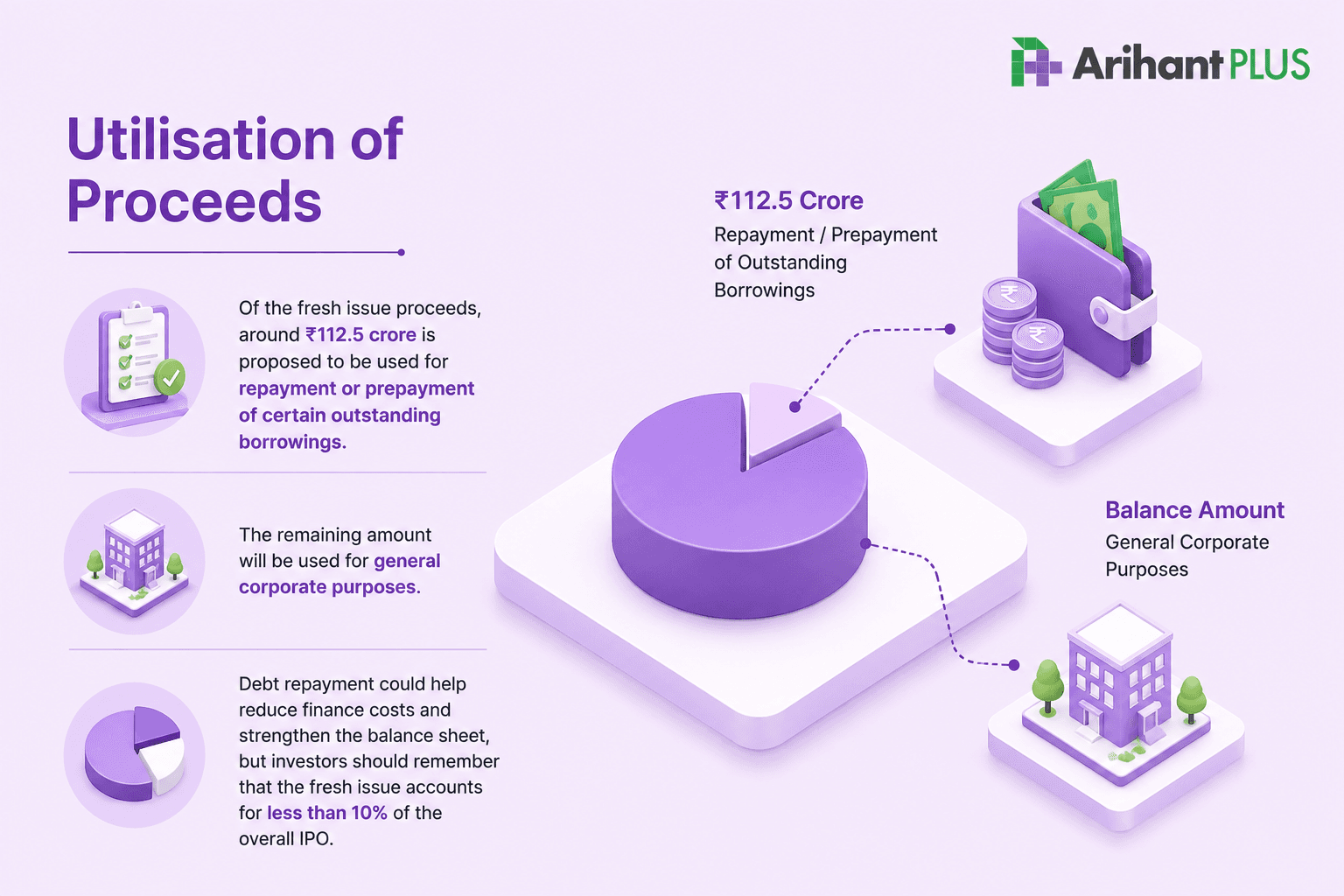
The IPO consists of a ₹150 crore fresh issue and a ₹1,607 crore offer for sale (OFS). Around ₹112.5 crore from the fresh issue is proposed to be used for repayment or prepayment of borrowings, while the remaining amount will be used for general corporate purposes. The proceeds from the OFS will go to the selling shareholders.
5. What are the key risks of the Symbiotec Pharmalab IPO?
Key risks include the company’s high dependence on APIs, concentration in a few key products, significant exposure to export markets, pharmaceutical regulatory risks and uncertainty around the scaling of its newer businesses. Investors should also note that a large part of the IPO is an OFS rather than fresh capital being raised by the company.

Related Topics

Jio Platforms IPO Review: Can a Telecom Network Carry a Technology Valuation?

Subway Plans ₹600 Crore IPO: What You Need to Know About EverBrands India

Moneyview IPO 2026: From Digital Lending to a ₹1,092 Cr Public Listing



Rentomojo, Karamtara, LCC - 6 IPO Listings Today: Gains, Losses & Key Highlights


NSE IPO 2026: Price Band, GMP, Financials, Risks and Key Highlights


Kanohar Electricals IPO Review 2026: Risks, Strengths and Financials
Horizon Industrial Parks IPO: Details, Financials, Strengths and Risks


Dhoot Transmission IPO: A ₹3,067 Crore Bet on India's Electric Future






















Important IPO terms all investors should understand before investing
Meesho IPO Opens on 3Dec - Is this ₹5,421 crores IPO worth investing?


10 Things to Know About Sudeep Pharma IPO: Date, Price, GMP & Complete Review




Canara Robeco AMC IPO: Should You Apply for MF Giant’s Public Debut?




Smartworks Coworking Spaces Limited IPO: 10 Key Things to Know Before Investing

Travel Food Services Limited IPO: 10 Key Things to Know Before Investing


Ellenbarrie Industrial Gases Limited IPO: 10 Key Things to Know Before Investing



HDB Financial Services Limited IPO: 10 Key Things to Know Before Investing

Sambhv Steel Tubes Limited IPO: 10 Key Things to Know Before Investing

Indogulf Cropsciences Limited IPO: 10 Key Things to Know Before Investing

Prostarm Info Systems Limited IPO: 10 Key Things to Know Before Investing

Aegis Vopak Terminals Ltd IPO: 10 Key Things to Know Before Investing

Schloss Bangalore Limited IPO: 10 Key Things to Know Before Investing

Belrise Industries Limited IPO: 10 Key Things to Know Before Investing


Hexaware’s Billion Dollar Markets Hits in Bear Market: Should You Invest?