


Shree Ram Twistex IPO 2026 | Should You Invest?

By
Arihant Team
Shree Ram Twistex IPO opens Feb 23, 2026 with a ₹95–₹104 price band. The cotton yarn manufacturer plans a ₹110 crore fresh issue to fund captive power, debt repayment, and working capital. With ~29.7x P/E and thin margins, investors must weigh cotton price risks and valuation before applying.
In This Article
- Introduction
- Shree Ram Twistex Business Model and Structure
- IPO Structure & Issue Details | Shree Ram Twistex IPO
- IPO Objectives: How will Shree Ram Twistex use IPO funds?
- Financial Snapshot of Shree Ram Twistex
- Shree Ram Twistex IPO GMP
- Revenue Concentration & Geographic Exposure
- Peer Comparison: Analysis
- Shree Ram Twistex IPO: Key risks for investors
- Investor Takeaway | Should You Invest in Shree Ram Twistex IPO?
- FAQs
Introduction
Cotton spinning is not a glamorous business.
It’s not tech driven. It doesn’t have brand premiums. It doesn’t scale like SaaS.
But it is fundamental to India’s textile ecosystem.
Shree Ram Twistex operates right at the start of that value chain, converting cotton into yarn for textile manufacturers. And now, it’s now all set for a debut with its ₹110 crore IPO that’s 100% fresh issue. The IPO opens today 23 Feb and closes for subscription on 26 Feb 2026, with a price band of ₹95 to ₹104 per share.
Before you think about applying, you need to understand one thing clearly:
- This is a spread business.
- Margins depend on the gap between cotton prices and yarn realisations.
Everything else flows through that. Let’s take a look into the company, its financials, and the IPO analysis to decide if the Shree Ram Twistex IPO is worth investing in.
Open a free account today
Invest in tomorrow with just one click
Shree Ram Twistex Business Model and Structure
India’s cotton yarn industry is structurally supported by strong domestic textile demand. Nearly 70% of the country’s yarn production is absorbed within India itself, feeding a large and diversified textile manufacturing ecosystem spanning denim, knitwear, home textiles, and apparel.
Shree Ram Twistex operates entirely within this domestic ecosystem. The company operates a focused cotton yarn manufacturing business supplying institutional buyers in the B2B segment.
Its yarn is used in both knitting and weaving, and goes into end-products like denim, terry towels, shirting, sheeting, sweaters, socks, bottom wear, home textiles and industrial fabrics. It manufactures:
- Compact ring spun cotton yarn and carded yarn (combed and carded)
- Value-added yarns like Eli Twist (Siro), compact slub yarns, and lycra-blended yarns
- It also monetises by-products like cotton waste
Cleanly, the business can be understood through two lenses and understanding the difference is critical to evaluating the IPO.
i) Yarn Manufacturing
This is Shree Ram’s core business. It makes cotton yarn, including Eli Twist (Siro) 2-ply yarn (Ne 40/2) and other value-added yarn types. The business benefits when the plant runs at higher capacity. Utilisation improved to ~86% in FY25 from ~70% in FY23, which helps margins.
But it is cotton-driven and working-capital heavy. The company buys cotton bales through brokers, and also uses pledge loans against cotton stock.
ii) Captive Power
Shree Ram Twistex’s captive power is not a separate business like a renewable company but more of a cost-saving move. The IPO includes funding captive solar and wind power for the company’s own use. In spinning, electricity is a major expense, so generating its own power can reduce costs and lower dependence on grid rates over time.
IPO Structure & Issue Details | Shree Ram Twistex IPO
- IPO Size: ₹110.24 crore
- Price Band: ₹95 to ₹104 per share
- IPO Dates: 23 to 25 Feb, 2026
- Face Value: ₹10 per share
- Lot Size: 144 shares
- Listing Date: Mon, Mar 2, 2026
- Listing At: BSE, NSE
Since this is a 100% fresh issue, all the money raised will go to the company (none to existing shareholders). There is no offer for sale component in this IPO.
IPO Objectives: How will Shree Ram Twistex use IPO funds?
The use of proceeds is heavily skewed toward strengthening the company’s cost structure and funding the operating cycle. In a cotton yarn business, the biggest competitive edge is not branding, it is power cost control + working capital discipline.
The allocation of funds is as follows:
- Capital expenditure for captive renewable power capacity, including 6.1 MW solar and 4.2 MW wind, to lower dependence on grid power and improve cost competitiveness - ₹39 crores.
- Repayment/prepayment of borrowings, which reduces interest outgo and balance sheet pressure (including term borrowing related to the solar project) - ₹14.89 crores.
- Funding working capital requirements, which is critical in a cotton-yarn model given seasonal raw material procurement, inventory holding, and receivable cycles - ₹44 crores.
- The remaining amount will be utilized for general corporate purposes and issue-related expenses.
Financial Snapshot of Shree Ram Twistex
Shree Ram Twistex has delivered steady growth over the last three fiscals, supported by higher capacity utilisation and a gradual shift toward value-added yarn mixes. For the six months ended September 30, 2025, revenue stood at ₹132.08 crores. Company’s profit after tax increased to ₹7.99 crores in FY2025, translating into a PAT margin of ~3.14%.
Source - DRHP
EBITDA rose from ₹17.40 crores in FY2023 to ₹21.85 crores in FY2025, with EBITDA margin expanding from 8.16% to 8.57% over the same period. More tellingly, for the six months ended September 30, 2025, EBITDA margin improved to ~12.90%, indicating a sharper near-term uptick in operating efficiency.
Operationally, the utilisation trend is improving. Capacity utilisation increased from ~70% in FY2023 to ~86% in FY2025, indicating better absorption of fixed costs in a spinning model where efficiency directly impacts unit economics.
Return ratios are reasonable but still reflect the realities of a cyclical manufacturing model, with ROE at ~11.36% in FY2025. The ability to sustain and expand returns will depend on maintaining utilisation, protecting spreads during cotton price swings, and keeping finance costs contained.
However, this remains a working capital-heavy, commodity linked business. Cotton procurement is seasonal and inventory led, and margins can compress quickly if cotton prices move faster than yarn realizations. This is why the company’s objective of adding captive renewable power is strategically important because power is one of the few major cost lines management can structurally control.
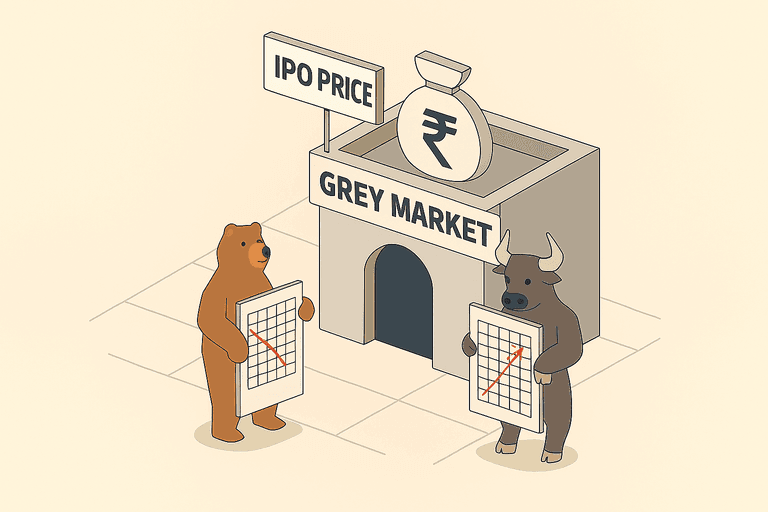
Shree Ram Twistex IPO GMP
Shree Ram Twistex's unlisted shares are trading at ₹109, reflecting a grey market premium (GMP) of 4.81% over the upper price band of ₹104 as per the data from investorgain.com and media reports.
Disclaimer: Grey Market Premium (GMP) is not regulated or recommended by the stock exchanges or SEBI. ArihantPlus does not endorse or facilitate trading in the grey market. Investors are advised to conduct their own research or consult an expert before making any investment decisions.
Revenue Concentration & Geographic Exposure
Shree Ram Twistex earns most of its money from cotton yarn. It does sell some related products (like value-added yarn types and cotton waste), but the business is still mainly dependent on yarn sales. So if yarn demand slows or prices fall, there aren’t many other income streams to balance it out.
It serves institutional customers and bulk purchasers, including Welspun Living and Jindal Worldwide, where repeat execution and quality consistency matter more than branding.
The company’s single manufacturing facility is located in Gondal, Rajkot (Gujarat), and houses 17 compact ring spinning machines with a total spindle count of 27,744. It also has five warehouses, two for raw material, two for finished goods and one for general storage.
It sells across multiple states including Gujarat, Rajasthan, West Bengal, Maharashtra, Tamil Nadu, Madhya Pradesh and Punjab, and also supplies to the Union Territory of Dadra & Nagar Haveli, along with international exports.
Peer Comparison: Analysis
We’ve stacked Shree Ram Twistex up against listed spinning leaders: Vardhman Textiles, Ambika Cotton and Nitin Spinners and the mismatch shows up clearly in valuation.
The numbers below point to one thing: Shree Ram Twistex is being offered at a richer valuation than larger, better established peers.
Source - DRHP
At ~29.7x P/E, investors are paying ‘quality large cap’ pricing for a much smaller company.
Shree Ram Twistex IPO: Key risks for investors
We’ve listed down the key risk for you that you’d know before choosing to apply for this IPO:
- Revenue & customer concentration: The business is largely cotton yarn-led, and the top 10 customers contribute ~90% of revenue. If a few large buyers reduce orders, negotiate harder on pricing, or delay payments, it can directly impact sales and cash flow.
- Raw material price risk (cotton): Cotton is the main input. If cotton prices rise sharply and yarn prices don’t move up fast enough, margins can compress quickly. This “cotton-yarn spread” risk is a core reality of spinning businesses.
Working capital intensity: Yarn manufacturing needs high inventory and credit. Any stretch in receivables or higher cotton stocking can tighten liquidity. - Single plant concentration: The company manufactures from one main facility in Gondal (Rajkot, Gujarat). Any disruption like power issues, labour constraints, breakdowns, compliance interruptions can affect the entire business because there is no second plant to fall back on.
- Execution risk on captive power projects: A key IPO objective is spending on captive wind (4.2 MW) and solar (6.1 MW) for internal power. If execution is delayed, costs overrun, or generation is lower than expected, the cost-savings thesis may take longer to show up.
- Debt & refinancing / prepayment costs: Part of the proceeds will be used for repayment/prepayment of borrowings. Prepayment can attract charges (as disclosed for the solar-linked term loan), and if working capital expands faster than expected, the business may still need external funding.
- Cyclicality risk: This is not a steady demand business like essentials. Textile and yarn demand can slow during weak export cycles or broader demand softness, which can hit volumes, realizations, and utilisation.
Investor Takeaway | Should You Invest in Shree Ram Twistex IPO?
Shree Ram Twistex gives investors exposure to a cotton yarn manufacturing business. Demand for yarn is steady over time, but earnings can move up and down with cotton prices and textile cycles.
At ~29.7x P/E and elevated sales multiple (1.63x P/S) the IPO is not cheap even on topline. The market is already offering better priced spinning assets in the secondary market. Unless Shree Ram Twistex can deliver meaningfully superior growth + consistently higher returns, the IPO valuation looks hard to justify versus peers.
FAQs
1. What are the IPO dates for the Shree Ram Twistex IPO?
Shree Ram Twistex IPO opens on February 23, 2026 and closes on February 25, 2026. The shares are proposed to be listed on March 2, 2026.
2. What is the Shree Ram Twistex IPO price band?
The price band is ₹95 to ₹104 per share.
3. What is the lot size of the Shree Ram Twistex IPO?
Minimum lot size is 144 shares for retail investors.
4. Who should consider applying for the Shree Ram Twistex IPO?
Investors looking for exposure to a cotton yarn manufacturing company may find this IPO relevant. However, they should be comfortable with risks related to cotton price volatility, working capital intensity, customer concentration, and execution of captive power projects.
5. Is Shree Ram Twistex IPO a fresh issue or OFS?
The IPO is entirely a fresh issue of up to ₹110 crore, which means all the money raised through the IPO will go to the company.

Related Topics

Jio Platforms IPO Review: Can a Telecom Network Carry a Technology Valuation?

Subway Plans ₹600 Crore IPO: What You Need to Know About EverBrands India

Moneyview IPO 2026: From Digital Lending to a ₹1,092 Cr Public Listing


Rentomojo, Karamtara, LCC - 6 IPO Listings Today: Gains, Losses & Key Highlights


NSE IPO 2026: Price Band, GMP, Financials, Risks and Key Highlights


Kanohar Electricals IPO Review 2026: Risks, Strengths and Financials


Horizon Industrial Parks IPO: Details, Financials, Strengths and Risks



Dhoot Transmission IPO: A ₹3,067 Crore Bet on India's Electric Future
























Important IPO terms all investors should understand before investing

Meesho IPO Opens on 3Dec - Is this ₹5,421 crores IPO worth investing?

10 Things to Know About Sudeep Pharma IPO: Date, Price, GMP & Complete Review





Canara Robeco AMC IPO: Should You Apply for MF Giant’s Public Debut?




Smartworks Coworking Spaces Limited IPO: 10 Key Things to Know Before Investing

Travel Food Services Limited IPO: 10 Key Things to Know Before Investing


Ellenbarrie Industrial Gases Limited IPO: 10 Key Things to Know Before Investing



HDB Financial Services Limited IPO: 10 Key Things to Know Before Investing

Sambhv Steel Tubes Limited IPO: 10 Key Things to Know Before Investing

Indogulf Cropsciences Limited IPO: 10 Key Things to Know Before Investing

Prostarm Info Systems Limited IPO: 10 Key Things to Know Before Investing

Aegis Vopak Terminals Ltd IPO: 10 Key Things to Know Before Investing

Schloss Bangalore Limited IPO: 10 Key Things to Know Before Investing

Belrise Industries Limited IPO: 10 Key Things to Know Before Investing


Hexaware’s Billion Dollar Markets Hits in Bear Market: Should You Invest?