

Sedemac Mechatronics IPO 2026 | Should You Invest?

By
Arihant Team
The Sedemac Mechatronics IPO 2026 is a 100% OFS issue priced at ₹1,287–₹1,352 per share. The company manufactures ECUs and control systems for 2W, 3W, EVs and gensets. While revenue and margins are improving, the IPO is priced at a steep ~127x P/E with high customer concentration risk
In This Article
- Introduction
- Sedemac Mechatronics Business Overview
- Key IPO Details | Sedemac Mechatronics
- IPO Objectives | How will Sedemac Mechatronics use IPO funds?
- Financial Snapshot of Sedemac Mechatronics
- Peer Comparison
- Key Risks of Sedemac Mechatronics
- Investor Takeaway: Should You Invest in Sedemac Mechatronics IPO?
- FAQs
Introduction
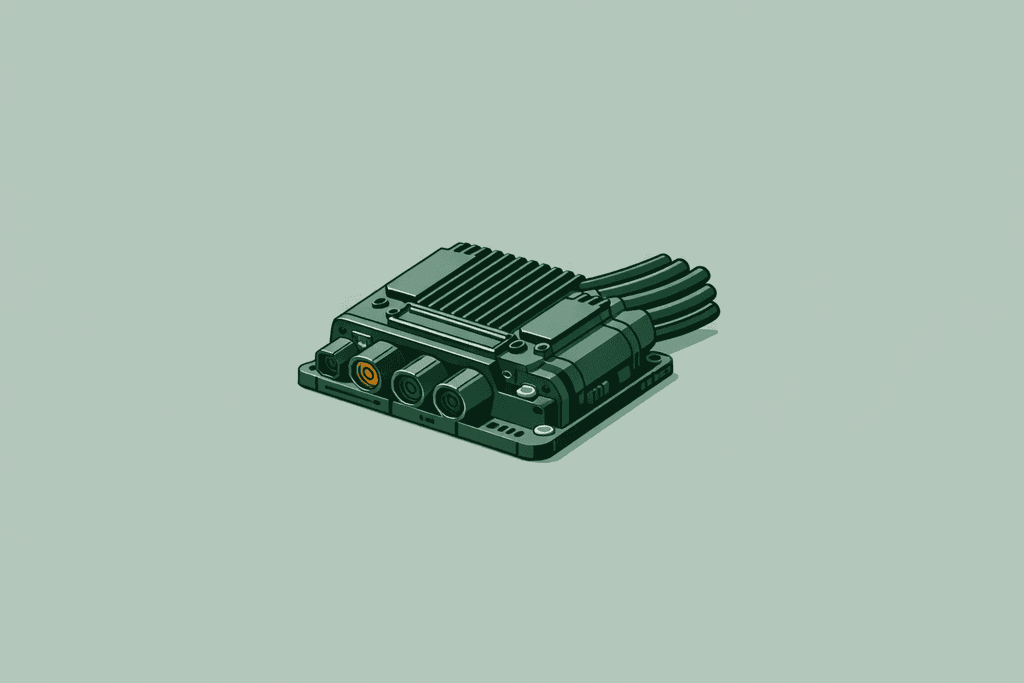
If you’re following this IPO, you’d come across the term “ECU” a lot of times. That said, a very few of you actually understand the workings of this system. To put it most simply, it helps run bikes better.
Just like our brain detects smell, sight and sound and acts via our legs, hands, fingers and such. Similarly, the ECU takes inputs from various sensors, processes them and sends out a signal to the concerned electronic component to act upon it.
And that system, in many Indian vehicles, is built by Sedemac Mechatronics Limited.
And now, Sedemac Mechatronics is open for subscription with a ₹1,087.45 crore IPO at a price band of ₹1,287 - ₹1,352 per share. Importantly, the issue is a 100% Offer for Sale (OFS). There is no fresh issue component. The company will not receive any proceeds from the IPO.
The sellers include early-stage and institutional investors such as A91 Emerging Fund II LLP, Xponentia Opportunities Fund II, 360 One Special Opportunities Fund, HDFC Life Insurance Company, NRJN Family Trust, and Mace Private Limited. Certain promoters, including Manish Sharma and Ashwini Amit Dixit, are also partially offloading small portions of their holdings.
.
The question is simple: can a company that operates invisibly inside vehicles become a visible wealth creator for investors?
Before you decide, let’s understand what you’re actually buying.
Open a free account today
Invest in tomorrow with just one click
Sedemac Mechatronics Business Overview
India’s automotive electronics space is quietly going through a big shift. Emission norms are getting tighter. Fuel efficiency matters more than ever. And EV adoption is slowly picking up pace. All of this means one thing, the electronic content inside every vehicle is increasing. And when electronics increase, the companies building the control systems behind them become more important.
That’s where Sedemac Mechatronics Limited fits in.
Sedemac has been around for nearly 18 years, building control-intensive electronic products across mobility and industrial applications. What’s interesting is how neatly its portfolio spreads across different vehicle types instead of depending on just one product.
- For traditional petrol-powered 2W and 3W, it supplies ISG units and EFI ECUs, basically the electronics that manage starting, power generation and fuel delivery.
- For electric vehicles, it supplies Motor Control Units and even the motors themselves. In an EV, these are the parts that replace the combustion engine entirely. The same control expertise is extended to electric light commercial vehicles and even e-bikes.
- On the industrial side, Sedemac supplies genset controllers and EFI ECUs for generators. In fact, it holds roughly 77% market share in India’s generator control segment, which makes it a dominant player there.
- It’s also developing motor control units for power tools.
In terms of revenue, mobility drives the business. 2W, 3W and EVs together contribute around 85% of total revenue. The industrial genset segment makes up the remaining 15%.
More than 90% of revenue comes from India. There are exports to the US and Europe, but this is largely a domestic manufacturing story tied closely to India’s vehicle ecosystem.
Key IPO Details | Sedemac Mechatronics
Here are the key details investors should know:
- IPO Size: ₹5,970 crore
- Price Band: ₹1287 - ₹1352 per share
- IPO Dates: 04 - 06 March 2026
- IPO Type: OFS
- Minimum investment: ₹14872 (or 11 shares - lot size)
- Listing Date: March 11, 2026
- Proposed Listing: BSE & NSE
- Lead Managers: ICICI Securities, Avendus Capital Private Limited and Axis Capital Limited
IPO Objectives | How will Sedemac Mechatronics use IPO funds?
This is the part most retail investors skim but shouldn’t.
The Sedemac Mechatronics Limited IPO is a 100% Offer for Sale (OFS). That means the company will not receive any proceeds from the issue. Not one rupee goes into expansion, debt repayment, capex or working capital.
Every rupee raised goes to the existing shareholders who are selling part of their stake.
And who exactly is exiting?
The selling shareholders include institutional investors such as A91 Emerging Fund II LLP, Xponentia Opportunities Fund II, 360 One Special Opportunities Fund, HDFC Life Insurance Company, and Mace Private Limited, among others.
Promoters Manish Sharma and Ashwini Amit Dixit are also selling a small portion of their holdings.
So this IPO is essentially providing liquidity to early investors and partial exits to promoters while giving the company public market visibility and a listed status.
The growth you’re betting on must come from the company’s existing capabilities, cash flows and execution.
Financial Snapshot of Sedemac Mechatronics
Revenue at Sedemac Mechatronics Limited has grown steadily over the past few years. It increased from ₹423 crore in FY23 to ₹658 crore in FY25, which is about 55% growth over two years. In the first nine months of FY26 alone, the company reported ₹770 crore in revenue.
EBITDA margin rose from 12.82% in FY23 to 19% in FY25, and further to 20.9% in 9M FY26. In FY24, PAT fell to ₹5.88 crore from ₹8.57 crore in FY23. However, this was largely due to a one-time interest charge of ₹255 crore related to compulsory convertible preference shares. Excluding this financial adjustment, the underlying operating performance did not deteriorate. Profit rebounded to ₹47 crore in FY25 and reached ₹71.5 crore in the first nine months of FY26.
On the balance sheet side, borrowings reduced from around ₹150 crore in FY24 to about ₹50 crore as of December 2025.
Another important point is R&D spending. Sedemac allocates around 7-10% of its revenue annually toward research and development. For a company operating in automotive electronics, this level of investment is consistent with the need to continuously upgrade technology and maintain OEM relationships.
Overall, the financial trend shows steady revenue growth, improving margins, recovery in profitability after a one-time adjustment, and a moderate debt position.
(in crore) | 6M ended 30 Sept 2025 | FY25 | FY24 | FY23 |
Revenue | ₹775.31 | ₹662.54 | ₹535.90 | ₹429.87 |
EBITDA | ₹161.07 | ₹125.07 | ₹83.12 | ₹54.24 |
Net Profit | ₹71.50 | ₹47.05 | ₹5.88 | ₹8.57 |
Peer Comparison
Sedemac Mechatronics Limited operates in automotive electronics alongside Bosch Limited, ZF Commercial Vehicle Control Systems India Limited, Sona BLW Precision Forgings Limited and Schaeffler India Limited.
At ₹1,352 and FY25 EPS of ₹10.82, Sedemac is priced at ~127x P/E, the most expensive in its peer set. The peer average is ~58x, implying a ~2.2x premium.
The premium holds across metrics. P/B at 18.9x is the highest in the group. EV/EBITDA at 47.7x is ~23% higher than ZF (39.1x). On P/S at 9.0x, it is broadly in line with Sona BLW (9.1x).
Operationally, FY25 EBITDA margin of ~20.9% is comparable to Bosch (19.9%) and ZF (20.5%), but below Sona BLW (27.4%) and Schaeffler (31.1%), both of which trade cheaper on P/E.
RoCE at 33.8% is strong and ahead of peers, which supports part of the premium. However, at current pricing and with the IPO being a 100% OFS, the stock is clearly positioned as a premium play. Sustained margin expansion and diversification beyond key customers will be critical to justify this valuation.
Metric | Sedemac Mechatronics | Bosch Limited | ZF Commercial Vehicle | Sona BLW Precision | Schaeffler India |
P/E Ratio (X) | 126.91x | 51.5x | 62.7x | 53.6x | 64.7x |
Price to Book (X) | 18.9x | 7.5x | 9.0x | 6.0x | 11.4x |
Price to Sales (X) | 9.0x | 5.7x | 7.5x | 9.1x | 7.4x |
EV / EBITDA | 47.7x | 33.3x | 39.1x | 29.4x | 38.9x |
Key Risks of Sedemac Mechatronics
Here are the key risks in the Sedemac IPO:
- Customer Concentration Risk: Nearly three-quarters of Sedemac’s revenue comes from TVS Motor. There are no long-term volume guarantees. If TVS reduces orders, shifts platforms, or negotiates pricing harder, Sedemac’s revenue and margins would feel the pressure immediately.
- Mobility Segment Exposure: Over 84% of revenue comes from two- and three-wheelers. If that segment slows due to weak rural demand, financing tightness, regulatory delays, or cyclical downturns, Sedemac has limited diversification to cushion the impact.
- EV Transition Risk: While Sedemac has EV exposure, a faster-than-expected shift away from ICE platforms could structurally reduce demand for certain legacy products like ICE-focused ECUs and ISG systems. The company must continuously adapt its product mix to stay relevant.
- Technology Obsolescence Risk: Automotive electronics evolves quickly. Emission norms, fuel efficiency targets, and digitization keep changing specifications. If Sedemac fails to develop or commercialize next-generation control systems in time, OEMs can switch to alternative suppliers.
- Pricing Pressure from OEMs: Auto OEMs typically demand periodic price reductions and pass on cost pressures selectively. With high customer concentration, Sedemac’s negotiating power is limited. Margin sustainability depends on cost efficiency and scale.
- China Sourcing & Semiconductor Risk: Critical inputs like semiconductors and PCBs are sourced largely from China. Export restrictions, rare earth curbs, or geopolitical disruptions could impact supply.
- Geographic Concentration: All production is concentrated in two facilities in Pune. Any natural calamity, infrastructure issue, or regulatory disruption in that region could temporarily halt operations.
- Working Capital Intensity: The business requires meaningful working capital to manage receivables and inventory. If OEM payment cycles stretch or volumes fluctuate sharply, liquidity pressure could build.
- Regulatory Dependence: Part of demand growth is linked to tighter emission norms and regulatory upgrades. Delays or changes in policy timelines can affect product rollout cycles and revenue visibility.
Investor Takeaway: Should You Invest in Sedemac Mechatronics IPO?
Sedemac operates in the engine control and mechatronics space, where the global ISG ECU market is expanding rapidly, driven by stricter emission norms, fuel efficiency mandates and rising two- and three-wheeler penetration across emerging markets.
The company has already demonstrated consistent execution, with FY25 revenue of ₹658 cr and EBITDA margins of ~20.9%, supported by deep OEM integration and high switching costs.
At the upper band of ₹1,352, the issue trades at ~127x FY25 earnings (EPS: ₹10.65), a steep multiple that reflects the premium for niche technology positioning and near-monopoly ISG ECU status.
The multiple must be weighed against significant customer concentration risk (TVS Motor accounts for ~80% of revenues) as well as limited product diversification and the execution risk of scaling beyond its anchor client.
FAQs
1. What are the IPO dates for Sedemac Mechatronics?
The IPO opens on March 4, 2026, and closes on March 6, 2026. Allotment is expected around March 9, with a tentative listing on BSE and NSE on March 11, 2026.
2. What is the Sedemac IPO GMP?
According to investorgain.com, Sedemac Mechatronics is currently quoting at a Grey Market Premium (GMP) of around ₹-17, implying a discount of roughly 1.26% to the top end of the issue price. GMP is unofficial and can shift quickly. Don't base investment decisions on it alone.
3. What is the lot size for retail investors?
The minimum lot size is 11 shares, translating to a minimum investment of ₹14,872 at the upper price band of ₹1,352.
4. Is this a fresh issue or an OFS?
It is entirely an Offer for Sale. The company will not receive any proceeds from this IPO. All ₹1,087 crore goes to existing shareholders, institutional investors and some promoter group members who are using the listing as their exit.
5. How has the Sedemac Mechatronics IPO performed on Day 1 so far?
As of March 4, 2026, the IPO is subscribed 0.01x overall. Retail investors have bid 0.01x, the Employee category stands at 0.25x, while QIBs and NIIs are yet to participate. Demand remains muted at this stage.

Related Topics

Jio Platforms IPO: 8 Things Every Investor Should Know Before Applying


Jio Platforms IPO Opens 21Oct: Can a Telecom Network Carry Tech Valuation?


Subway Plans ₹600 Crore IPO: What You Need to Know About EverBrands India

Moneyview IPO 2026: From Digital Lending to a ₹1,092 Cr Public Listing



Rentomojo, Karamtara, LCC - 6 IPO Listings Today: Gains, Losses & Key Highlights


NSE IPO 2026: Price Band, GMP, Financials, Risks and Key Highlights


Kanohar Electricals IPO Review 2026: Risks, Strengths and Financials


Horizon Industrial Parks IPO: Details, Financials, Strengths and Risks


Dhoot Transmission IPO: A ₹3,067 Crore Bet on India's Electric Future





























Important IPO terms all investors should understand before investing

Meesho IPO Opens on 3Dec - Is this ₹5,421 crores IPO worth investing?


10 Things to Know About Sudeep Pharma IPO: Date, Price, GMP & Complete Review






Canara Robeco AMC IPO: Should You Apply for MF Giant’s Public Debut?





Smartworks Coworking Spaces Limited IPO: 10 Key Things to Know Before Investing

Travel Food Services Limited IPO: 10 Key Things to Know Before Investing


Ellenbarrie Industrial Gases Limited IPO: 10 Key Things to Know Before Investing



HDB Financial Services Limited IPO: 10 Key Things to Know Before Investing

Sambhv Steel Tubes Limited IPO: 10 Key Things to Know Before Investing

Indogulf Cropsciences Limited IPO: 10 Key Things to Know Before Investing

Prostarm Info Systems Limited IPO: 10 Key Things to Know Before Investing

Aegis Vopak Terminals Ltd IPO: 10 Key Things to Know Before Investing

Schloss Bangalore Limited IPO: 10 Key Things to Know Before Investing

Belrise Industries Limited IPO: 10 Key Things to Know Before Investing


Hexaware’s Billion Dollar Markets Hits in Bear Market: Should You Invest?