Dhoot Transmission IPO: A ₹3,067 Crore Bet on India's Electric Future

By
Arihant Team
₹3,067 crore IPO, market leadership in 2W & 3W EV wiring harnesses but can Dhoot Transmission’s valuation pass the market’s test?
In This Article
- Introduction
- Key IPO Details
- IPO Objectives: Where will the money go?
- Business overview
- Dhoot Transmission financials
- Peer Comparison
- Risks
- Investor Takeaway
- FAQs
Introduction
An electric two wheeler carries far more electrical content than a petrol one, and that is where Dhoot Transmission has built its edge. The company supplies wiring harnesses and related electrical systems across ICE and EV platforms, with close to 70 percent share of India’s electric two wheeler and three wheeler wiring harness market in FY26.
It is now coming to the public market with a ₹3,066.89 crore IPO at a post issue valuation of about ₹17,816 crore, putting its growth story, margin pressure and valuation under the spotlight.
So, let’s evaluate together whether it deserves your money or not.
Open a free account today
Invest in tomorrow with just one click
Key IPO Details
IPO Objectives: Where will the money go?
Out of the ₹3,066.89 crore IPO, ₹1,666.89 crore is an offer for sale, with Bain Capital’s BC Asia Investments XV and Mangalam Capital selling shares. Mangalam Capital is exiting its entire holding.
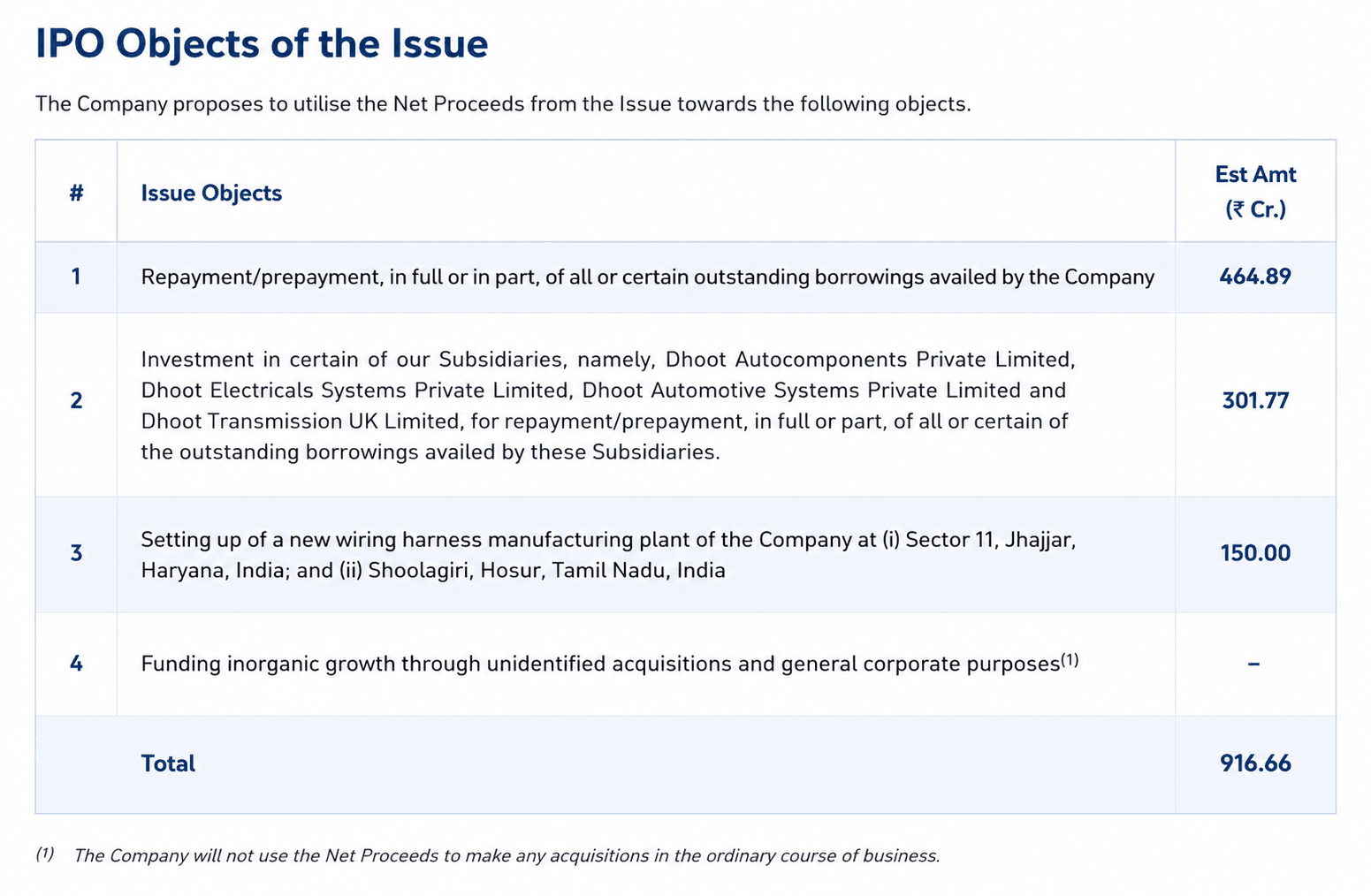
Remaining ₹1,400 crore is the fresh issue that will go to the company and be used for the following purposes:
Business overview
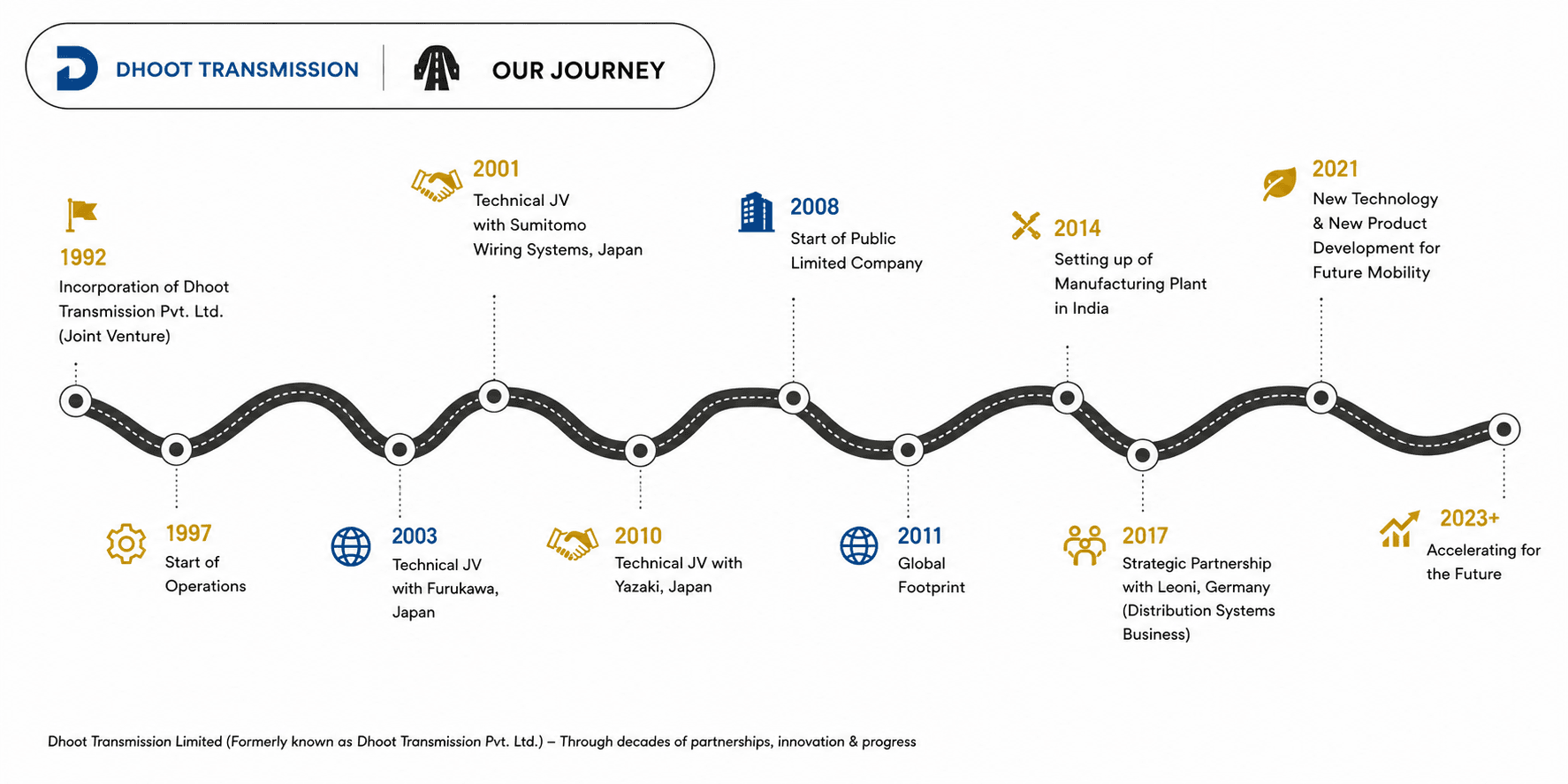
Incorporated in 1998 and headquartered in Pune, Dhoot Transmission designs, engineers and manufactures wiring harnesses and other electrical distribution systems for the automotive
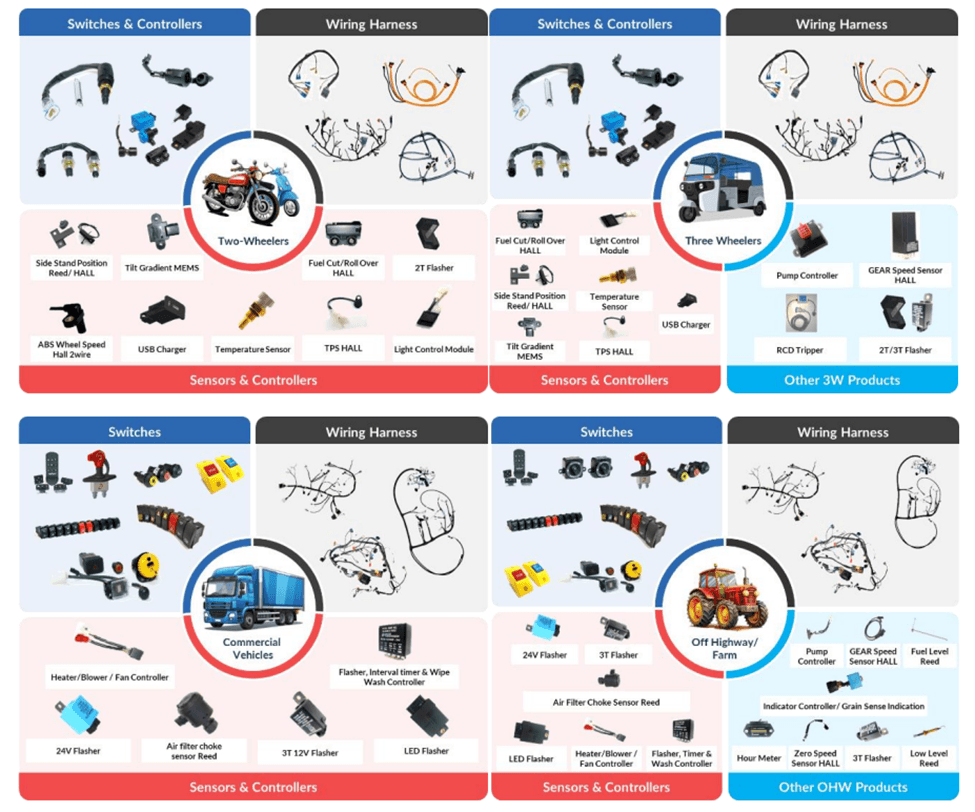
Wiring harnesses make up close to 77% of FY26 revenue, with the rest coming from battery packs, sensors, electronic controllers, switches and power supply systems.
Dhoot commands a strong position in India’s two wheeler and three wheeler wiring harness market, with a 41 percent share of the combined market in FY26 and a leadership position in three wheelers, where its share exceeds 70 percent.
Its opportunity grows as vehicles become more electrical. An electric two wheeler carries about 1.5 to 2.5 times the wiring harness content of an ICE model, while features such as ABS, connected systems and premium electronics add further electrical content.
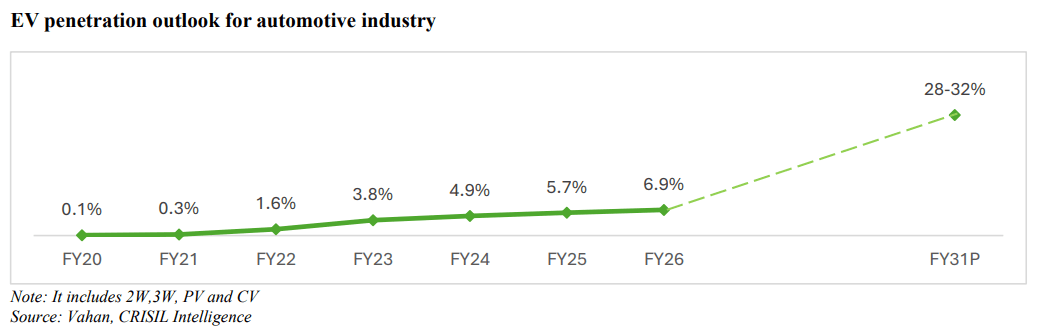
Around 95% of Dhoot’s automotive portfolio is either EV focused or powertrain neutral, allowing it to supply across ICE, hybrid and electric vehicles and its client roster includes major names like Bajaj Auto, TVS Motor, Honda Motorcycle and Scooter India, and Royal Enfield.
It operates 22 manufacturing facilities across India, Europe and Thailand, with a dedicated EV division that's been running since 2020.
Dhoot Transmission financials
Dhoot Transmission's growth trajectory over the past three fiscal years looks like this:
Total income grew 31 percent in FY26 and compounded at roughly 28 percent over FY24 to FY26, but PAT increased only 12 percent.
Margins have been moving in the opposite direction to revenue; EBITDA margin declined from 17.15 percent in FY25 and 15.71 percent in FY26, while PAT margin fell to 8.70 percent.
Debt to equity dropped from 0.78 to 0.35, even though borrowings increased to ₹841.39 crore, while net debt to EBITDA moved from 1.29 times to negative 0.25 times.
- ROE fell from 35.60 percent to 16.30 percent, largely because the fresh equity entered the year end capital base before having time to generate a corresponding return.
Peer Comparison
Among listed peers Dhoot FY26 revenue grew 31.35 percent, the fastest in the set, while its 15.71 percent EBITDA margin is higher than Minda Corporation, Uno Minda and Motherson Sumi Wiring. Only Sona BLW reports a higher margin, though its driveline focused business is not directly comparable.
At ₹871 per share, Dhoot trades at 35.70 times FY26 diluted earnings on the RHP basis, versus a peer average of 55.31 times. On a more conservative post issue share count, the multiple rises to about 44.9 times, still below Minda Corporation, Uno Minda and Sona BLW, but slightly above Motherson Sumi Wiring.
Dhoot’s ROCE of 19.14 percent and ROE of 16.30 percent trail the peer averages, although the Bain Capital equity infusion just before year end enlarged its capital base and depressed these ratios. So the valuation largely rests on whether Dhoot can sustain its faster growth while stabilising margins and improving returns on the additional capital.
Risks
A few factors are worth weighing before applying:
Sector Concentration: About 65.47 percent of FY26 revenue came from two wheelers and another 12.86 percent from three wheelers. With wiring harnesses contributing 77 percent of revenue, any slowdown in these segments or shift in harness technology could hit sales directly.
Customer Dependence: The top ten customers contributed 80.93% of FY26 revenue. Losing a major OEM programme, or even a reduction in order volumes, could materially affect revenue.
Order Visibility: Dhoot does not have firm long term volume commitments from OEMs. Customers can revise, reschedule or cancel orders, which makes future volumes less predictable.
Capital Intensity: The business requires continuous spending on capacity and working capital. Higher expansion needs could increase dependence on external funding and pressure returns if demand falls short.
Capacity Constraints: Some plants, including Hosur and Pithampur, are already operating at high utilisation. Until new capacity comes online, Dhoot may struggle to absorb additional demand.
Copper Exposure: Copper can account for 50% to 60% of wiring harness material costs, making margins sensitive to commodity prices. Pass through clauses offer some protection, but time lags and contract conditions mean cost increases may not be fully recovered.
- Import Exposure: Dhoot sources imported materials from China, the UK and Europe, exposing it to currency moves, tariffs, geopolitical disruptions and logistics costs.
Investor Takeaway
At ₹871 a share, Dhoot does not appear aggressively priced against its peers. Its RHP P/E is 35.70 times versus the peer average of 55.31 times. Even on the more conservative post issue basis of about 44.9 times, it remains below most peers.
For listing gains, the ₹245 GMP you cited implies a listing price of around ₹1,116, or about 28 percent upside from the upper band. GMP is unofficial, so this reflects current sentiment rather than a guaranteed return.
For long term investors, Dhoot looks attractive if it can arrest the decline in margins. In that case, investors are effectively buying a market leader in electric two wheeler and three wheeler wiring harnesses at a reasonable price relative to peers, which could make it a strong long term buy.

FAQs
What are the IPO dates for Dhoot Transmission IPO?
The IPO opens on August 10, 2026 and closes on August 12, 2026. Allotment is expected around August 13, with listing tentatively scheduled for August 17 on the BSE and NSE.
What is the Dhoot Transmission IPO price band and lot size?
The price band is ₹829 to ₹871 per share with a minimum lot of 17 shares, requiring about ₹14,807 at the upper band.
What is Dhoot Transmission IPO GMP?
The last GMP we checked was ₹245 as of August 7, 2026, implying an estimated listing price of about ₹1,116, or roughly 28.13 percent upside over the upper band.
Is Dhoot Transmission IPO a fresh issue or an OFS?
Both. The IPO includes a ₹1,400 crore fresh issue and an OFS worth up to ₹1,666.89 crore at the upper band. This means a little over 54 percent of the total issue is an OFS, while the fresh capital goes to Dhoot.
What will Dhoot Transmission use the IPO proceeds for?
A large part of the fresh issue will go toward debt repayment, with about ₹766.57 crore earmarked for borrowings at the company and its subsidiaries. Another ₹150 crore will fund new wiring harness plants, while the balance can be used for acquisitions and general corporate purposes.
Why is Dhoot Transmission considered an EV play?
Dhoot holds close to 70 percent share of India’s electric two wheeler and three wheeler wiring harness market. EVs also require more electrical content per vehicle, while much of Dhoot’s automotive portfolio can be used across ICE, hybrid and electric platforms.
Should you invest in the Dhoot Transmission IPO?
Dhoot offers strong growth, EV market leadership and a valuation below most peers, but 3 years of margin compression remain the key risk. Current GMP supports the listing gains case, while long term upside depends on whether margins can stabilise and improve.

Related Topics
Rentomojo, Karamtara, LCC - 6 IPO Listings Today: Gains, Losses & Key Highlights

NSE IPO 2026: Price Band, GMP, Financials, Risks and Key Highlights


Kanohar Electricals IPO Review 2026: Risks, Strengths and Financials

Horizon Industrial Parks IPO: Details, Financials, Strengths and Risks













Important IPO terms all investors should understand before investing
Meesho IPO Opens on 3Dec - Is this ₹5,421 crores IPO worth investing?

10 Things to Know About Sudeep Pharma IPO: Date, Price, GMP & Complete Review



Canara Robeco AMC IPO: Should You Apply for MF Giant’s Public Debut?



Smartworks Coworking Spaces Limited IPO: 10 Key Things to Know Before Investing

Travel Food Services Limited IPO: 10 Key Things to Know Before Investing


Ellenbarrie Industrial Gases Limited IPO: 10 Key Things to Know Before Investing


HDB Financial Services Limited IPO: 10 Key Things to Know Before Investing
Sambhv Steel Tubes Limited IPO: 10 Key Things to Know Before Investing

Indogulf Cropsciences Limited IPO: 10 Key Things to Know Before Investing
Prostarm Info Systems Limited IPO: 10 Key Things to Know Before Investing

Aegis Vopak Terminals Ltd IPO: 10 Key Things to Know Before Investing

Schloss Bangalore Limited IPO: 10 Key Things to Know Before Investing
Belrise Industries Limited IPO: 10 Key Things to Know Before Investing

Hexaware’s Billion Dollar Markets Hits in Bear Market: Should You Invest?