LEAP India ₹2,480 crore IPO 2026 | Should You Apply?

By
Arihant Team
LEAP India is bringing its ₹2,480 crore IPO, offering investors a chance to participate in India's fast-growing logistics infrastructure story. The company is the market leader in pallet pooling, but the IPO comes at a premium valuation and is largely an Offer for Sale (OFS). Read our analysis to understand the business, financials, key risks, and whether this IPO is worth considering.
In This Article
- Introduction
- Key IPO Details: LEAP India IPO
- Business Overview
- Where will LEAP India's IPO proceeds go?
- Financial Performance
- Peer Comparison
- Key Risks
- Investor Takeaway
- FAQs
Introduction
Indian warehouses are quietly undergoing a massive shift moving away from manual loading toward palletised, automated supply chains.
Right now, only about 15 percent of goods movement in India is palletised, compared to over 90 percent in North America and Europe. LEAP India sits right at the center of this massive structural gap.
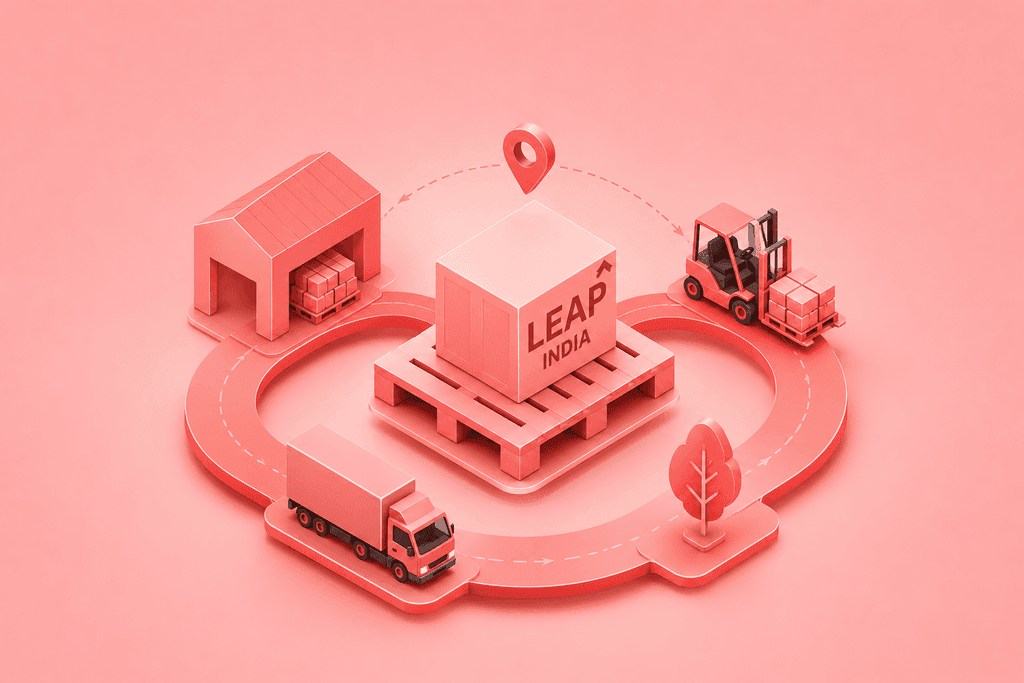
Think of them as a shared rental pool for logistics equipment: instead of companies spending heavy capital on buying wooden pallets, heavy containers, or forklifts, LEAP owns the gear and rents it out across factories, warehouses, and distribution centers. Once used, the assets are collected, repaired, and sent off to the next customer.
Founded in 2013, LEAP has scaled into India’s largest on demand asset pooling provider, managing nearly 14.7 million assets across more than 10,000 customer touchpoints as of March 2026.
Now, the company is coming to the primary market with a ₹2,480 crore IPO priced between ₹151 and ₹159 per share, commanding a post issue market cap of around ₹7,005 crore.
But at a steep valuation of roughly 112 times FY26 earnings, it raises a crucial question for investors: what does the business actually need to deliver to justify that price tag?
Open a free account today
Invest in tomorrow with just one click
Key IPO Details: LEAP India IPO
Business Overview
LEAP India operates an asset pooling model, renting reusable logistics assets on a pay-per-use basis rather than selling equipment outright. This allows clients to convert capital expenditure (purchasing assets) and operational overhead (maintenance and storage) into variable operating expenses.
LEAP India’s portfolio features wooden pallets, foldable plastic containers, and specialized material handling equipment like forklifts. Around these core assets, the company layers value-added services including returnable packaging, inventory management, logistics, and maintenance.
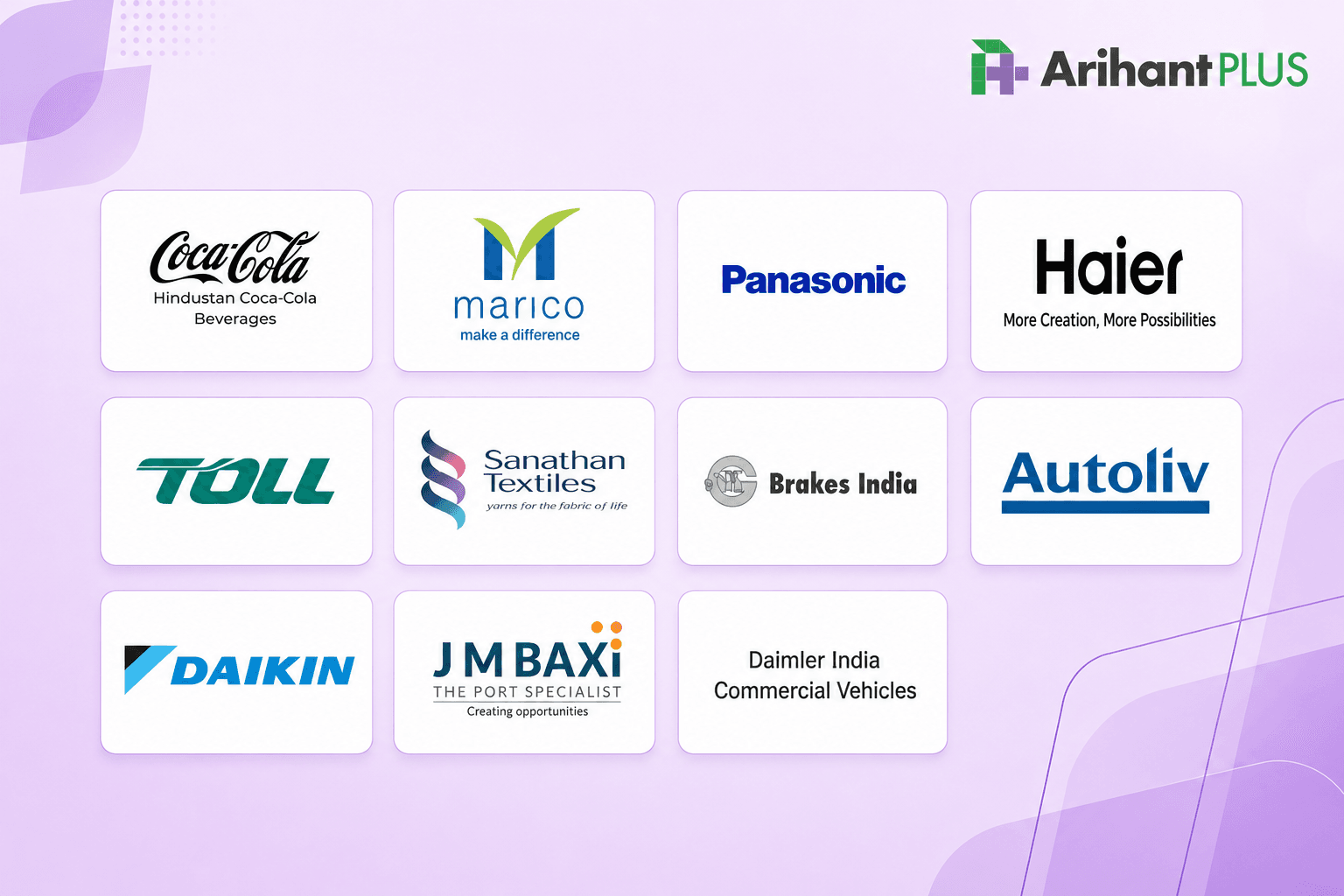
As of March 31, 2026, LEAP served over 1,000 customers across sectors such as FMCG, food and beverage, third-party logistics (3PL), e-commerce, quick commerce, automotive, industrials, and consumer durables. Some of their key customers:
Pallets are the engine of the business, contributing 62.17 percent of revenue from operations in FY26. The company holds roughly 90 percent of India's pallet pooling market.
Global investment firm KKR acquired a majority stake in 2023 through Vertical Holdings II Pte. Ltd., which is now a promoter alongside founder Sunu Mathew.
Where will LEAP India's IPO proceeds go?
Unlike a typical growth-capital raise, this offer is largely a shareholder exit. Of the ₹2,480 crore, only ₹480 crore is fresh capital for the company.
Remaining ₹2,000 crore goes to selling shareholders, with Vertical Holdings II Pte. Ltd. accounting for ₹1,998.62 crore.
Financial Performance
- Total income grew 54 percent in FY26 and profit after tax rose 66 percent. On a two-year view, income compounded at roughly 42 percent.
- EBITDA margin is 50.69 percent, which looks exceptional until you remember this is a rental business.
- ROCE was 19.06 percent in FY26 and ROE just 6.48 percent, against a price-to-book of 6.48 times. Debt to equity sits at 1.01.
Assets grew from ₹1,400 crore to ₹2,401 crore in two years while borrowings roughly doubled.
Peer Comparison
There is no directly comparable listed peer in India, which the DRHP acknowledges.
Key Risks
Valuation: A three-figure P/E on single-digit ROE leaves almost no cushion if growth moderates from FY26's exceptional base.
Product concentration: Pallets contribute 62.17 percent of operating revenue. Pricing pressure or a slowdown in palletisation adoption hits the core.Supplier concentration: The top ten suppliers and service providers made up 63.27 percent of total purchases in FY26.
Offer structure: Only 19 percent of proceeds reach the company. This is primarily a route for KKR's vehicle to monetise, not a capital-raising event.Asset loss and damage: Physical assets circulating across thousands of touchpoints get lost, damaged or poorly tracked. Replacement cost flows straight to the P&L.
Leverage: Borrowings have risen every year and only a third is being repaid, so the company continues to fund expansion partly through debt.
- Contract renewal: Revenue depends on multi-year customer agreements, some lasting up to five years, making timely renewals critical to future growth.
Investor Takeaway
LEAP India is a genuinely differentiated business. Asset pooling is a high-barrier, capital-intensive category where scale compounds, and its 90 percent share of pallet pooling in the market is a strong position to hold.
Grey market activity has been muted, moving from about ₹8 to ₹3 in the days before the open, implying a listing premium of roughly 1 to 2 percent.
At a stretched post-issue valuation of 112x P/E and a modest ROE of 6.48 percent, the scope for listing gains may remain limited.
Investors should therefore view the IPO from a long-term perspective, as they are investing in the company’s growth rather than only seeking short-term listing gains.

FAQs
What are the IPO dates for LEAP India IPO?
The IPO opens on August 7, 2026 and closes on August 11, 2026. Allotment is expected on August 12 and listing on August 14 on the BSE and NSE.
What is LEAP India IPO GMP?
Grey market premium was around ₹8 on August 2 and had eased to about ₹3 by August 4, implying a listing premium of roughly 2 to 3 percent. GMP is unofficial and moves quickly, so it is best treated as a mood check.
What is the lot size for retail investors?
Minimum lot is 94 shares, requiring ₹14,946 at the upper price band of ₹159.
Is LEAP India IPO a fresh issue or an OFS?
Both, but heavily weighted to OFS. The fresh issue is ₹480 crore and the offer for sale ₹2,000 crore, so about 19 percent of proceeds go to the company.
Should I invest in the LEAP India IPO?
LEAP India has market leadership, blue-chip clients and a long growth runway, but a 112x post-issue P/E, 6.48% ROE and an IPO largely structured as a promoter exit make the valuation demanding.
This article is for informational purposes only and is not investment advice. Consult a SEBI-registered advisor before investing.

Related Topics

Rentomojo, Karamtara, LCC - 6 IPO Listings Today: Gains, Losses & Key Highlights


NSE IPO 2026: Price Band, GMP, Financials, Risks and Key Highlights


Kanohar Electricals IPO Review 2026: Risks, Strengths and Financials

Horizon Industrial Parks IPO: Details, Financials, Strengths and Risks


Dhoot Transmission IPO: A ₹3,067 Crore Bet on India's Electric Future





















Important IPO terms all investors should understand before investing
Meesho IPO Opens on 3Dec - Is this ₹5,421 crores IPO worth investing?

10 Things to Know About Sudeep Pharma IPO: Date, Price, GMP & Complete Review




Canara Robeco AMC IPO: Should You Apply for MF Giant’s Public Debut?






Smartworks Coworking Spaces Limited IPO: 10 Key Things to Know Before Investing

Travel Food Services Limited IPO: 10 Key Things to Know Before Investing


Ellenbarrie Industrial Gases Limited IPO: 10 Key Things to Know Before Investing



HDB Financial Services Limited IPO: 10 Key Things to Know Before Investing

Sambhv Steel Tubes Limited IPO: 10 Key Things to Know Before Investing

Indogulf Cropsciences Limited IPO: 10 Key Things to Know Before Investing

Prostarm Info Systems Limited IPO: 10 Key Things to Know Before Investing

Aegis Vopak Terminals Ltd IPO: 10 Key Things to Know Before Investing

Schloss Bangalore Limited IPO: 10 Key Things to Know Before Investing

Belrise Industries Limited IPO: 10 Key Things to Know Before Investing


Hexaware’s Billion Dollar Markets Hits in Bear Market: Should You Invest?