
From Bid To Listing: How IPO Investment Really Works

By
Arihant Team
Thinking of applying for an IPO but not sure where to start? Learn everything from researching an upcoming IPO and applying to IPO allotment and listing day. A simple guide to help you invest with more confidence.
In This Article
- Introduction
- What is an IPO?
- Why do companies launch an IPO?
- Why do investors choose IPO investment?
- How to apply for an IPO?
- What is pre-applying for an IPO?
- How does IPO allotment work?
- What happens on the IPO listing day?
- Common mistakes to avoid
- Conclusion
- FAQs
Introduction
Every company you can buy on the stock exchange today got there the same way - through an Initial Public Offering (IPO).
Think about companies like Zomato, LIC, or Tata Technologies. Before their shares began trading on the stock exchange, they first invited the public to become shareholders through an IPO.
That's what makes IPO investment exciting. An IPO isn't just a listing event, it's your one shot to buy in before the shares even hits the stock market.
But here's the catch: not every investor who applies gets the shares. That's because getting the allotment right matters just as much as picking the right IPO to apply for.
In this guide, we'll walk you through everything you need to know, from tracking an upcoming IPO and placing your bid to understanding IPO allotment and what happens on the IPO listing day.
Open a free account today
Invest in tomorrow with just one click
What is an IPO?
An Initial Public Offering, or IPO, is when a private company offers its shares to the public for the first time.
Until then, the company's ownership usually stays with its founders, early investors, and private institutions. An IPO changes that by allowing retail investors to buy shares and become part owners of the business.
Here's a simple way to think about it.
Imagine your favourite neighbourhood café has grown so popular that it wants to open stores across the country. To raise money for expansion, it decides to invite people to invest in the business in exchange for ownership. That's essentially what an IPO does, except this exchange of shares for money happens in what's called the primary market.
Once the IPO closes and the company gets listed, its shares become available for regular buying and selling on the stock exchange, where investors can buy and sell shares among themselves
Why do companies launch an IPO?
Going public isn't just about getting listed. Companies usually launch a stock IPO to raise capital for future growth.
The funds raised through an IPO may be used to:
● Expand the business
● Launch new products or services
● Reduce existing debt
● Invest in technology and infrastructure
● Increase brand visibility and credibility
For many businesses, an IPO marks the beginning of their next phase of growth.
Why do investors choose IPO investment?
For investors, IPOs offer an opportunity to participate in a company's journey from the very beginning.
If the company performs well after listing, investors may benefit from long-term growth. Some investors also look forward to potential listing gains, although these are never guaranteed.
Here are a few reasons why many investors consider IPO investment:
● Opportunity to invest before public trading begins
● Chance to build a diversified portfolio
● Access to companies from emerging industries
● Potential for long-term wealth creation
● Easy online application through a demat and trading account
That said, every IPO is different. Some perform well after listing, while others may not. That's why it's important to evaluate the company before investing rather than applying solely based on market buzz.
Before applying, take some time to understand the company's fundamentals. Ask yourself questions like:
● What does the company do?
● Is the business profitable or growing steadily?
● Why is it raising money?
● Who are its competitors?
● Does the valuation look reasonable?
Reading the Red Herring Prospectus (RHP), reviewing financial performance, and following reliable IPO news can help you make a more informed decision.
Applying for an IPO has become much simpler than it used to be. Most investors can complete the process online in just a few minutes.
Before you apply, make sure you have:
Requirement | Why is it needed |
Demat account | To receive allotted shares |
Trading account | To place your IPO application |
Linked bank account | For ASBA/UPI payment blocking |
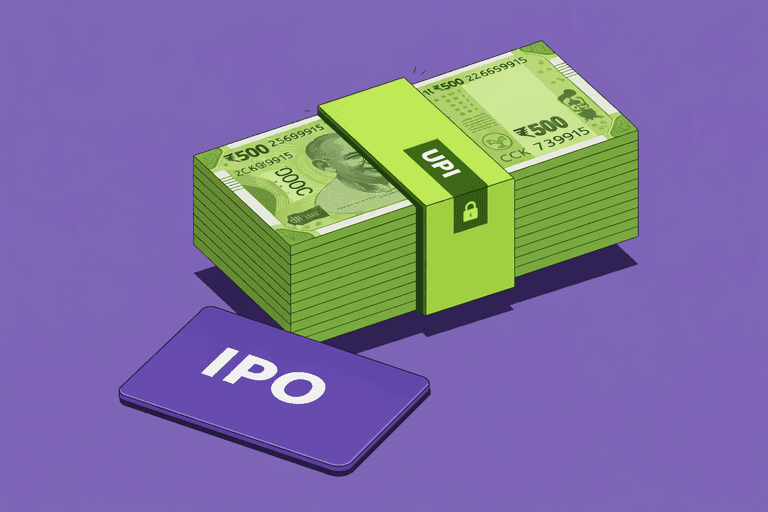
Valid UPI ID | To approve the payment mandate |
PAN card | Mandatory for IPO applications |
How to apply for an IPO?
If you already have a demat account, a trading account, and a UPI-linked bank account, you can complete your application in just a few minutes.
Here's what the process usually looks like:
1. Log in to your trading app
2. Go to the IPO section
3. Select the IPO you want to invest in
4. Enter the number of lots you'd like to apply for
5. Choose your bid price or opt for the cut-off price (if applicable)
6. Enter your UPI ID
7. Submit your application
8. Approve the UPI mandate in your UPI app before the IPO closes
That's it. Once your UPI mandate is approved, your application is considered complete.
What is pre-applying for an IPO?
Imagine you've found an upcoming IPO that interests you. The only problem is that you'll be travelling on the day subscriptions open.
Should you miss the opportunity?
Not necessarily.
On ArihantPlus, we offer a pre-apply feature that lets you submit your application before the IPO officially opens. When the subscription window begins, your application is automatically processed and submitted. Although, make sure you approve the IPO mandate, because that you will receive only after the IPO bidding officially opens.
Overall, pre-apply is a convenient way to avoid last-minute issues like:
● Forgetting the opening date
● Network problems
● UPI delays
● Busy work schedules
How does IPO allotment work?
One of the biggest misconceptions about IPOs is that everyone who applies receives shares. That's not always the case.
If an IPO receives more applications than the number of shares available, it's called an oversubscribed IPO. In such cases, the registrar follows SEBI's allotment guidelines to distribute shares fairly among eligible applicants in each investor category.
This means applying for an IPO doesn't guarantee you'll receive shares.
What happens after you apply?
Once the subscription window closes, here's what happens next:
Stage | What happens |
IPO closes | Applications are reviewed |
IPO allotment | Registrar finalises share allocation |
Shares credited | Successful applicants receive shares in their demat account |
Funds released | Unsuccessful applicants have their blocked amount unblocked |
You can usually check your IPO allotment status through:
● Your ArihantPlus trading app
● The registrar's website
● BSE or NSE portals
What happens on the IPO listing day?
The IPO listing day is when the company's shares become available for trading on the stock exchange.
If you've been allotted shares, you can decide whether to:
● Sell them on the listing day
● Hold them as a long-term investment
Some investors aim for listing gains, while others invest with a longer time horizon.
It's important to remember that IPO listing gains are never guaranteed.
Even highly anticipated IPOs can list below, at, or above their issue price. That's why it's better to base your IPO investment decision on the company's fundamentals rather than short-term expectations.
Common mistakes to avoid
Before applying for any stock IPO, avoid these common mistakes:
● Applying without researching the company
● Relying only on the grey market premium (GMP)
● Forgetting to approve the UPI mandate
● Waiting until the last few minutes to apply
● Assuming every IPO will deliver listing gains
● Using third-party bank account for your IPO application, always apply with your own bank account
You can also check our IPO Allotment Success Guide here that explains in detail how to improve the chances of getting IPO allotment.
Conclusion
An IPO can be an exciting way to invest in a company before its shares start trading on the stock exchange. But getting started isn't just about applying on time. It's about understanding the business, following reliable IPO news, and knowing what happens at every stage: from application and IPO allotment to the IPO listing day.
With the right information and a reliable trading platform such as ArihantPlus, participating in the IPO stock market can become a simple and well-informed part of your investment journey.

FAQs
1. How do I apply for an IPO?
You can apply for an IPO through a trading platform using your demat and trading account. On the ArihantPlus, applying for IPO is really simple and quick. Simply go to the IPO page from the dashboard, select the IPO you want to apply, enter your bid details, submit your application, and approve the UPI mandate before the subscription window closes.
2. What happens if I don't get an IPO allotment?
If you aren't allotted any shares, the amount blocked in your bank account through ASBA or the UPI mandate is automatically released. You don't need to request a refund separately.
3. When can I sell my IPO shares?
You can sell your shares once the company completes its IPO listing and trading begins on the stock exchange, provided you've received the shares through the allotment process. All you have to do is, go to your ArihantPlus app, your holdings, find the stock and tap on the sell button and place your order.

Related Topics

Jio Platforms IPO: 8 Things Every Investor Should Know Before Applying



Jio Platforms IPO Opens 21Oct: Can a Telecom Network Carry Tech Valuation?


Subway Plans ₹600 Crore IPO: What You Need to Know About EverBrands India
Moneyview IPO 2026: From Digital Lending to a ₹1,092 Cr Public Listing



Rentomojo, Karamtara, LCC - 6 IPO Listings Today: Gains, Losses & Key Highlights


NSE IPO 2026: Price Band, GMP, Financials, Risks and Key Highlights


Kanohar Electricals IPO Review 2026: Risks, Strengths and Financials


Horizon Industrial Parks IPO: Details, Financials, Strengths and Risks



Dhoot Transmission IPO: A ₹3,067 Crore Bet on India's Electric Future



























Important IPO terms all investors should understand before investing

Meesho IPO Opens on 3Dec - Is this ₹5,421 crores IPO worth investing?


10 Things to Know About Sudeep Pharma IPO: Date, Price, GMP & Complete Review






Canara Robeco AMC IPO: Should You Apply for MF Giant’s Public Debut?







Smartworks Coworking Spaces Limited IPO: 10 Key Things to Know Before Investing

Travel Food Services Limited IPO: 10 Key Things to Know Before Investing


Ellenbarrie Industrial Gases Limited IPO: 10 Key Things to Know Before Investing



HDB Financial Services Limited IPO: 10 Key Things to Know Before Investing

Sambhv Steel Tubes Limited IPO: 10 Key Things to Know Before Investing

Indogulf Cropsciences Limited IPO: 10 Key Things to Know Before Investing



Prostarm Info Systems Limited IPO: 10 Key Things to Know Before Investing


Aegis Vopak Terminals Ltd IPO: 10 Key Things to Know Before Investing

Schloss Bangalore Limited IPO: 10 Key Things to Know Before Investing

Belrise Industries Limited IPO: 10 Key Things to Know Before Investing


Hexaware’s Billion Dollar Markets Hits in Bear Market: Should You Invest?