



Bonfiglioli Transmissions IPO 2026: Price, Financials & Review

By
Arihant Team
Bonfiglioli Transmissions brings an established industrial gearbox business to the stock market, backed by improving profitability and exposure to automation and renewable energy. But at a premium valuation, does the IPO offer enough value for investors?
In This Article
- Introduction
- Bonfiglioli Transmissions IPO Details
- What does Bonfiglioli Transmissions do?
- Where Does Its Revenue Come From?
- How Strong Are Bonfiglioli's Financials?
- What Do These Numbers Tell Us?
- Is the IPO Valuation Attractive?
- What Are the Key Risks?
- Final Verdict
- Frequently Asked Questions
Introduction
India’s manufacturing story often focuses on automobiles, construction equipment and wind turbines. But behind these machines are companies that make the components enabling them to function.
Bonfiglioli Transmissions is one such company; it manufactures gearboxes, gear motors and drive systems used across industries, giving investors exposure to industrial automation, infrastructure and renewable energy through its ₹2,533.66 crore IPO.
But does the company’s business strength translate into an attractive investment opportunity? Let’s look at its financial performance, growth prospects and IPO valuation to understand whether the asking price is justified.
Bonfiglioli Transmissions IPO Details
For key details such as the IPO opening and closing dates, price band and lot size, refer to the table below.
Particulars | Details |
IPO Opening Date | 15 October 2026 |
IPO Closing Date | 19 October 2026 |
Price Band | ₹558–₹586 |
Issue Size | Approximately ₹2,533.66 crore |
Issue Type | 100% Offer for Sale |
Lot Size | 25 shares |
Minimum Retail Investment | ₹14,650 at ₹586 |
Proposed Listing | NSE and BSE |
Bonfiglioli Transmissions IPO is entirely an offer for sale (OFS) by the promoter, meaning the proceeds will go to the selling shareholder rather than the company to fund its expansion.
Open a free account today
Invest in tomorrow with just one click
What does Bonfiglioli Transmissions do?
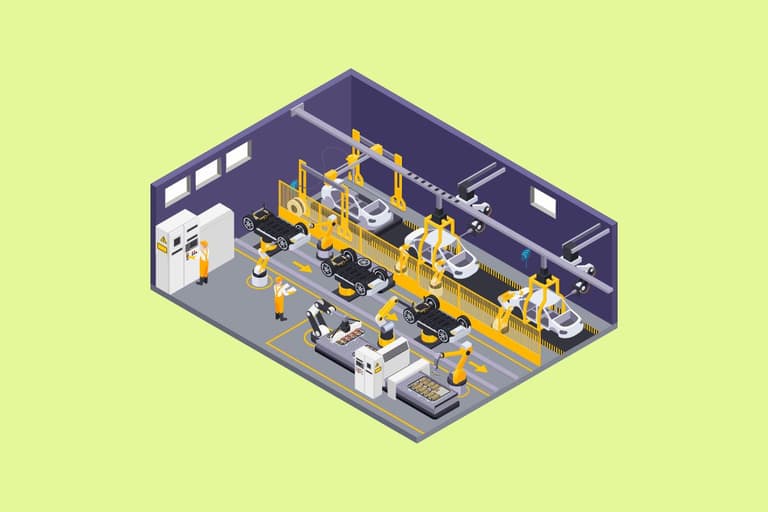
Imagine a wind turbine, a conveyor belt or a construction machine. Each requires systems that control movement, speed and torque.
Bonfiglioli manufactures the transmission and drive solutions that help these machines operate.
Its business serves three major verticals:
Industry & Automation: Gearboxes and drive systems used in manufacturing, material handling and industrial machinery.
Off-Highway Mobility: Transmission solutions for construction, agricultural and other heavy equipment.
- Wind: Gearboxes and related solutions used in wind-energy applications.
It operates three separate manufacturing facilities located in Thirumudivakkam, Mannur, and Talegaon to support its production needs. A major portion of its revenue is generated by co-engineering custom products directly with its customers. Furthermore, the business operates under a license agreement with its corporate promoter, granting it the right to manufacture and sell products utilizing the promoter’s proprietary technology, designs, and trademarks.
This claim relates to a defined product category, not every type of gearbox manufactured in India.
Where Does Its Revenue Come From?
H1 CY2026 revenue mix
Business Vertical | Revenue Share |
Industry & Automation Solutions | 42.53% |
Off-Highway Mobility | 28.31% |
Wind | 27.36% |
Others | 1.80% |
Industrial automation contributes the largest share, but the company also has meaningful exposure to construction equipment and wind energy.
That diversification is useful, although all three businesses remain sensitive to industrial investment cycles.
How Strong Are Bonfiglioli's Financials?
Bonfiglioli's financials show steady revenue growth, improving profitability and strong capital efficiency.
Financial Metric | CY2024 | CY2025 | H1 CY2026 |
Revenue from Operations | ₹1,854.18 Cr | ₹2,013.53 Cr | ₹1,131.87 Cr |
EBITDA (excluding Other Income) | ₹295.07 Cr | ₹370.77 Cr | ₹223.87 Cr |
EBITDA Margin (excluding Other Income) | 15.91% | 18.41% | 19.78% |
Profit After Tax | ₹191.60 Cr | ₹237.87 Cr | ₹148.58 Cr |
ROCE | 30.05% | 34.05% | 20.03%* |
Source: Bonfiglioli Transmissions RHP, restated financial information. H1 CY2026 figures cover six months; ROCE is not annualised.
What Do These Numbers Tell Us?
Revenue Growth: Revenue increased 8.6% in CY2025, indicating steady business expansion.
Profitability: PAT grew 24.2% in CY2025, significantly faster than revenue, reflecting improving profitability.
EBITDA Margin: The margin improved from 15.91% in CY2024 to 18.41% in CY2025 and 19.78% in H1 CY2026. These margins exclude other income.
- Capital Efficiency: ROCE improved to 34.05% in CY2025 from 30.05% in CY2024, indicating more efficient use of capital.
Bonfiglioli's profits are growing faster than its revenue, supported by improving operating margins. The key question is whether this performance can be sustained.
Is the IPO Valuation Attractive?
Bonfiglioli's improving profitability is encouraging, but is the IPO reasonably priced?
P/E Ratio: At ₹586, the IPO is valued at 46.3× CY2025 earnings, based on EPS of ₹12.65. This means investors are paying ₹46.30 for every ₹1 of annual earnings.
P/B Ratio: At ₹586, the IPO trades at 10.65× book value, based on June 2026 NAV of ₹55.02 per share.
- Peer Comparison: The cited peer P/E range is 31.6×–63.4×. Bonfiglioli's 46.3× multiple falls within this range, although differences in business mix and profitability matter.
Bonfiglioli commands a premium valuation, supported by improving margins and strong capital efficiency. Whether that premium is justified will depend on its ability to sustain earnings growth.
What Are the Key Risks?
Industrial Slowdown: Demand depends on manufacturing, infrastructure and wind-energy investments. A slowdown could impact orders and revenue.
Supplier Dependence: Bonfiglioli Riduttori S.p.A., a group company, accounted for 15.18% of CY2025 raw-material purchases. Supply disruptions could affect operations.
Working Capital: The cash conversion cycle increased from 83 days in CY2024 to 94 days in H1 CY2026, indicating more capital tied up in operations.
- Premium Valuation: At 10.65× June 2026 book value, the IPO leaves limited room for disappointment if growth or profitability slows.

Final Verdict
Bonfiglioli Transmissions has several attractive characteristics, including an established industrial business, diversified end markets, improving margins and strong capital efficiency. Its exposure to automation, infrastructure and wind energy also positions it to benefit from potential long-term growth in these sectors.
However, the IPO is entirely an offer for sale (OFS), meaning the company will not receive any proceeds from the issue. Additionally, the valuation leaves limited room for error if growth or profitability falls short of expectations.
Frequently Asked Questions
1. What is the Bonfiglioli Transmissions IPO price band?
The price band is ₹558–₹586 per share, with a minimum application of 25 shares.
2. When does the Bonfiglioli Transmissions IPO open?
The IPO opens on October 15, 2026, and closes on October 19, 2026.
3. Is Bonfiglioli Transmissions IPO a fresh issue?
No. The IPO is entirely an Offer for Sale by promoter Bonfiglioli S.p.A. The company will not receive fresh proceeds.
4. What is Bonfiglioli Transmissions' ROCE?
The company reported ROCE of 34.05% in CY2025, compared with 30.05% in CY2024. H1 CY2026 ROCE was 20.03%, which is not annualised.
5. Is Bonfiglioli Transmissions IPO worth investing in?
The company has improving profitability and an established industrial business. However, its premium valuation, cyclical demand exposure and supplier concentration risks should be considered before investing.
Disclaimer: This article is for educational and informational purposes only and does not constitute investment advice. Investors should read the RHP and consult their financial adviser before making investment decisions.
Related Topics

Jio Platforms IPO Review: Can a Telecom Network Carry a Technology Valuation?

Subway Plans ₹600 Crore IPO: What You Need to Know About EverBrands India

Moneyview IPO 2026: From Digital Lending to a ₹1,092 Cr Public Listing




Rentomojo, Karamtara, LCC - 6 IPO Listings Today: Gains, Losses & Key Highlights


NSE IPO 2026: Price Band, GMP, Financials, Risks and Key Highlights


Kanohar Electricals IPO Review 2026: Risks, Strengths and Financials


Horizon Industrial Parks IPO: Details, Financials, Strengths and Risks




Dhoot Transmission IPO: A ₹3,067 Crore Bet on India's Electric Future































Important IPO terms all investors should understand before investing


Meesho IPO Opens on 3Dec - Is this ₹5,421 crores IPO worth investing?


10 Things to Know About Sudeep Pharma IPO: Date, Price, GMP & Complete Review







Canara Robeco AMC IPO: Should You Apply for MF Giant’s Public Debut?







Smartworks Coworking Spaces Limited IPO: 10 Key Things to Know Before Investing

Travel Food Services Limited IPO: 10 Key Things to Know Before Investing


Ellenbarrie Industrial Gases Limited IPO: 10 Key Things to Know Before Investing



HDB Financial Services Limited IPO: 10 Key Things to Know Before Investing

Sambhv Steel Tubes Limited IPO: 10 Key Things to Know Before Investing

Indogulf Cropsciences Limited IPO: 10 Key Things to Know Before Investing

Prostarm Info Systems Limited IPO: 10 Key Things to Know Before Investing


Aegis Vopak Terminals Ltd IPO: 10 Key Things to Know Before Investing

Schloss Bangalore Limited IPO: 10 Key Things to Know Before Investing

Belrise Industries Limited IPO: 10 Key Things to Know Before Investing


Hexaware’s Billion Dollar Markets Hits in Bear Market: Should You Invest?