



Why Is the Indian Stock Market Falling? 5 Key Reasons

By
Arihant Team
Indian markets are under pressure as FPI selling, rising US bond yields, high crude oil prices and valuation concerns weigh on the Nifty and Sensex. Here’s what’s driving the correction and the key signals investors should watch next.
In This Article
- Introduction
- Why Hasn't the Indian Stock Market Fallen Further?
- When Will the Indian Stock Market Recover?
- The Bottom Line
Introduction
If you have checked your portfolio lately and wondered, “Why is the Indian stock market falling?”, you are not alone.
The Nifty 50 and Sensex have been under pressure, with the Nifty recording eight consecutive weeks of decline - its longest weekly losing streak since 2001.
What makes the current Indian stock market correction interesting is that it comes even as the domestic economy remains relatively resilient. India's GDP grew 7.8% in Q1 FY27, while passenger vehicle wholesales rose 21.4% year-on-year in September 2026.
So, why are Nifty and Sensex falling despite strong economic growth?
There isn't one single reason. Here are five major factors behind the recent stock market fall in India.
Open a free account today
Invest in tomorrow with just one click
1. Heavy FPI Selling in Indian Stocks
One of the biggest reasons behind the Nifty and Sensex correction is sustained selling by Foreign Portfolio Investors (FPIs).
According to NSDL data, FPIs have been net sellers in four of the six months of H1FY27. FPI outflows from Indian equities reached ₹1.29 lakh crore during the first half of FY27, while total outflows in 2026 stood at around ₹2.60 lakh crore by the end of September. September alone saw net selling of ₹35,861 crore.
The selling hasn't been equal across sectors either. Financial services saw the highest FPI outflows at ₹47,030 crore between April and September 15, followed by oil & gas at ₹33,359 crore, automobiles at ₹22,507 crore, FMCG at ₹16,876 crore and telecom at ₹16,861 crore.
Why are FPIs selling Indian stocks?
Global investors constantly compare opportunities across markets. When US bond yields rise, the dollar strengthens, crude oil becomes expensive or Indian stocks look relatively costly, foreign investors may shift money elsewhere.
This is an important distinction for investors: a stock can fall because of market-wide capital flows even when there has been no major change in the underlying business.
2. Rising US Bond Yields Are Pressuring Indian Equities
Another reason why the Indian stock market is falling is the rise in US Treasury yields.
When US government bonds offer higher yields, they become more attractive to global investors because they provide relatively lower-risk returns.
That creates competition for emerging markets such as India.
There is also a currency angle. If the Indian rupee weakens against the US dollar, returns earned by foreign investors in India can reduce once converted back into dollars.
Together, high US bond yields and a strong dollar can encourage FPI outflows and put pressure on the Nifty, Sensex and other emerging-market indices.
3. High Crude Oil Prices Are a Concern for India
Crude oil is another important factor affecting the Indian stock market outlook.
India depends heavily on imported crude oil. Therefore, a sharp rise in global oil prices can affect the economy in several ways:
Higher crude prices → higher import bill → pressure on rupee → inflation risk → higher business costs
Expensive crude can particularly affect sectors such as aviation, paints, chemicals, logistics, tyres and automobiles, where fuel or crude-linked raw materials form an important part of costs.
High oil prices can also complicate India's inflation and interest-rate outlook.
That is why crude oil prices are one of the key indicators investors should watch for signs of a stock market recovery.
4. RBI Rate Hike Expectations Are Creating Uncertainty
The upcoming RBI monetary policy decision on October 7, 2026 is another event the market is watching closely.
Expectations of an RBI repo rate hike have increased amid inflation concerns, elevated crude oil prices and higher global bond yields.
Why does this matter for stocks?
Higher interest rates can make borrowing more expensive for companies and consumers. They can also make bonds and other fixed-income investments relatively more attractive compared with equities.
Highly valued stocks can be particularly sensitive because higher interest rates reduce how much investors may be willing to pay today for profits expected years into the future.
However, markets are forward-looking. If investors have already priced in a rate hike, the RBI's commentary on inflation, liquidity and future interest rates may matter as much as the actual decision.
5. Expensive Valuations Are Being Corrected
Valuation is another major reason behind the current Indian stock market correction.
Indian equities have traded at relatively expensive valuations compared with several other emerging markets. High valuations can continue when earnings growth is strong and liquidity is abundant.
But when global yields rise, oil becomes expensive and foreign investors turn cautious, investors may become less willing to pay those high valuations.
This can lead to valuation de-rating, where a company's share price falls even without an immediate decline in earnings.
There is another global trend at play: Artificial Intelligence (AI).
AI-related companies have attracted significant global capital. While India has a growing AI ecosystem, its listed market currently offers relatively limited exposure to the large AI beneficiaries that have driven investor interest globally.
Indian technology stocks have also been under pressure, with the Nifty IT index falling more than 11% during September 2026.
Why Hasn't the Indian Stock Market Fallen Further?
One important factor has provided some support: domestic investors.
Indian mutual funds, SIP investors, insurance companies and domestic institutions have created a much larger domestic investor base than India had in previous decades.
These flows can partly absorb foreign investor selling.
However, domestic liquidity cannot completely offset sustained FPI outflows. A meaningful recovery may require some of the global pressures currently affecting Indian equities to ease.
It is also important to remember that a stock market correction and an economic crisis are not the same thing. Markets react to valuations, liquidity, interest rates, currencies and expectations - not just GDP growth.
When Will the Indian Stock Market Recover?
Nobody can reliably predict the exact bottom of the Nifty or Sensex.
Instead, investors can watch a few important indicators:
- Crude oil: A sustained decline could ease pressure on inflation and the rupee.
- US bond yields: Lower yields could make emerging-market equities more attractive.
- FPI flows: A slowdown in foreign selling could improve market sentiment.
- RBI policy: Watch the October 7 decision and commentary on future rates.
- Corporate earnings: Strong earnings can help valuations become more reasonable after a correction.

The Bottom Line
So, why is the Indian stock market falling?
There isn't one single trigger. FPI selling, rising US bond yields, high crude oil prices, RBI rate uncertainty and expensive valuations are all contributing to the current Nifty and Sensex correction.
For investors, the key is to distinguish between a stock falling because of broader market conditions and one falling because its business fundamentals have changed.
Instead of trying to predict exactly when the Indian stock market will recover, focus on what is driving the correction, track corporate earnings and valuations, and ensure your investments remain aligned with your financial goals and risk appetite.
Disclaimer: This article is for educational and informational purposes only and should not be considered investment advice or a recommendation to buy, sell or hold any security.
Related Topics



NSE Pre-Open Session Rules Have Changed: Here’s What Traders Need to Know

LIC Gets RBI Nod for 9.99% HDFC Bank Stake: Buy Signal or Market Noise?
India’s July Factory Growth Hits a 5-Year Low. Should We Be Worried?

Closing Auction Session (CAS) kicks in from 3rd August: Market timing changes

Ethical Investing Gets Real: NSE and BSE Launch Saatvik and Ahimsa Indices
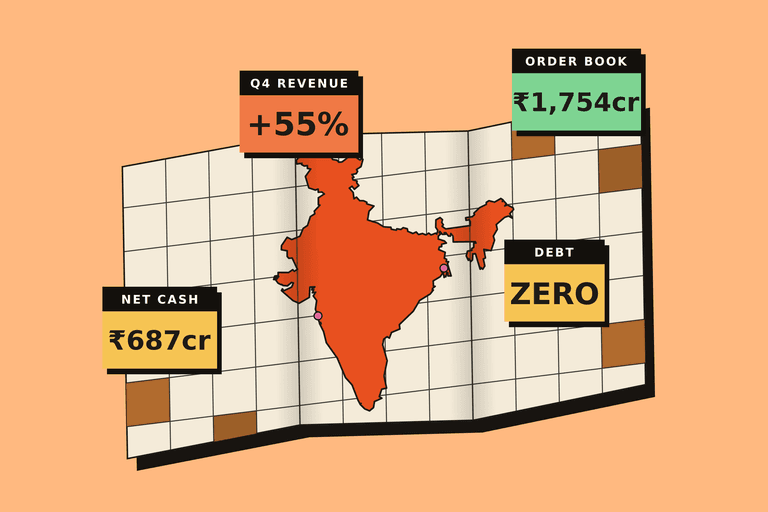


Can REITs and InvITs Become India’s Next Retail Portfolio Essential?

Everyone Knows Bajaj Finance’s Playbook. So Why Can’t Anyone Copy It?


Beyond the Dark Store: Is Advertising Zepto's Real Business?

Vedanta Demerger: Why Aluminium Became the Market’s Favourite/Darling


NSE Extends F&O Market Close to 3:40 PM: What Traders Must Know

Elon Musk’s $119 Billion Terafab Bet: Can It Reshape AI Chips?

Rupee Crashes to ₹96: How Investors Can Profit From the Fall

The Rise of India’s Defence Sector: Stocks, Trends & Opportunities

SEBI introduces Verified Badge for Trading Apps to Curb Fake App Scams

TCS Q4 Concall: AI Infrastructure to Drive the Next Growth Cycle

Rupee Slips Past 95/USD | Factors Driving the Fall Despite RBI Intervention


The Popcorn Trade: How Dhurandhar 2 is driving PVR INOX Stock Higher

Oil Is Surging After The Iran Strikes. So Why Isn’t Gold Following?

What’s Getting Cheaper & Costlier in Budget 2026: A Simple Money Guide


Union Budget Day & Market Behaviour: 15 Year Trend Analysis (2011-2025)

Maruti Q3FY26 Profit Up 4%: Losing Grip on India’s Car Market?


New Year, New Financial Goals: Make SIP Your 2026 Resolution


Infosys ₹18,000 Crore Share Buyback: Record Date & Why Promoters Opted Out?

Nifty 50 Performance Since Last Muhurat Trading: Nifty Top 10 Performers

Diwali Muhurat Trading: Can Nifty’s 7-Year Winning Streak Continue?


Tata Motors Demerger Gets NCLT Nod: What Shareholders Must Know

Muhurat Trading 2025 on 21 Oct: Everything You Should Know



Tuesday is the New Thursday: NSE & BSE Expiry Shift from Sep 2025


How Jane Street Snatched ₹36,500 Crore While India's Youth Lost Everything

Axis Bank Q1FY26 Results: A Mixed Bag, but Long-Term Picture Still Intact

Indian Stock Market Outlook: What Happened And Way Forward