
Why is PB Fintech DOWN TODAY? | IRDAI Commission Rules Explained

Thursday's fall had nothing to do with a weak quarter or a missed target. It came down to a regulator asking a pointed question: how much should the middleman really earn? For companies built on that middle slice, it's a big question, and the market took just a few hours to price in its answer.
In This Article
- Introduction
- What did IRDAI propose?
- Why is IRDAI cutting commissions?
- Why did PB Fintech fall ~30%?
- Where is the insurance industry headed?
- What does this mean for you?
- Investor Takeaway
Introduction
Thursday was a tough day for the market, which fell 1.64%. But for insurance stocks, "tough" doesn't quite capture it.
Shares of PB Fintech, the company behind Policybazaar, crashed 36% to ₹1,207.20 on the NSE, marking the stock's worst single day fall on record. Turtlemint, another insurance selling platform, slid 20%. Even established insurers like HDFC Life and ICICI Prudential Life lost 4 to 5%.
So what made investors head for the exit? Well, a single document from India's insurance regulator, Insurance Regulatory and Development Authority of India, aka IRDAI.
Open a free account today
Invest in tomorrow with just one click
What did IRDAI propose?
On September 23, IRDAI, the body that regulates India's insurance sector, published a consultation paper suggesting limits on commissions across life, health and general insurance, with separate caps for each product and each sales channel.
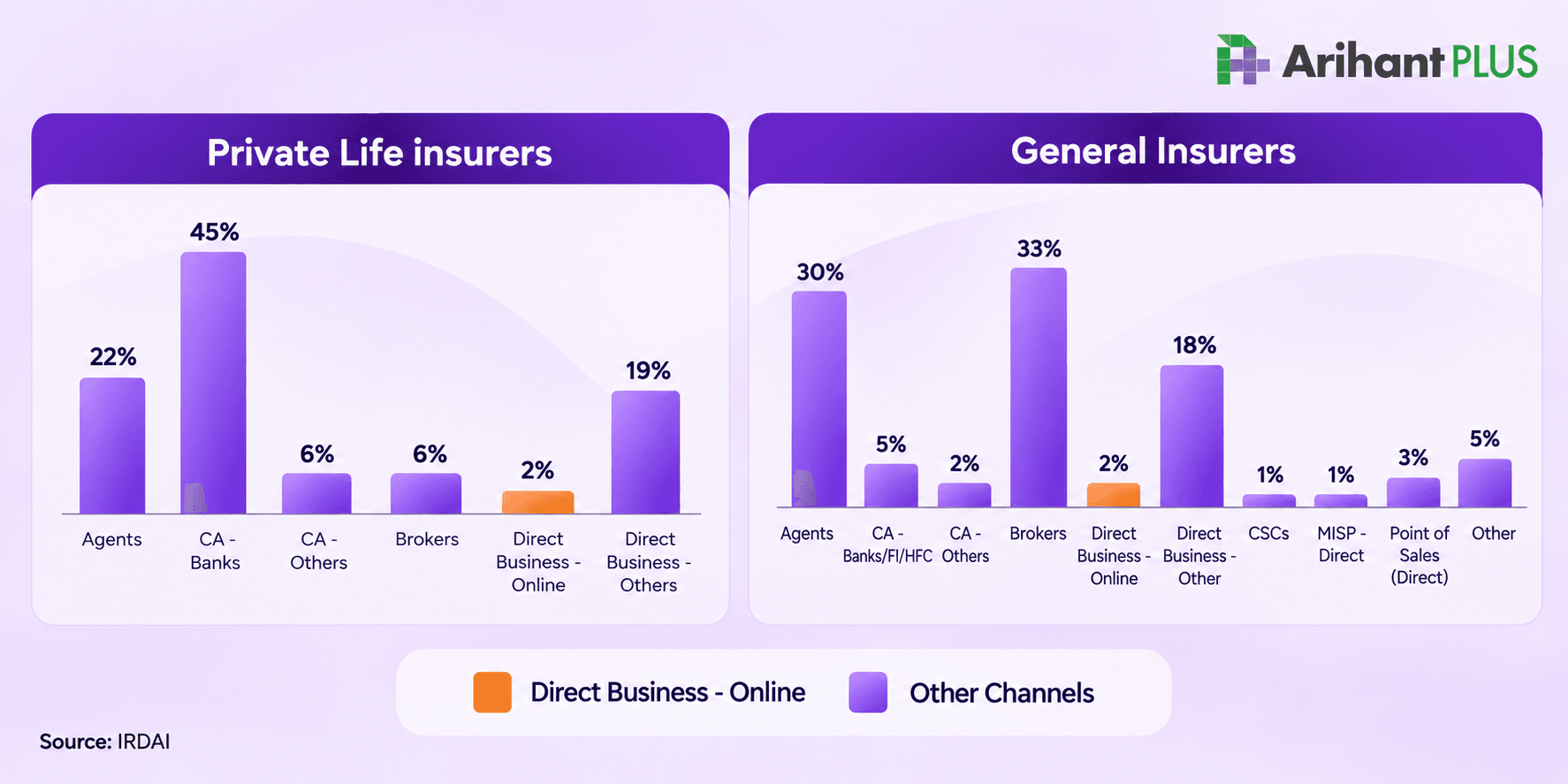
So, every time you buy a policy, the insurer pays a commission to whoever sold it to you. That could be an agent, your bank, a broker, or an app like Policybazaar. Right now, those payouts are generous, which is exactly what IRDAI wants to fix.
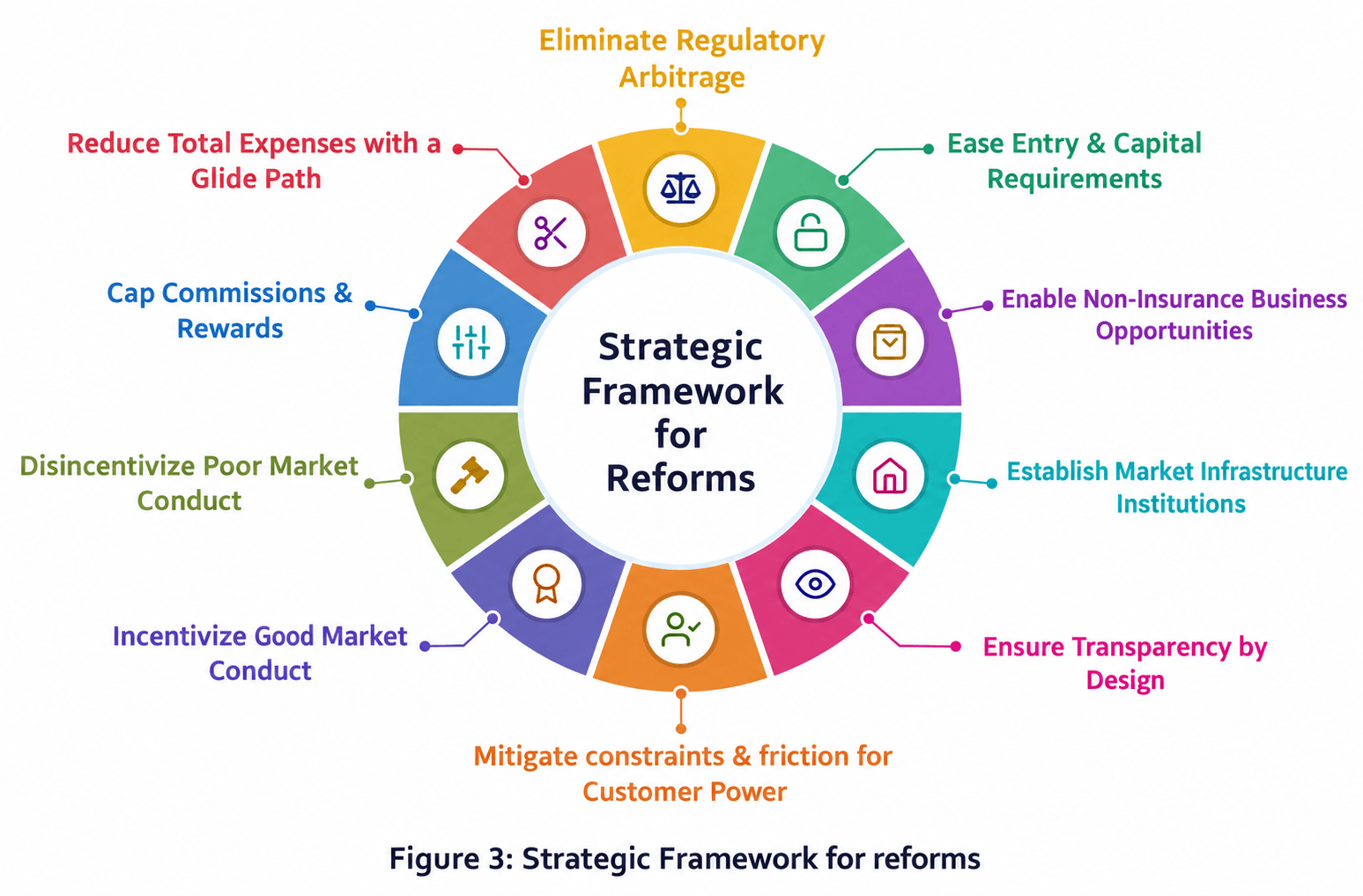
The proposed cuts are steep:
Credit life insurance: Type of insurance usually sold alongside loans. Commission would fall to just 2%, down from roughly 28% today.
Motor own damage: Commission on this cover would drop to 5%, from about 16% currently. Platforms and brokers would earn nothing at all on third party motor insurance.
Long term life: For policies where you pay premiums for 10 years or more, first year commission would be capped at 20% for distribution companies and 25% for individual agents.
- Life renewals: Commission on renewal premiums would be limited to 3 to 5%.
The regulator has also proposed closing a loophole. Insurers sometimes pay distributors extra money through bonuses or incentives on top of the official commission. IRDAI wants these payments to be counted as part of the commission, so distributors cannot effectively earn more than the prescribed limit through other forms of remuneration.
Why is IRDAI cutting commissions?
IRDAI's own data shows in the life insurance segment, corporate agent remuneration grew 125% between FY23 and FY25, while premiums grew just 28%. In general insurance, broker remuneration rose 173% against premium growth of 37%.
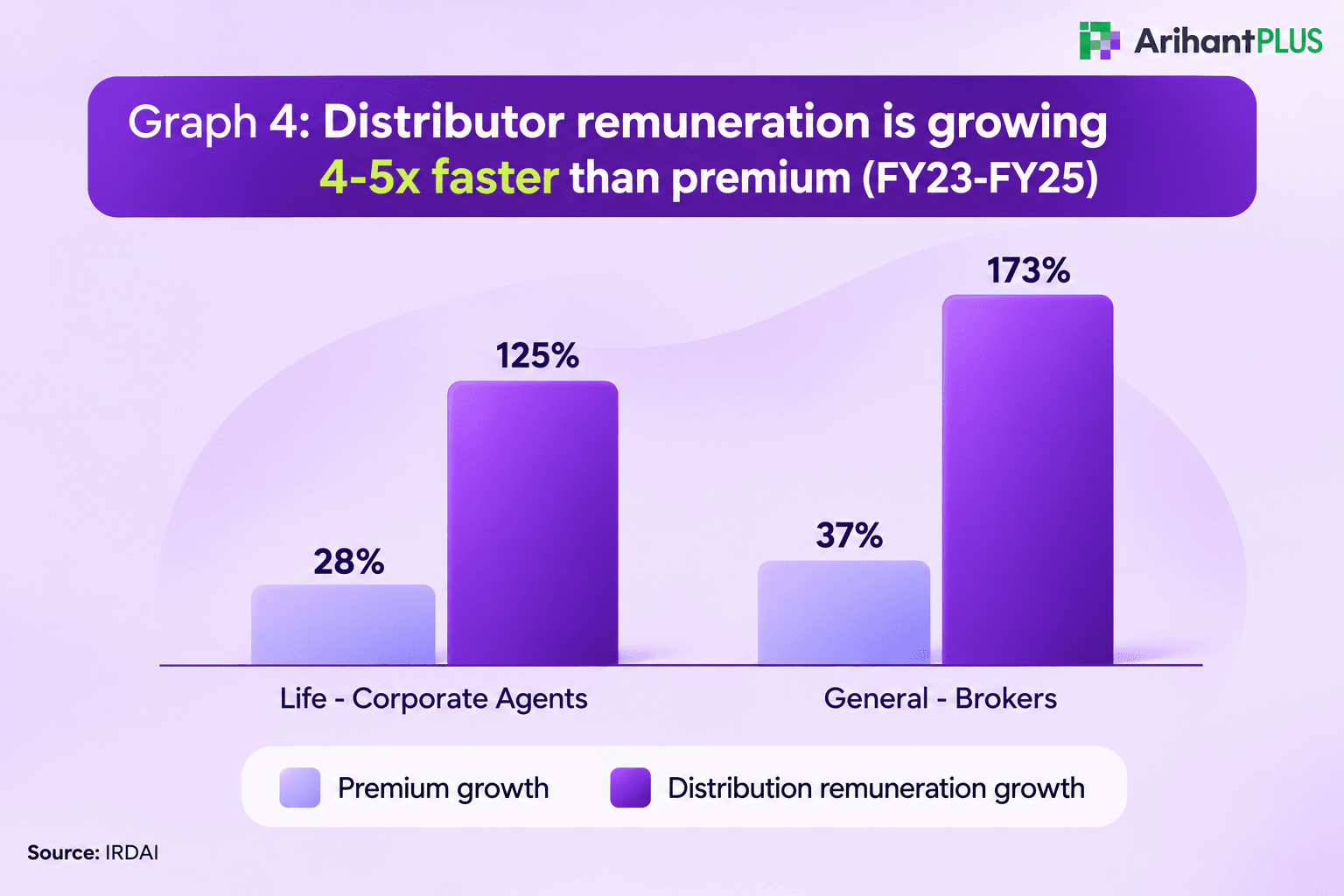
Put differently, the cost of selling insurance grew more than 4 times faster than insurance itself, and someone has to fund it. Usually, it's the person paying the premium.
In 2023, IRDAI actually removed hard commission caps and gave insurers more room to manage their own costs, betting that competition would keep things in check. It didn't, and this paper is the regulator walking that decision back.
The deeper issue is incentives, when an agent earns significantly more for selling one product over another, they'll push that product regardless of whether it's right for the customer. Lower, more uniform commissions are IRDAI's way of trying to fix that at the source.
Why did PB Fintech fall ~30%?
Policybazaar's business is built on one thing: earning a cut each time someone buys a policy on its platform. Shrink that cut, and revenue per policy falls, even if sales stay exactly the same.
PB Fintech has been one of the market's favourite growth stories, and stocks priced for strong growth tend to get hit hardest when that growth is questioned. A regulator can, with a single document, rewrite the economics of an entire business model. That's regulatory risk, and it tends to stay invisible right until the moment it isn't.
IRDAI also proposed curbing deceptive design practices on insurance websites, which adds another layer of uncertainty for a platform like Policybazaar whose entire business runs online.
Where is the insurance industry headed?
Lower commissions mean lower costs, and insurers are the ones writing those cheques. That's a positive but if distributors earn less per policy, they'll likely push fewer of them.
IRDAI’s draft could put insurance volumes at risk, and that's a real concern for companies whose growth depends on how aggressively the sales channel moves.
Insurers are also facing tighter expense limits, with life insurers required to bring management expenses down to 15% of premiums within two years and 12.5% within five.
The bigger issue is regulatory risk: IRDAI removed hard commission caps in 2023 and is now proposing to bring them back, showing how quickly regulatory changes can alter the economics of the industry.
What does this mean for you?
If these proposals go through largely as written, buying insurance should get simpler and more transparent. The paper proposes clawbacks, where insurers must recover commissions from anyone who misled a customer, and supports expanding Bima Sugam so people can buy insurance directly without going through a middleman at all.
However, you must understand these are proposals, not final rules. IRDAI is taking feedback until October 25, 2026, with implementation planned from FY28.

Investor Takeaway
Thursday’s sell-off was not a reaction to a bad quarterly report, it was a structural repricing of PB Fintech’s entire unit economics after IRDAI’s proposal directly challenged the company’s key revenue source.
The IRDAI’s proposed commission caps, spanning health, motor, and term life, directly target open-architecture aggregators and seek to subsume extra insurer marketing fees into a strict, unified limit. With analysts projecting a potential 20% to 30% hit to near-term EBITDA and new limits on dark patterns disrupting online lead generation, PB Fintech faces structural margin compression. Until final rules emerge post-October 2026, the stock must be evaluated as a maturing distribution business adapting to permanently downsized middleman economics.
The proposal is still open for feedback and the final caps could change, but the message for PB Fintech is clear: even if policy volumes keep growing, lower commissions could mean less revenue from each policy sold.
Related Topics

LIC Gets RBI Nod for 9.99% HDFC Bank Stake: Buy Signal or Market Noise?



Has Bandhan finally become a real bank? l Q1FY2027 Results Analysis

Bajaj Auto vs TVS Motor Q1FY27 | Beyond profits, whose quarter was stronger?


Wipro Q1 FY27 Results | 7 Key Takeaways Every Investor Should Know





Tata Motors Demerger Gets NCLT Nod: What Shareholders Must Know
ICICI Lombard Q1FY26 Result: Profit jump 28.7%, Strong Margin & Digital Momentum