


Ethical Investing Gets Real: NSE and BSE Launch Saatvik and Ahimsa Indices

By
Shruti Jain
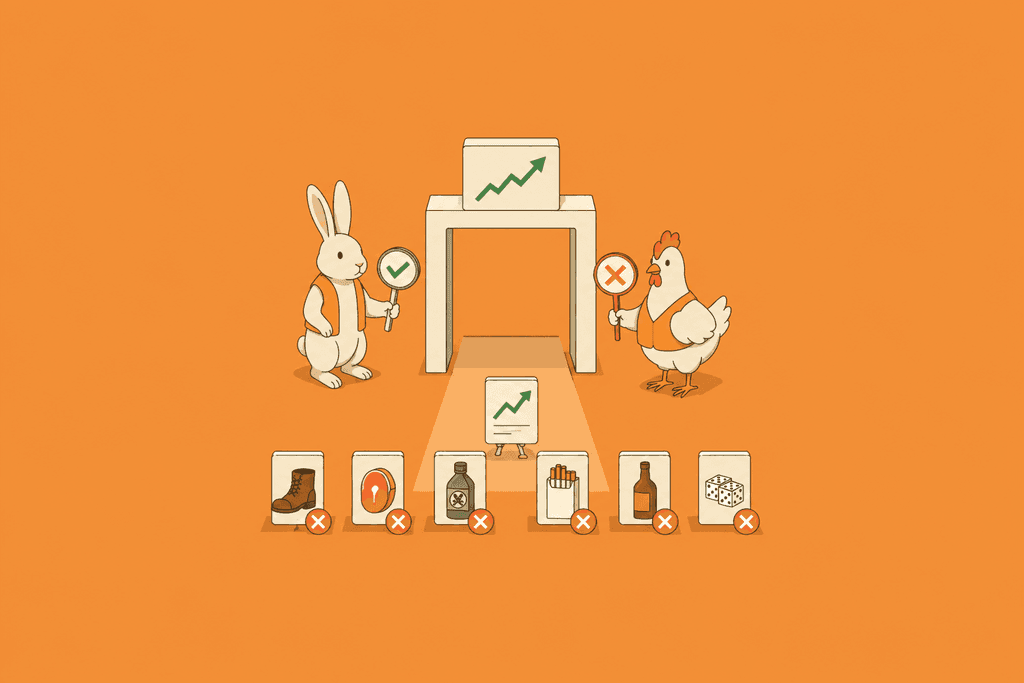
You check if your lipstick is cruelty-free. Your sneakers, vegan. Your portfolio? Probably funding a leather company right now. India's two biggest exchanges just fixed that blind spot - BSE's Saatvik 100 and NSE's Nifty500 Ahimsa Index, launched weeks apart. They screen out companies tied to animal cruelty, alcohol, tobacco, and gambling. Ethical investing finally has a scoreboard.
In This Article
- Introduction
- The BSE Saatvik 100
- What are the top holdings of BSE Saatvik 100 Index?
- Performance of BSE Saatvik 100 Index: Backtesting
- Introducing the Nifty500 Ahimsa Index
- What are the top holdings of NSE500 Ahimsa Index?
- NSE500 Ahimsa vs BSE Saatvik 100: How Do They Compare?
- Is ESG investing the same as Saatvik and Ahimsa Index principles?
- Conclusion
Introduction
Can you grow your money while also sticking true to your ahimsa values? Until recently, that might have sounded utopian. But India’s top stock exchanges have now made it a real possibility.
In June 2026, BSE launched India’s first ethical index – the BSE Saatvik 100 Index, built not around growth or momentum, but around ethics. Within weeks, NSE followed the suit and launched Nifty500 Ahimsa Index in July, expanding its thematic and ESG-linked offerings and giving investors an option to align their portfolios with their ethical filters.
Until now, you may have followed ahimsa in every part of your lifestyle, but the moment you invested in an index fund or mutual fund scheme, you automatically ended up owning companies that didn't match your beliefs. As a vegan and Jain, myself, creating a truly cruelty-free portfolio has been challenging.
The launch of these new indices marks a real shift: values-based investing in India now has actual benchmarks, not just an aspiration.
Let's unpack both, how they compare, and whether they're worth watching.
Open a free account today
Invest in tomorrow with just one click
The BSE Saatvik 100
Launched on June 19, 2026, the BSE Saatvik 100 is India's first index built around "Saatvik" principles - a philosophy rooted in purity, ethics, and non-violence, more commonly associated with food. BSE has extended that idea into equity investing, using it as a screening layer on top of the usual market-cap and liquidity criteria.
So, the obvious question is, what kind of companies does the BSE Saatvik 100 Index have? The Saatvik index follows an exclusionary screening method. It starts with BSE 500 universe and eliminates companies involved in
- Animal cruelty like leather, meat, poultry and pesticides
- Products that are toxic or addictive like alcohol, tobacco and narcotics
- Gambling or explicit entertainment
regardless of how well they perform. Interestingly, unlike Shariah-compliant investing, financial services aren't excluded here; in fact, they're the single largest sector in the index.
In case you’re wondering, if the BSE Saatvik 100 Index vegan – the answer is no. While the index excludes companies involved in animal-cruelty like leather, meat and poultry, it does not include companies involved in dairy business. For example, Varun Beverages is part of the Saatvik 100 Index, even though the company is involved in dairy products.
What are the top holdings of BSE Saatvik 100 Index?
HDFC Bank (9.7%), ICICI Bank (7.7%), and Reliance Industries (7.6%), followed by Bharti Airtel, L&T, Infosys, SBI, Axis Bank, Kotak Mahindra Bank, and Mahindra & Mahindra. Financial services make up nearly 37% of the index, with consumer discretionary and energy next in line.
The index rebalances every June and December. Also, as of now, there's no ETF or mutual fund tracking it directly. It currently exists purely as a benchmark that asset managers can eventually build products around.
Performance of BSE Saatvik 100 Index: Backtesting
Although the index launched only in June 2026, its base date goes back to June 20, 2005, which means BSE has calculated how it would have performed over the past two decades.
Here’s a look at the back-tested numbers (as of late May 2026):
- 13.70% annualized returns over ten years,
- 11.11% over five years,
- 12.22% over three years, and
- a small dip of 0.61%.in the last year
While the numbers look encouraging, back-tested data applies today's rules to yesterday's markets, so treat it as informative, not predictive.
Introducing the Nifty500 Ahimsa Index
NSE wasted little time and launched its own version of Saatvik Index on July 11, 2026 – the Nifty500 Ahimsa Index. This index is also built around the principle of Ahimsa, or non-violence with a specific focus on companies that don't harm animals.
Unlike BSE's straightforward exclusion list, NSE built this one in collaboration with the Ahimsagain Foundation, using its Ahimsa Investment Movement (AIM) framework. Instead of a simple in-or-out screen, AIM classifies every company into a Green, Orange, or Red band based on how closely its products, services, and practices align with non-violence toward animals. Only Green-band companies make the cut; Orange and Red are excluded entirely.
Drawing from the broader Nifty 500 universe, the index currently comprises 326 companies, with constituents weighted by free-float market capitalization — the standard approach used across most Nifty indices. Its base date is April 1, 2016, with a base value of 1,000, and like the Saatvik 100, it rebalances twice a year.
What are the top holdings of NSE500 Ahimsa Index?
The top holdings of the NSE500 Ahimsa Index include Bharti Airtel (6.01%), Infosys (3.74%), Mahindra (2.92%), TCS (2.21%), and Maruti Suzuki (1.96%). Among the top sectors are automobile (13.5%), capital goods (12.2%), IT (11.8%), financial services (10.35%), metals and mining (8.29%), and telecommunications (7.7%). You can find full details of the index on NSE’s website here.
NSE has positioned the index the same way BSE has positioned Saatvik: as a benchmark first, with the expectation that ETFs, index funds, and other structured products will follow as demand builds.
NSE500 Ahimsa vs BSE Saatvik 100: How Do They Compare?
Both indices chase the same broad goal — giving values-driven investors a measurable, rules-based way to align money with ethics — but they get there differently.
Scope: Saatvik 100 pulls from the BSE 500 and settles on exactly 100 stocks. The Ahimsa Index draws from the larger Nifty 500 and currently holds 326 - a much wider net.
Screening approach: Saatvik uses a binary exclusion list across several categories (alcohol, tobacco, gambling, meat, leather, and more). Ahimsa uses a graded, single-dimension framework (Green/Orange/Red) focused specifically on animal welfare, built with an external foundation's methodology.
History: Saatvik back-tests to 2005; Ahimsa's base date is 2016, a shorter but still meaningful stretch.
- Products available: Neither index has a live ETF or fund tracking it yet. Both are, for now, benchmarks waiting for asset managers to build on top of them.
Is ESG investing the same as Saatvik and Ahimsa Index principles?
Sustainable investing has gained a lot of momentum in the last decade, particularly ESG investing. ESG uses broad, multi-factor scoring across environmental, social, and governance metrics. In fact, India also has a lot of ESG funds for conscious investors.
However, ESG and ethical investing are not the same things. While a company can get a good score on ESG scale, it might still be excluded by the BSE Saatvik 100 or Nifty 500 Ahimsa Index because of its direct or indirect engagement in animal cruelty. Or a company that’s part of these indices can rank poorly on ESG parameters and may not be picked by an ESG fund.
Both Saatvik and Ahimsa skip the scoring nuance in favor of clearer, values-based lines: a company either aligns with the principle, or it doesn't. There is no grading.

Conclusion
Launching two ethics-first indices within weeks of each other isn't a coincidence. It reflects that values-based investing is no longer a niche idea waiting for validation; it now has official benchmarks from the country's two largest exchanges. And for conscious investors, that changes something fundamental: you no longer have to choose between your principles and broad market exposure.
Having actual, rules-based benchmarks will give you something concrete to build your ethical portfolio, rather than leaving it to vague claims.
For now, both remain benchmarks rather than investable products. However, both these ethical indices will pave the way for future passive investment products, including ETFs and index funds built around the index. This will help vegan, vegetarian, Jain and other ethical investors alsign their investment with their cruelty-free principles.
If your investment philosophy leans toward purity, non-violence, or ethical screening, these are two names worth keeping on your radar.
That said, ethical positioning isn't the same as lower risk. Both are still market-cap-weighted equity indices exposed to normal market swings, and Saatvik in particular leans heavily on financial services. Also, make sure to evaluate every company the same way you'd weigh any other addition to your portfolio: is this fundamentally strong? Is this company aligned with your investment goals, your risk appetite, and if it fits in the bigger picture.
Related Topics
RBI Repo Rate Hike October 2026: 10 Takeaways That Matter for Your Money




NSE Pre-Open Session Rules Have Changed: Here’s What Traders Need to Know
LIC Gets RBI Nod for 9.99% HDFC Bank Stake: Buy Signal or Market Noise?
India’s July Factory Growth Hits a 5-Year Low. Should We Be Worried?

Closing Auction Session (CAS) kicks in from 3rd August: Market timing changes


Can REITs and InvITs Become India’s Next Retail Portfolio Essential?

Everyone Knows Bajaj Finance’s Playbook. So Why Can’t Anyone Copy It?

Beyond the Dark Store: Is Advertising Zepto's Real Business?

Vedanta Demerger: Why Aluminium Became the Market’s Favourite/Darling

NSE Extends F&O Market Close to 3:40 PM: What Traders Must Know

Elon Musk’s $119 Billion Terafab Bet: Can It Reshape AI Chips?
Rupee Crashes to ₹96: How Investors Can Profit From the Fall

The Rise of India’s Defence Sector: Stocks, Trends & Opportunities
SEBI introduces Verified Badge for Trading Apps to Curb Fake App Scams

TCS Q4 Concall: AI Infrastructure to Drive the Next Growth Cycle
Rupee Slips Past 95/USD | Factors Driving the Fall Despite RBI Intervention


The Popcorn Trade: How Dhurandhar 2 is driving PVR INOX Stock Higher

Oil Is Surging After The Iran Strikes. So Why Isn’t Gold Following?

What’s Getting Cheaper & Costlier in Budget 2026: A Simple Money Guide
Union Budget Day & Market Behaviour: 15 Year Trend Analysis (2011-2025)

Maruti Q3FY26 Profit Up 4%: Losing Grip on India’s Car Market?

New Year, New Financial Goals: Make SIP Your 2026 Resolution

Infosys ₹18,000 Crore Share Buyback: Record Date & Why Promoters Opted Out?
Nifty 50 Performance Since Last Muhurat Trading: Nifty Top 10 Performers

Diwali Muhurat Trading: Can Nifty’s 7-Year Winning Streak Continue?


Tata Motors Demerger Gets NCLT Nod: What Shareholders Must Know

Muhurat Trading 2025 on 21 Oct: Everything You Should Know
Tuesday is the New Thursday: NSE & BSE Expiry Shift from Sep 2025

How Jane Street Snatched ₹36,500 Crore While India's Youth Lost Everything
Axis Bank Q1FY26 Results: A Mixed Bag, but Long-Term Picture Still Intact

Indian Stock Market Outlook: What Happened And Way Forward