

Elon Musk’s $119 Billion Terafab Bet: Can It Reshape AI Chips?
For decades, the world’s technology supply chain was built for efficiency: America designed, Asia manufactured and global companies scaled. That model is now being tested by AI demand, chip shortages and geopolitics. Elon Musk’s Terafab is one of the clearest signs that the next era may belong to companies that control their own compute.
In This Article
- Introduction
- But what exactly is Terafab?
- SpaceX IPO
- Shift Behind Terafab’s Augmentation
- Debunking Myth Around Terafab
- Risks Involved
- Investor Takeaway
Introduction
What happens when the most important input for the future of cars, robots, satellites and artificial intelligence cannot be bought reliably from the open market?
Musk’s answer is simple. Build it.
On March 21, 2026, Musk announced a joint semiconductor venture between Tesla, SpaceX, and xAI with Intel as the manufacturing partner.
The site is planned in Grimes County, Texas. The ambition is vast: a vertically integrated chip and compute facility on American soil, with 55 billion dollars committed for Phase 1 and a potential total investment of 119 billion dollars if all phases are approved.
In Indian terms, that is roughly ₹11.5 lakh crore, more than India’s annual capital expenditure budget for a single manufacturing complex.
Open a free account today
Invest in tomorrow with just one click
But what exactly is Terafab?
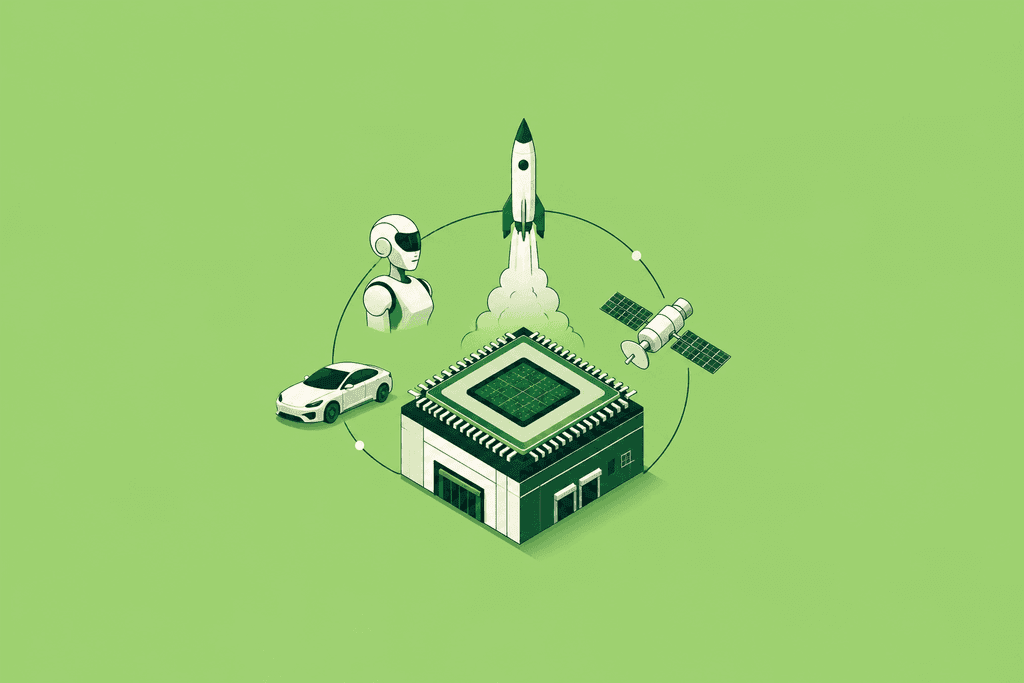
Terafab is designed to be a fully self-contained chip factory handling chip design, fabrication, memory, and packaging all under one roof. Most companies in the world rely on separate suppliers for each of these steps. Terafab wants to collapse the entire chain.
Two types of chips are planned:
- An AI inference chip: It is to power Tesla's Full Self-Driving system, Optimus humanoid robots, and its Robotaxi fleet.
- A space-hardened chip: Built to survive radiation in orbit, for SpaceX satellites and orbital data centres.
The manufacturing backbone, if it materialises, would be Intel's next-generation 14A fabrication process, one of the most advanced chip processes in development today. Musk confirmed during Tesla's latest earnings call that this is the process Terafab is targeting.
Tesla and SpaceX have also reportedly already started sourcing chipmaking equipment, approaching companies like Applied Materials, Tokyo Electron, and Lam Research for photomasks, substrates, etchers, and other foundry machinery.
SpaceX IPO
Reuters reportedly reviewed excerpts from SpaceX’s confidential S1 filing, the document companies prepare before going public. The filing suggests that SpaceX wants to produce its own GPUs and is preparing for major capital spending to support this chipmaking push.
It also highlights the risk. SpaceX has not secured long term agreements with most of its chip suppliers. The filing also warns that Terafab may not meet its targets on time, or may not meet them at all.
There is still no final agreement between SpaceX and any chip manufacturing company. So, at this stage, Terafab is a serious ambition backed by filings and early sourcing activity. It is not yet a fully signed, operational project.
Shift Behind Terafab’s Augmentation
To understand why Musk is doing this, you need to understand one uncomfortable fact - the world's most advanced chips are made almost entirely in one place: Taiwan.
TSMC, the Taiwan Semiconductor Manufacturing Company produces roughly 90% of the world's leading-edge chips. Every major chip that powers your iPhone, Nvidia's AI accelerators, and AMD's processors is made there. That's a single point of failure sitting in one of the world's most geopolitically sensitive regions.
Terafab also sits inside a much bigger reset in global technology.
The COVID pandemic exposed how fragile global supply chains are when there's no slack. The AI boom turned chips from a commodity into a strategic resource. And rising US-China tensions made Taiwan's geographic position impossible to ignore.
The old assumption that you could always buy what you need from a trusted global supplier stopped being safe.
This is why the response has moved beyond company boardrooms. Governments are now treating chip capacity as strategic infrastructure. The US has passed the CHIPS Act to rebuild domestic manufacturing. China is investing heavily in its own semiconductor supply chain. Europe wants less dependence on Asian fabs. Private companies like Tesla are now reaching the same conclusion.
Debunking Myth Around Terafab
One thing worth being clear about: Terafab is not being built as a service to the US semiconductor ecosystem.
The chips produced here are intended primarily for Tesla's EVs, Optimus robots, and autonomous vehicles and for SpaceX's satellites and orbital infrastructure. xAI, Musk's AI company, will also draw on this compute capacity.
This is vertical integration in its most literal form. Musk's companies need chips at a scale that doesn't currently exist in the market. So they're building the factory themselves, for themselves.
As one chip analyst put it, this is a 15-year strategy. Musk knows his companies would find it "very, very hard" to get priority allocation at TSMC, where Nvidia and Apple have already locked up capacity years in advance.
Risks Involved
But Musk’s ambitious strategy comes with equally serious risks.
- Execution risk: Building a leading-edge fab from scratch is extraordinarily hard. TSMC spent decades becoming TSMC. Intel with all its expertise lost multiple process generations before recovering.
- Timeline risk: Mid-2028 for first chips means Musk's companies depend on outside suppliers for at least two more years while spending at scale.
Agreement risk: SpaceX’s S-1 says long-term supplier agreements are still missing, and warns that Terafab may be delayed or may not achieve its targets at all.
Capital risk: Tesla’s $44.7 billion cash gives Terafab room to scale in phases, but cost overruns or delays could still make it a very expensive bet.
Investor Takeaway
Five years ago, a car company and a rocket company planning a $119 billion chip facility would have sounded absurd.
Today, it looks like a response to a changed world. One where geography is risk, where chip access is leverage, and where the companies that control their own silicon control their own destiny.
Terafab may not succeed on the timeline Musk has set. The risks are real, the ambition is extraordinary, and the execution required is unprecedented.
But the logic behind it is hard to ignore. In the next phase of AI, automation and space infrastructure, owning compute may become as important as owning the product itself.
And that logic is driving decisions at Apple, Nvidia, Microsoft, and governments worldwide and now in Tesla, too.

Related Topics
RBI Repo Rate Hike October 2026: 10 Takeaways That Matter for Your Money



NSE Pre-Open Session Rules Have Changed: Here’s What Traders Need to Know

LIC Gets RBI Nod for 9.99% HDFC Bank Stake: Buy Signal or Market Noise?
India’s July Factory Growth Hits a 5-Year Low. Should We Be Worried?

Closing Auction Session (CAS) kicks in from 3rd August: Market timing changes
Ethical Investing Gets Real: NSE and BSE Launch Saatvik and Ahimsa Indices


Can REITs and InvITs Become India’s Next Retail Portfolio Essential?

Everyone Knows Bajaj Finance’s Playbook. So Why Can’t Anyone Copy It?


Beyond the Dark Store: Is Advertising Zepto's Real Business?

Vedanta Demerger: Why Aluminium Became the Market’s Favourite/Darling


NSE Extends F&O Market Close to 3:40 PM: What Traders Must Know

Rupee Crashes to ₹96: How Investors Can Profit From the Fall

The Rise of India’s Defence Sector: Stocks, Trends & Opportunities

SEBI introduces Verified Badge for Trading Apps to Curb Fake App Scams

TCS Q4 Concall: AI Infrastructure to Drive the Next Growth Cycle
Rupee Slips Past 95/USD | Factors Driving the Fall Despite RBI Intervention

The Popcorn Trade: How Dhurandhar 2 is driving PVR INOX Stock Higher

Oil Is Surging After The Iran Strikes. So Why Isn’t Gold Following?

What’s Getting Cheaper & Costlier in Budget 2026: A Simple Money Guide

Union Budget Day & Market Behaviour: 15 Year Trend Analysis (2011-2025)

Maruti Q3FY26 Profit Up 4%: Losing Grip on India’s Car Market?

New Year, New Financial Goals: Make SIP Your 2026 Resolution

Infosys ₹18,000 Crore Share Buyback: Record Date & Why Promoters Opted Out?

Nifty 50 Performance Since Last Muhurat Trading: Nifty Top 10 Performers

Diwali Muhurat Trading: Can Nifty’s 7-Year Winning Streak Continue?

Tata Motors Demerger Gets NCLT Nod: What Shareholders Must Know

Muhurat Trading 2025 on 21 Oct: Everything You Should Know
Tuesday is the New Thursday: NSE & BSE Expiry Shift from Sep 2025

How Jane Street Snatched ₹36,500 Crore While India's Youth Lost Everything

Axis Bank Q1FY26 Results: A Mixed Bag, but Long-Term Picture Still Intact

Indian Stock Market Outlook: What Happened And Way Forward