
How SEBI’s new vault rules for Gold and Silver ETFs impact you?

By
Arihant Team
SEBI just tightened the rules for vault managers that store the physical gold and silver behind your ETFs. While the new rules will not boost your market returns, it will ensure the real metal backing your investment is far more secure, segregated, and fully insured against worst-case scenarios.
In This Article
- Introduction
- How Gold ETFs Work Behind the Scenes
- What are SEBI’s amended bullion regulations?
- What’s changing under the new uniform bullion regulations
- What does it mean for your gold & silver ETF portfolio?
Introduction
When you buy gold and silver exchange traded funds (ETFs), you see their prices going up or down on your phone, assuming that somewhere in a high-security facility, real, physical gold bars are sitting safely to back your investment. And they are!
But here’s a question most investors forget to ask: Who actually looks after that gold, and what happens if something goes wrong?
To ensure your investments are safeguarded, SEBI has come out with a brand-new framework around bullion on September 24, 2026, which is the actual physical gold and silver backing your gold and silver ETFs. These amendments tighten how vault managers store and secure these precious metals.
Let’s check out what these changes mean in simple terms
Open a free account today
Invest in tomorrow with just one click
How Gold ETFs Work Behind the Scenes
Gold and silver ETFs are bought and sold on stock exchanges just like shares, and you can trade anytime during market hours using your demat and trading account.
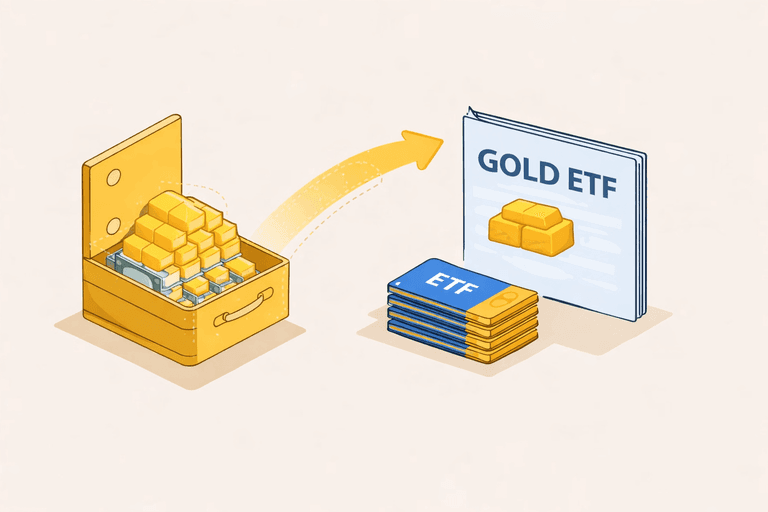
So, when you invest in a gold or silver ETF, you aren't buying physical metal from a jeweler. You're giving your money to a fund manager, who then buys physical bars with at least 99.5% purity for gold (or 99.9% for silver).
However, the fund manager doesn't store these shiny bars in their office basement. They hire specialized, SEBI-registered corporate entities called Vault Managers. Every single ETF unit you trade on the stock exchange represents a fractional piece of metal stored inside those high-security vaults.
Every ETF unit represents a fraction of gold or silver (typically equivalent to 0.01, 0.1, or 1 gram, depending on the AMC).
In a nutshell, you get exposure to pure domestic gold and silver with full liquidity, but without the hassles of security and locker fees.
What are SEBI’s amended bullion regulations?
Back in 2021, when SEBI introduced strict rules for vault managers in 2021, those rules were specifically tailored for Electronic Gold Receipts (EGRs), a product designed to let people trade physical gold digitally on stock exchanges. Gold and Silver ETFs, on the other hand, were governed under broader mutual fund guidelines.
However, having different rules for different gold products created regulatory fragmentation. If a firm managed vaults for both ETFs and digital gold receipts, they had to deal with two different sets of oversight.
On 24th September 202, SEBI finally decided to change the playbook for safekeeping of ETFs too. They scrapped the old product-specific rules and replaced them with a single, unified framework covering all bullion-backed instruments, which includes including Gold ETFs, Silver ETFs, and derivatives.
Had come up with strict regulations for vault managers to keep EGRs (Electronic Gold Receipts) safe. Investing in EGRs is like buying real physical gold on stock exchanges just like shares. However, the physical gold you buy through EGRs are stored in vaults managed by SEBI-registered entities called vault managers.
From registration and custody to purity-checks, insurance, reconciliation and record-keeping, now vault managers have to follow the same high standards for gold and silver ETFs just like EGRs.
What’s changing under the new uniform bullion regulations
SEBI isn't changing how you buy or sell your ETF units. Instead, it’s tightening the screws on the back-end institutions guarding the precious metals.
₹75 crores financial cushion: Vault managers who store bullion for gold and silver ETFs/derivatives must maintain a minimum net worth of ₹75 crores, up from ₹50 crores. This gives you an assurance that the vault manager holding the physical gold and silver backing your ETFs is financially strong and capable of handling huge quantities of physical bullion safely.
Strict asset segregation: Vault managers must keep physical bullion separate based on entities and financial instruments. . Physical gold backing your g old ETF must be stored separate from silver, separate from derivatives, and strictly separate from private client holdings. If one client entity defaults, your ETF assets remain entirely untouched.
Ironclad insurance: What if the vault is destroyed in a fire or suffers a heist? SEBI has a solution for this. Vault managers must maintain comprehensive insurance policies to cover risks to physical bullion arising from burglary, theft, fire, cyberattacks, fraud and terrorism.
- Independent compliance: Finally, vault managers must appoint a dedicated compliance officer to manage operations, audits and adhere to all the necessary regulations.

What does it mean for your gold & silver ETF portfolio?
While these new rules will not boost your returns or save you if gold prices crash tomorrow, they will guarantee that the physical backbone supporting your paper investments meets high purity standards, stays segregated from other entities, and remains fully insured against catastrophe.
In short: your Gold ETF won't make you richer overnight, but you can sleep a little easier knowing the vault holding your gold is built like a fortress.
Note: SEBI's board has approved the framework, but the full operational guidelines are yet to be released.
Related Topics

Everyone Bought Gold ETFs in January. Here's Why They're Selling Now

Why US ETFs Are Expensive for Indian Investors And How It Impacts Your Returns


Physical Gold vs Gold ETFs: Which investment is best for Indian investors?

How Your Gold Profits Are Taxed And Budget 2026 Expectations For Gold