

Defence Stocks explained: Opportunities vs Risks

By
Arihant Team
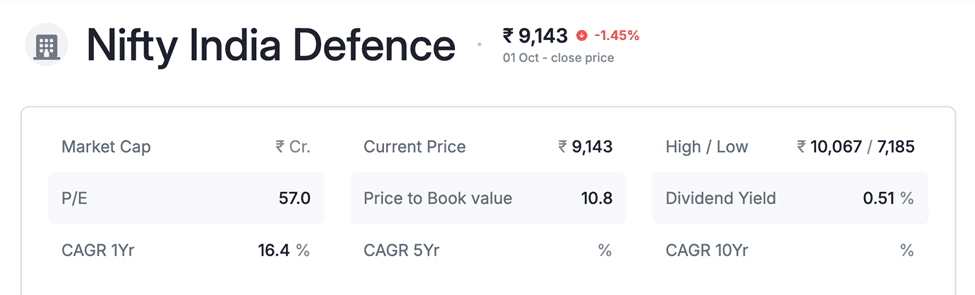
Nifty defence index is trading at its highest valuation of 57x earnings, but does India’s defence opportunity actually justify those valuations?
In This Article
- Introduction
- Let’s go behind the scenes
- Which are the major defence stocks?
- Should you invest in defence stocks?
- What are the risks?
- Investor takeaway
- FAQs
Introduction
The Nifty Defence Index is currently trading at around 57x earnings, its highest valuation ever. One of the main reasons for these higher valuations are the US-Iran tensions which could spread to the Indian Ocean region.
In this scenario, the Indian government has to focus on defence spending and has done so. It has raised the defence budget to a record ₹7.85 lakh crore in FY 2026-2027. As India looks to jump to the next level, be Atmanirbhar (self-reliant) and export weapons to many countries, should you tap into the defence sector and invest in defence stocks?
Open a free account today
Invest in tomorrow with just one click
Let’s go behind the scenes
India is the world’s second largest importer of weapons, accounting for 8.2% of global arms imports between 2021 and 2025. With much of this equipment paid for in foreign currency, reducing dependence on imports has become an important part of India’s defence strategy.
India’s self-reliance push
Defence production in India reached a record ₹1.78 lakh crore in FY2025-26, more than double the ₹84,643 crore recorded in FY2020-21. The government is supporting this shift through three key initiatives:
Import embargoes: The Positive Indigenisation List identifies defence equipment that will no longer be imported after specified deadlines, encouraging domestic manufacturing.
- iDEX: The Innovations for Defence Excellence initiative supports startups, MSMEs and innovators developing new defence technologies.
- Defence exports: India is now exporting defence products to more than 80 countries, with exports reaching ₹38,424 crore in FY2025–26.
Which are the major defence stocks?
India’s defence sector has traditionally been led by public sector companies, with HAL, BEL and Mazagon Dock Shipbuilders among the prominent listed players. HAL manufactures combat aircraft, helicopters and UAVs, while BEL focuses on electronic systems for the Army, Navy and Air Force. Mazagon Dock Shipbuilders builds submarines and warships for the Indian Navy.
Other listed public sector players include Bharat Dynamics, Cochin Shipyard, Garden Reach Shipbuilders & Engineers and BEML. The private sector has also built a strong presence, with companies such as Solar Industries, Data Patterns, Larsen & Toubro and Bharat Forge operating across different parts of the defence ecosystem.
Should you invest in defence stocks?
Some of the reasons to consider for investing in the defence sector are:
Large order books: Many defence companies have order books that are several times their annual revenue. This gives them revenue visibility over the next few years, provided these orders are executed on schedule.
Higher government spending: The Union Budget 2026–27 has allocated significant funds to defence, while the focus on Make in India is pushing more defence procurement towards domestic manufacturers. This could support demand for Indian defence companies.
- High entry barriers: Defence manufacturing requires significant capital, specialised technology and regulatory approvals. These requirements make it difficult for new players to enter, giving established companies an advantage.
- Rising exports: India is also looking beyond domestic demand, with defence exports reaching ₹38,424 crore in FY2025-26, up from ₹23,622 crore in FY2024-25. India has also secured export contracts for products such as the BrahMos missile and Akash air defence system.
What are the risks?
Dependence on government orders: Defence companies rely heavily on government agencies and the armed forces for orders, so changes in policy, procurement priorities or order timelines can affect their revenue.
Order book execution: A large order book provides visibility, but it does not guarantee immediate revenue. Delays in production, supplies or deliveries can push revenue recognition further out.
- High valuations: Defence stocks are currently trading at around 57x earnings. This means investors are paying a high price for the sector’s growth, leaving less room for disappointment if earnings or order execution fall short of expectations.

Investor takeaway
India’s defence story is real, with rising exports, greater self reliance and strong government support driving long term growth.
But with defence stocks trading at around 57x earnings, much of that optimism is already priced in, leaving investors with less room for execution delays or slower order growth.
FAQs
How can you invest in India’s defence sector?
You can invest in India’s defence sector through ArihantPlus Defence Themes, which give you exposure to a basket of defence stocks across market caps, instead of investing in a single stock.
Which index tracks the defence sector in India?
Nifty India Defence Index, tracks the defence sector in India.
Should you allocate your entire portfolio towards defence stocks?
Many financial experts recommend that you spread your investments across many sectors and industries. Having a concentrated portfolio towards only one sector increases concentration risk if that sector is impacted by different factors.
How long should you invest in defence funds?
Defence funds track the defence sector or theme. They are a suitable investment if you can time your entry and exit in the defence space to maximize your returns.
Related Topics



LIC Gets RBI Nod for 9.99% HDFC Bank Stake: Buy Signal or Market Noise?



Has Bandhan finally become a real bank? l Q1FY2027 Results Analysis

Bajaj Auto vs TVS Motor Q1FY27 | Beyond profits, whose quarter was stronger?


Wipro Q1 FY27 Results | 7 Key Takeaways Every Investor Should Know





Tata Motors Demerger Gets NCLT Nod: What Shareholders Must Know
ICICI Lombard Q1FY26 Result: Profit jump 28.7%, Strong Margin & Digital Momentum