What is an Offer for Sale (OFS)? A Complete Guide for Investors

By
Arihant Team
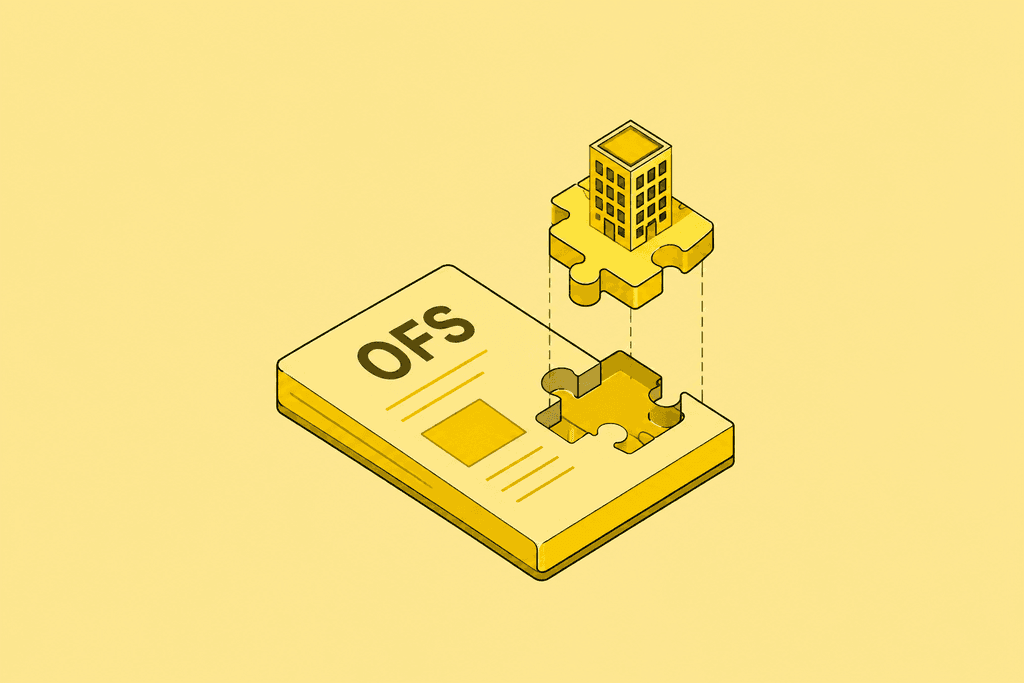
An Offer for Sale (OFS) allows promoters, governments, or large investors to sell their stake in an already listed company through the stock exchange. This guide explains how an OFS works, why companies launch it, how allotment happens, and the key factors investors should evaluate before investing.
In This Article
- Introduction
- What is an offer for sale (OFS)?
- Why do companies launch OFS?
- How does an OFS Work?
- How can you apply for an OFS?
- Is allotment guaranteed?
- How allotment works in an OFS
- Things to check before applying
- Does an OFS affect the share price?
- OFS vs IPO
- Final Thoughts
- FAQs
Introduction
"Government of India to sell 1% stake in Coal India through an Offer for Sale, over 6.1 crore shares, with the option to sell another 1% if demand was strong enough."
Have you ever read headlines like these and wondered if investing in an OFS is a good opportunity or a warning sign?
Or what is an OFS, why do companies do it and how it works?
The truth is, a company announcing an OFS isn't always a positive or negative news – its slightly more nuanced. It depends on who is selling their shares, why are they selling, at what price.
In this guide, we'll explain everything you need to know about OFS in simple terms.
Open a free account today
Invest in tomorrow with just one click
What is an offer for sale (OFS)?
An Offer for Sale (OFS) is a mechanism through which an existing shareholder of a already listed company sells shares through the stock exchange. The seller could be:
- Company promoters
- The Government of India
- Private equity funds
- Institutional investors
- Other large shareholders
Unlike a fresh issue (IPO), no new shares are issued in an OFS. Ownership simply transfers from the seller to new (or existing) investors. As a result, the money raised through an OFS goes to the selling shareholder, not the company. Consequently, the company's share capital remains unchanged.
One more thing worth knowing: OFS isn't open to every listed company. SEBI restricts the OFS mechanism to companies that have a market capitalisation of ₹1,000 crore or above. This is why you'll mostly see it used by large, well-established names. Another thing, if the seller is not a promoter of the company, then they are eligible to offer shares through the OFS mechanism only if their holding is at least 10% of share capital.
Why do companies launch OFS?
An OFS is generally announced for one of these reasons:
- To Meet SEBI's Public Shareholding Norms: SEBI requires every listed company to maintain at least 25% public shareholding. If promoters or the government own more than 75%, an OFS is the quickest way to reduce their stake.
- Government Disinvestment: The Government of India regularly uses OFS to sell their stakes in public sector companies as part of its disinvestment programme. Companies like Coal India, BHEL, Central Bank of India, and NLC India have used this route.
- Promoter or Investor Exit: Promoters, private equity firms, or institutional investors sometimes trim their holdings simply to book profits after years of investment. This doesn't automatically signal trouble at the company.
A stake sale on its own isn't necessarily positive or negative news. What matters is why the shares are being sold,
- how much stake remains with the promoter, and
- whether anything about the business has actually changed, and
- the company's long-term outlook and fundamentals.
How does an OFS Work?
The OFS process generally takes place in three stages.
Stage 1: OFS Announcement
The selling shareholder announces the offer along with details such as:
- Number of shares on offer
- Bidding dates
- Floor price
- Retail reservation
- Retail discount (if any)
- Greenshoe (oversubscription) option
- Allotment method
Stage 2: Non-Retail Bidding (T-day)
Institutional investors and investors bidding for more than ₹2 lakh participate first. Their bids help determine the cut-off price for retail investors.
Stage 3: Retail Bidding (T+1 day)
Retail investors, anyone whose total bid across NSE and BSE is ₹2 lakh or less, bid on the second day, usually at or above the cut-off price set on T-day. SEBI mandates that at least 10% of the offer be reserved for retail investors, and at least 25% for mutual funds and insurance companies.
Let's understand the bidding process through an example. Lets say XYZ Ltd's promoter announces an OFS with a floor price of ₹100.
- On T-day, institutional bids push the cut-off price to ₹105.
- On T+1, if a 5% retail discount is on offer, retail investors effectively pay around ₹99.75 per share. A small discount to the cut-off price, not the floor price.
- For all successful bids, your funds are debited, and shares are delivered to your demat account in T+1 days.
How can you apply for an OFS?
The application process varies across brokers.
On ArihantPlus, you can find the details of all the ongoing OFS issues on our bulletin or corporate action section on the mobile app. To apply for an OFS, you need to contact the customer service team, share your bid quantity and price and they will do the bidding for you. You need to make sure that your account has sufficient funds for the bidding to be successful. Always check the official OFS announcement for bidding timelines and offer details.
Is allotment guaranteed?
No, allotment is not always guaranteed in an OFS, just like IPO. If demand exceeds the number of shares available, allotment is made according to the method specified in the offer document.
The two most common methods are:
- Price Priority: Higher-priced bids receive preference.
- Proportionate Allotment: Shares are distributed among eligible investors in proportion to their bids.
If you receive fewer shares than applied for, the remaining blocked funds are released.
How allotment works in an OFS
Once bidding closes, shares are allotted using one of two methods, disclosed upfront in the OFS notice:
- Price Priority: Shares go to the highest bidders first. The higher you bid above the cut-off price, the better your chance of getting an allotment; if shares run out before your bid is reached, you may get nothing.
Proportionate Allotment: All eligible bidders (anyone who bid at or above the cut-off price) share the available shares at a single cut-off price, split in proportion to their bid size. Everyone gets something, just not necessarily the full amount they asked for.
Lets understand with an example. Say the cut-off price is ₹110.
- Under price priority, Mr C (bid ₹112) and Mr B (bid ₹111) get full allotment at ₹110, while Mr A, who bid exactly ₹110, may get nothing if shares run out first.
- Under proportionate allotment, all three share the pool at ₹110 based on their bid size, so even Mr A gets some shares, just fewer than he asked for.
Things to check before applying
Before investing in an OFS, ask yourself:
- Who is selling the shares?
- Why are they reducing their stake?
- What is the floor price?
- Is there a retail discount?
- Which allotment method will be followed?
- How much stake will the promoter retain after the sale?
These factors provide much better insight than reacting to the announcement alone.
Does an OFS affect the share price?
An OFS often creates short-term volatility in the stock price because the floor price is often set below the prevailing market price and additional shares enter the market.
However, an OFS does not change the company's actual business and fundamentals. Revenue, profits, assets, and operations remain the same. Its worth judging the company on its fundamentals and long-term prospects rather than the OFS announcement alone.
OFS vs IPO
Although both allow investors to buy shares, they serve different purposes.
Particulars | IPO | OFS |
Company status | Private company getting listed | Already listed company |
Who sells shares? | Company (Fresh Issue), existing shareholders, or both | Existing shareholders only |
New shares issued? | Yes, in a fresh issue | No |
Who receives the money? | Company (fresh issue) or selling shareholders | Selling shareholders |
Company's share capital | Increases (fresh issue) | Remains unchanged |
Main objective | Raise capital and/or provide an exit | Reduce promoter, government, or investor stake |
An IPO is often evaluated based on how the company plans to use the funds it raises. In an OFS, however, no money flows into the business. Instead, investors should focus on who is selling, why they are selling, and how much stake they will continue to hold after the sale.

Final Thoughts
An Offer for Sale is a transparent way for promoters, governments, or large investors to reduce their stake in a listed company. Since no new shares are issued, the company itself does not receive any funds.
Before participating in an OFS, take time to understand who is selling, why they're selling, how the offer is priced, and how allotment works. Combined with an assessment of the company's fundamentals and valuation, these factors can help you make a more informed investment decision.
FAQs
What is a floor price in an OFS?
The floor price is the minimum price at which investors can bid. However, it is not the guaranteed allotment price. The final price depends on investor demand during the bidding process.
What is the greenshoe option in an OFS?
If the OFS has strong demand and is oversubscribed, the seller may choose to sell additional shares beyond the original offer size. This is known as the Greenshoe (Oversubscription) Option.
Is there a lock-in period for shares bought in an OFS?
No. Unlike IPO allotments, shares bought through an OFS have no lock-in. You can sell them on the exchange the very next trading day after allotment.
Can I modify or cancel my OFS bid after placing it?
Yes, you can modify or cancel your bid, but only while the OFS window is still open on the exchange. Once bidding closes for the day, no further changes are allowed.
What happens if I don't get shares allotted in an OFS?
If your bid isn't allotted (fully or partially), the blocked funds for the unallotted portion are automatically released back to your trading account. No manual action needed.
What's the difference between OFS and FPO?
In an OFS, existing shareholders sell their shares, and the company doesn't receive any money. In an follow-on public offer (FPO), the company itself issues new shares to raise fresh capital, similar to an IPO but for an already-listed company.

Related Topics


Stock SIP Explained: A Smarter Way to Build Long-Term Wealth
Mutual Funds vs PMS: What’s the difference and which one is right for you?

Inside REITs: India’s Growing Real Estate Income Opportunity

Small Caps Lead Q1 Growth: Truth Behind India Inc’s Q1FY27 Earnings

Understanding Margin Trading Facility (MTF): A Detailed Guide


Good-Till-Date Orders: A Smarter Way to Invest Without Constant Monitoring

Ethical Investing Gets Real: NSE and BSE Launch Saatvik and Ahimsa Indices


CM Vijay's ₹213 Crore Bank Balance Teaches India's Biggest Investing Mistake

Understanding Bonus Shares and Their Impact on Your Portfolio

Understanding Stock Splits and Their Impact on Your Portfolio




How to Analyse a Stock in 2026: Fundamental + Technical Checklist





Silver vs gold 2025: Why smart investors are choosing silver now