

India's Semiconductor Opportunity 2026: Which stocks to benefit?

By
Arihant Team
India is investing billions in semiconductors, but not every stock labelled “semiconductor” stands to benefit in the same way. From chip design to manufacturing and testing, where do India's listed companies actually fit, and which ones offer meaningful exposure to this growing opportunity?
In This Article
- Introduction
- Semiconductor Value Chain in 3 Stages
- Not all Semiconductor stocks are alike
- Investor Takeaway
Introduction
In the last two years, the word "semiconductor" has appeared in more Indian budget speeches, policy documents, and business headlines than in the previous two decades combined. India has committed ₹1.27 lakh crore under the India Semiconductor Mission 2.0. The US passed the CHIPS Act with over $52 billion in subsidies. China has poured more than $40 billion into its own chip ambitions.
But most retail investors hear "semiconductor stocks" and think of it as a single category, as though every company in the space does the same thing. They do not. The semiconductor value chain is long and layered, and the companies involved occupy very different positions, carry very different risk profiles, and offer very different kinds of exposure.
This piece breaks that chain into three stages, explains where India stands in each, and maps the listed stocks that give you access to them.
Open a free account today
Invest in tomorrow with just one click
Semiconductor Value Chain in 3 Stages
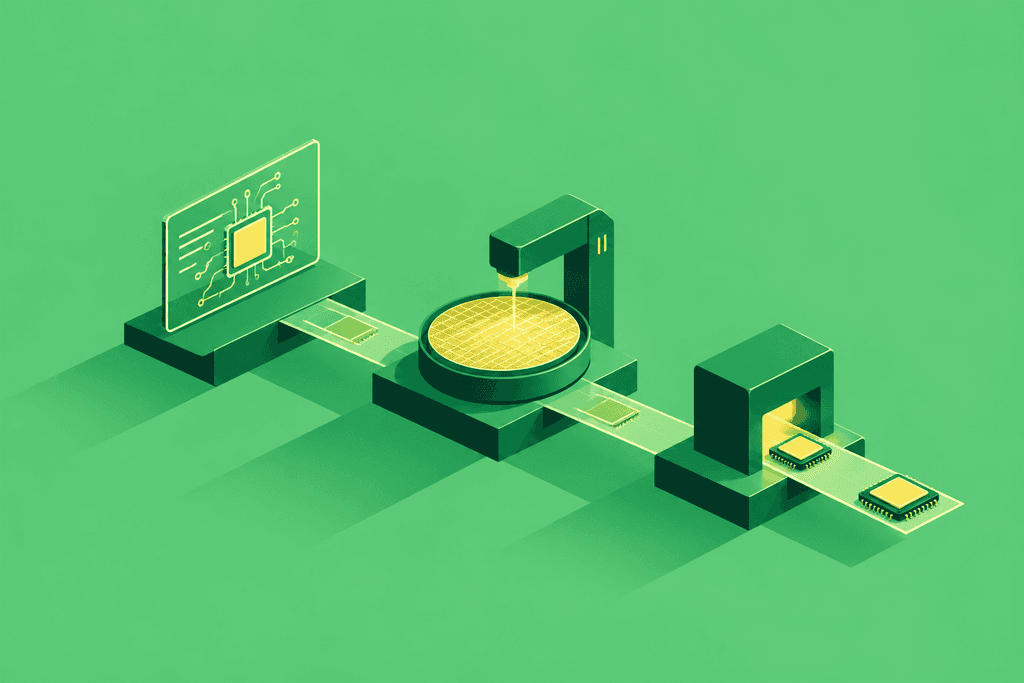
A chip does not spring into existence in a single step. Its journey runs through three distinct stages:
- Design (creating the chip's architecture in software),
- Manufacturing (physically building it in a fabrication plant),
- and OSAT (cutting, testing, and packaging the finished chip).
Each stage demands different capabilities, different levels of capital, and a different kind of expertise. And each has a different set of listed Indian companies attached to it.
Stage 1: Design
Before anything is physically built, someone has to decide how the chip will function, how electricity will flow through it, and what it will do. The work happens entirely in software and simulation with deeply specialised engineers and intellectual property.
Nvidia, Intel, Qualcomm, and AMD have maintained major design centres in Bengaluru and Hyderabad for years. India produces more chip design engineers than almost any other country, and this pipeline has been building for over two decades.
Listed exposure: MosChip Technologies | Tata Elxsi | L&T Technology Services | Cyient | HCLTech
Stage 2: Manufacturing
A semiconductor fabrication plant ("fab") requires billions of dollars, years of construction, ultra pure chemicals and gases, and equipment sourced from a handful of companies globally. A single fab can cost $10 billion to $30 billion.
A fab, once operational, creates an entire ecosystem around itself: suppliers, research labs, training institutions, and thousands of specialised jobs. Because the investment is so large and the workforce so specialised, that ecosystem stays where it is built. For a government, that means decades of locked in economic activity.
Taiwan's TSMC, founded in 1987, has spent nearly four decades perfecting its processes. Today it controls roughly 72.5% of the global foundry market while Samsung, its nearest competitor, holds 5.9%.
India's largest project in this space is the Tata Electronics fab in Dholera, Gujarat, built in partnership with Taiwan's Powerchip Semiconductor Manufacturing Corporation (PSMC).
However, Tata Electronics is private so there is no listed pure play stock for Indian semiconductor fabrication today.
Stage 3: OSAT
A fabricated chip is still far from ready. It needs to be cut from the wafer, wired, tested for defects, and sealed into a protective package. This final stage is called OSAT: Outsourced Semiconductor Assembly and Testing.
OSAT requires far less capital than fabrication, but it demands strong engineering talent, electronics manufacturing experience, and competitive costs. India has all three, and this is where the country has made its fastest progress.
Micron Technology has set up a facility in Sanand, Gujarat. Kaynes Semicon inaugurated its OSAT facility in March 2026, and CG Semi (a joint venture of CG Power with Renesas and Stars Microelectronics) launched commercial operations at its Sanand plant in July 2026, shipping its first batch of qualified chips.
Not all Semiconductor stocks are alike
You’ll often find companies like Dixon Technologies, Syrma SGS, Amber Enterprises, and PG Electroplast on semiconductor stock lists. These are primarily Electronics Manufacturing Services (EMS) companies that use finished chips to assemble electronics like phones, TVs, and ACs. They do not design, fabricate, or test semiconductors.
EMS companies are downstream customers of the semiconductor industry, not participants in it. Their margins, moats, and growth drivers are tied to consumer electronics demand, not to the chip value chain.
So, when building your semiconductor watchlist, it helps to understand where each company fits in the value chain and what actually drives its business.

Investor Takeaway
India's semiconductor theme is real, backed by serious capital from both government and private sector.
When evaluating a semiconductor stock, start by understanding where the company fits in the value chain. Chip designers, OSAT players, and EMS companies have different business models, margins, and growth drivers.
Next, look at how much revenue actually comes from semiconductors today. Several companies have announced expansion plans and partnerships, but their semiconductor businesses may still be at an early stage.
Finally, consider the larger question: does the ecosystem around these companies have the depth to sustain them? Individual companies will rise and fall, but the structural trajectory depends on whether ISM 2.0 creates the kind of interconnected ecosystem where design, fabrication, testing, and talent development reinforce each other.
For those tracking specific themes and sectors, ArihantPlus's "Themes" section lets you group and monitor semiconductor and other thematic baskets across your watchlist.
Disclaimer: This article is for educational and informational purposes only and does not constitute investment advice. Investors should consult a SEBI registered investment advisor before making any investment decisions.
Related Topics




LIC Gets RBI Nod for 9.99% HDFC Bank Stake: Buy Signal or Market Noise?


Has Bandhan finally become a real bank? l Q1FY2027 Results Analysis
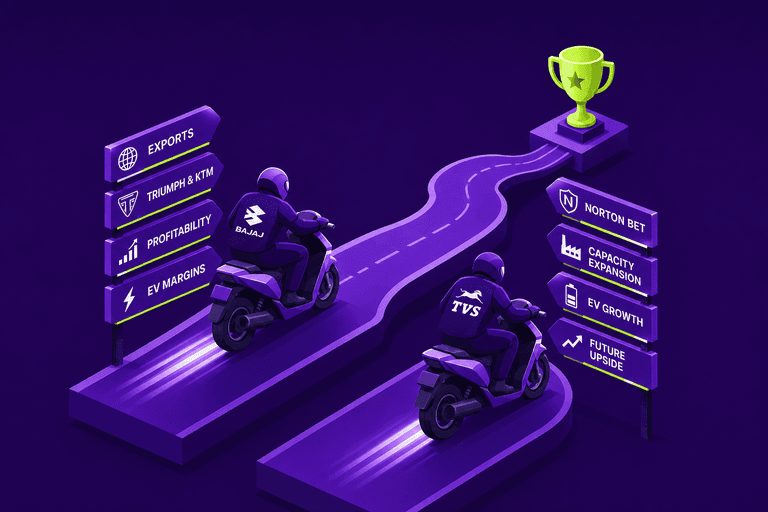
Bajaj Auto vs TVS Motor Q1FY27 | Beyond profits, whose quarter was stronger?
Wipro Q1 FY27 Results | 7 Key Takeaways Every Investor Should Know




Tata Motors Demerger Gets NCLT Nod: What Shareholders Must Know
ICICI Lombard Q1FY26 Result: Profit jump 28.7%, Strong Margin & Digital Momentum