


Has Bandhan finally become a real bank? l Q1FY2027 Results Analysis

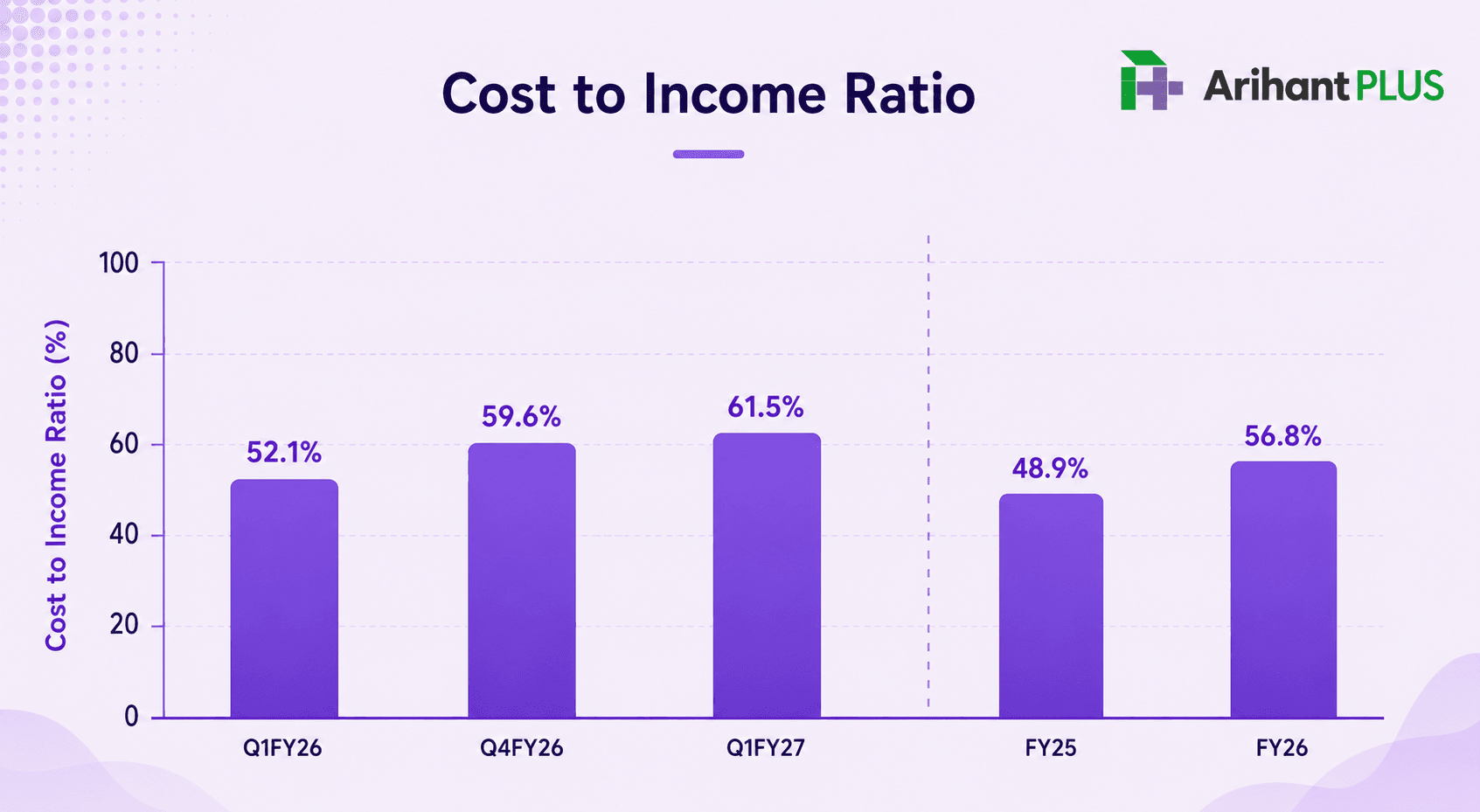
Bandhan Bank Q1 results: The lender reported a 34.9% year-on-year rise in net profit to ₹502 crore, helped by lower provisions. However, operating profit declined 18.6% and the cost-to-income ratio rose to 61.5%, showing that the core business remains under pressure.
In This Article
- Introduction
- Is it making money from banking?
- Can its deposits support its growth?
- Is the bank lending portfolio diversified?
- Can it absorb another bad cycle?
- Has the culture changed?
- So, has Bandhan become a real bank?
Introduction
Bandhan did not begin life as a bank.
It started as a microfinance institution, offering small unsecured loans to women in West Bengal and Assam. Repayments were collected in cash at weekly group meetings, and for years, this one product powered almost the entire business.
Then, in 2015, Bandhan received a universal banking licence. It began collecting deposits and expanded into housing, vehicle finance, gold loans and wholesale banking.
Today, it looks far more like a conventional bank. But has the business truly changed?
Let us put Bandhan’s Q1 FY27 numbers through five simple tests. And do not worry if terms like CASA or SMA0 sound unfamiliar. I will keep this as painless as possible.
Open a free account today
Invest in tomorrow with just one click
Is it making money from banking?
Now, Bandhan’s profit rose 34.9%, which sounds encouraging. But before we call that growth sustainable, it is important to understand where it came from.
The increase in profit was driven largely by lower provisions rather than a sharp improvement in the core business.
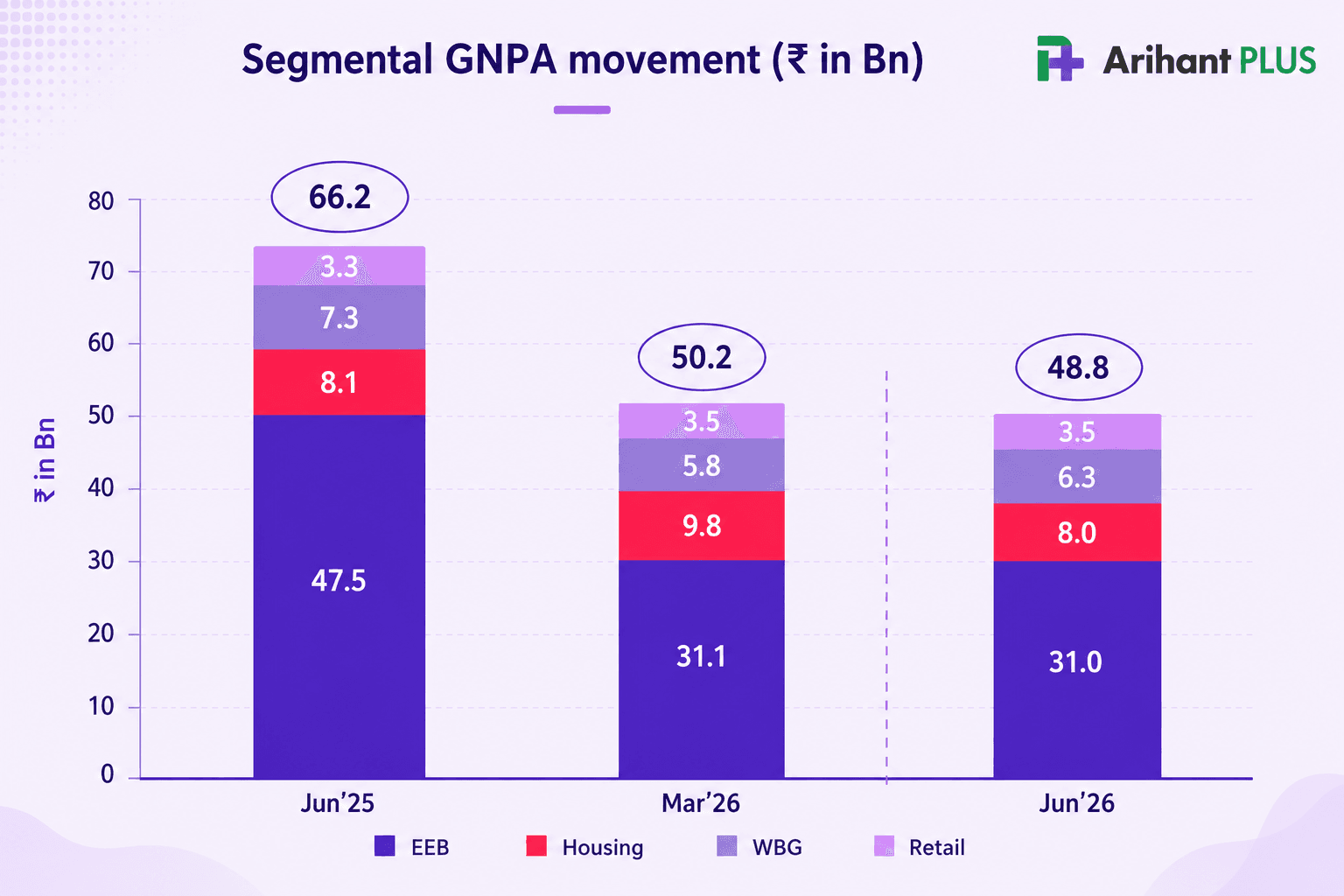
Provisions are the money a bank sets aside for loans that may not be repaid. Since Bandhan’s asset quality improved, it needed to set aside less money, which supported the final profit.
However, the cost-to-income ratio also rose from 52.1% to 61.5%, which means Bandhan is spending more to generate the same amount of income.
So, the higher profit is a positive sign, but it does not yet tell us that the bank’s underlying earnings have become stronger or more sustainable.
Can its deposits support its growth?
Banks use deposits to fund loans, so ideally, both should grow at a similar pace.
At Bandhan, loans grew 18%, while deposits increased only 6.6%. This means the bank is lending much faster than it is bringing in fresh deposits. If this continues, Bandhan may eventually have to offer higher interest rates to attract more depositors, which would make its funding more expensive.
But there’s one relief, the quality of Bandhan’s deposit base has improved. Retail deposits now form 74% of total deposits, up from 68.2% a year ago.
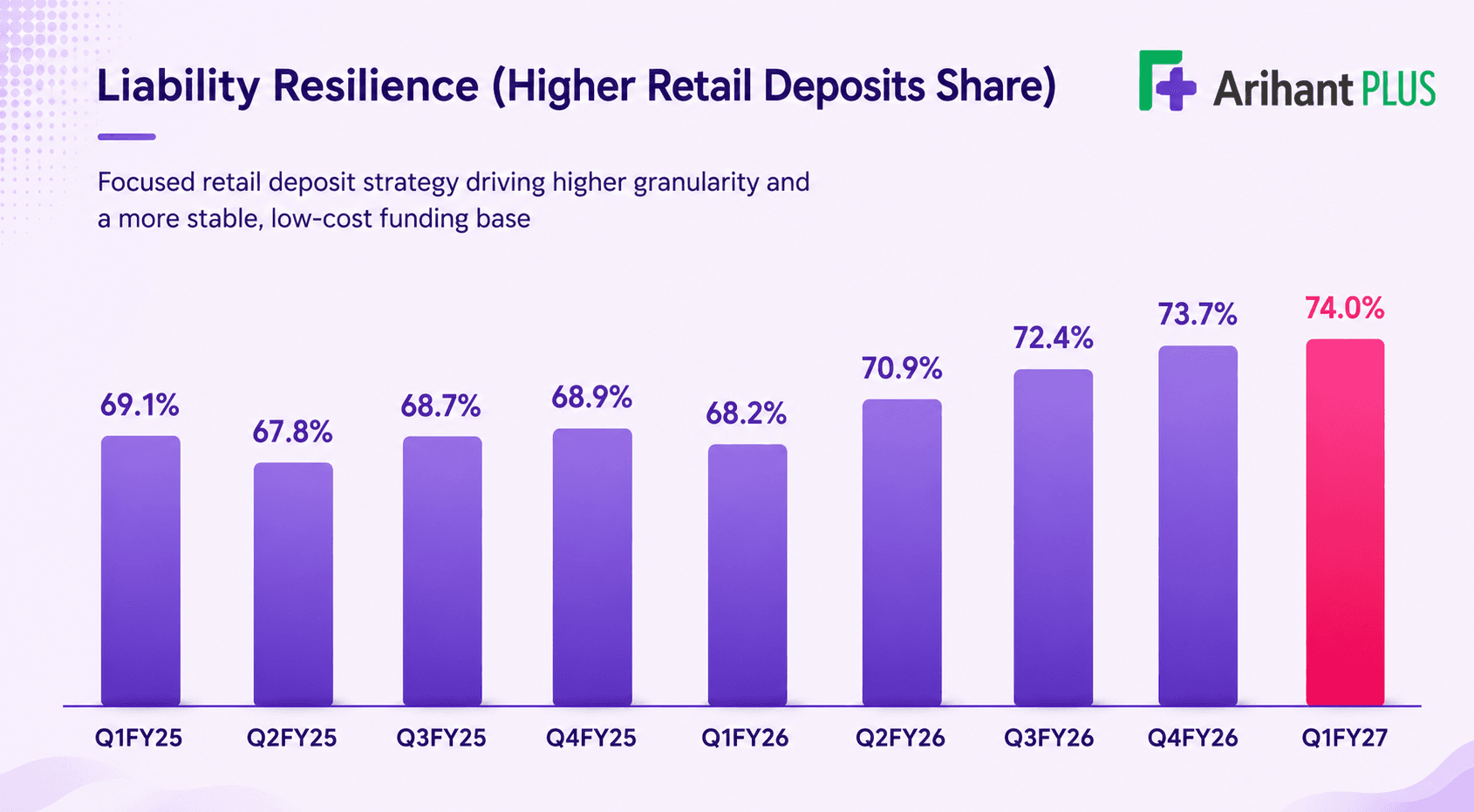
Because retail deposits come from many individual customers rather than a few large depositors, it is generally more stable and less likely to leave the bank all at once, giving Bandhan a more dependable funding base.
Is the bank lending portfolio diversified?
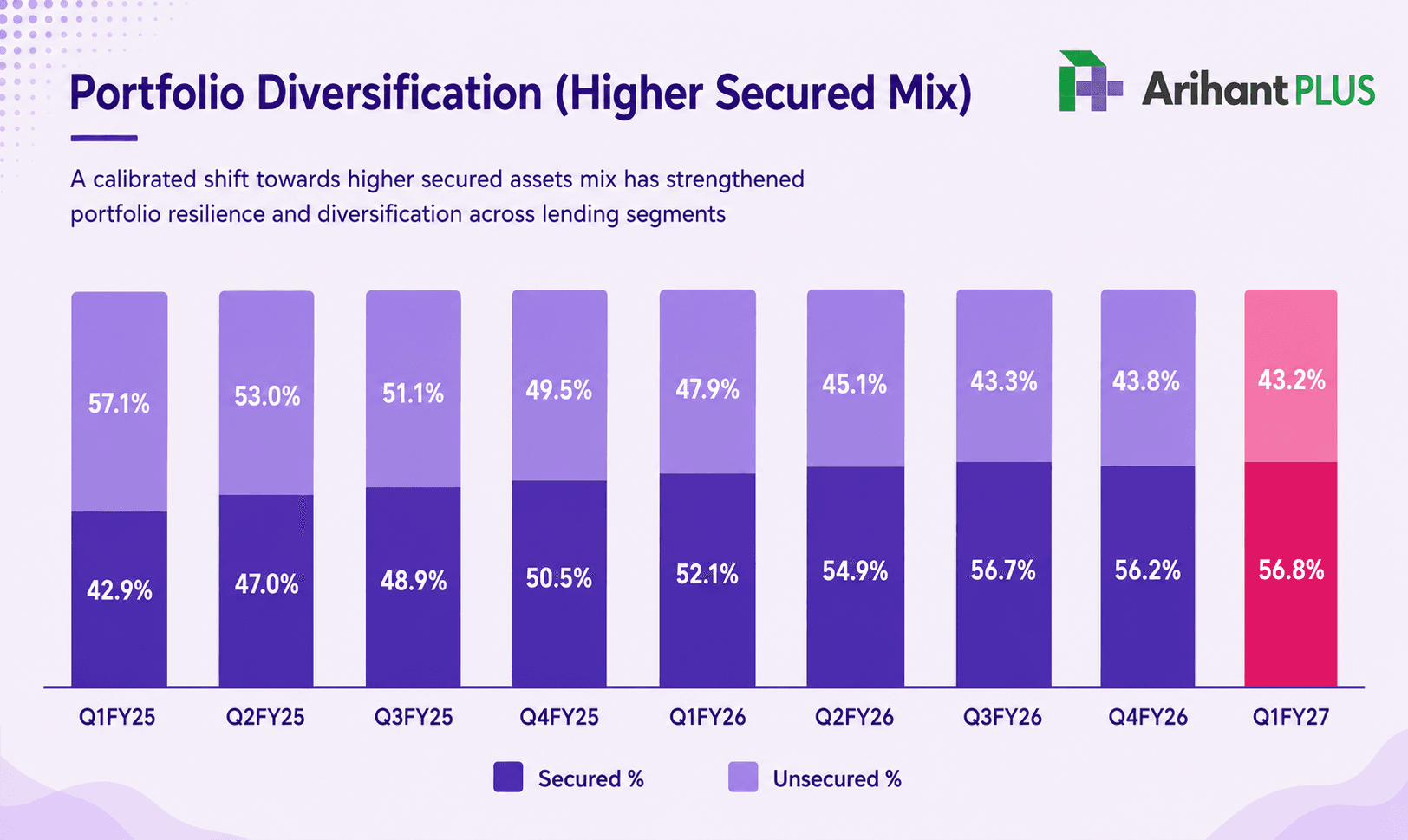
Earlier, most of its business came from small unsecured microfinance loans. Today, nearly 57% of the loan book is secured, with more lending going into housing, vehicles and gold.
That matters because these loans come with an asset attached. If a borrower stops repaying, the bank still has something it can recover. This reduces the chances of a large loss compared with an unsecured loan.
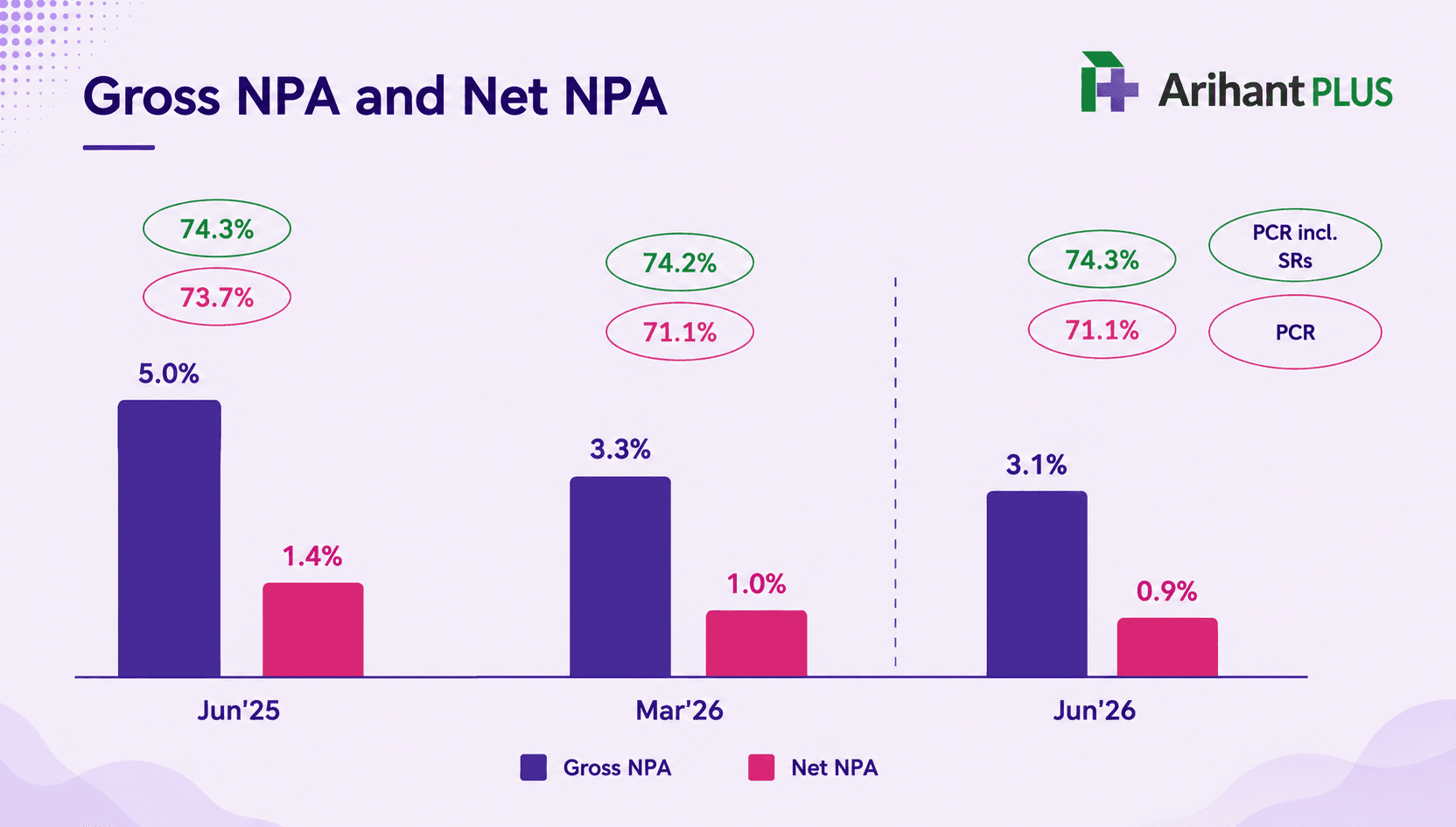
This broader mix is also showing up in asset quality in the metrics. Net NPA stands at 0.93%, credit cost has fallen from 3.5% to 1.8%, and collection efficiency remains at 98.9%. Microfinance slippages declined from ₹690 crore to ₹604 crore.
Can it absorb another bad cycle?
To get through a difficult lending cycle, a bank needs enough capital to absorb losses and enough earnings to keep rebuilding that cushion.
Bandhan is still comfortably placed on capital, with a capital adequacy ratio of 18.2% against the required 11.5%. However, the ratio has come down from 19.4% a year ago, while its net interest margin has also slipped from 6.4% to 6.2%.
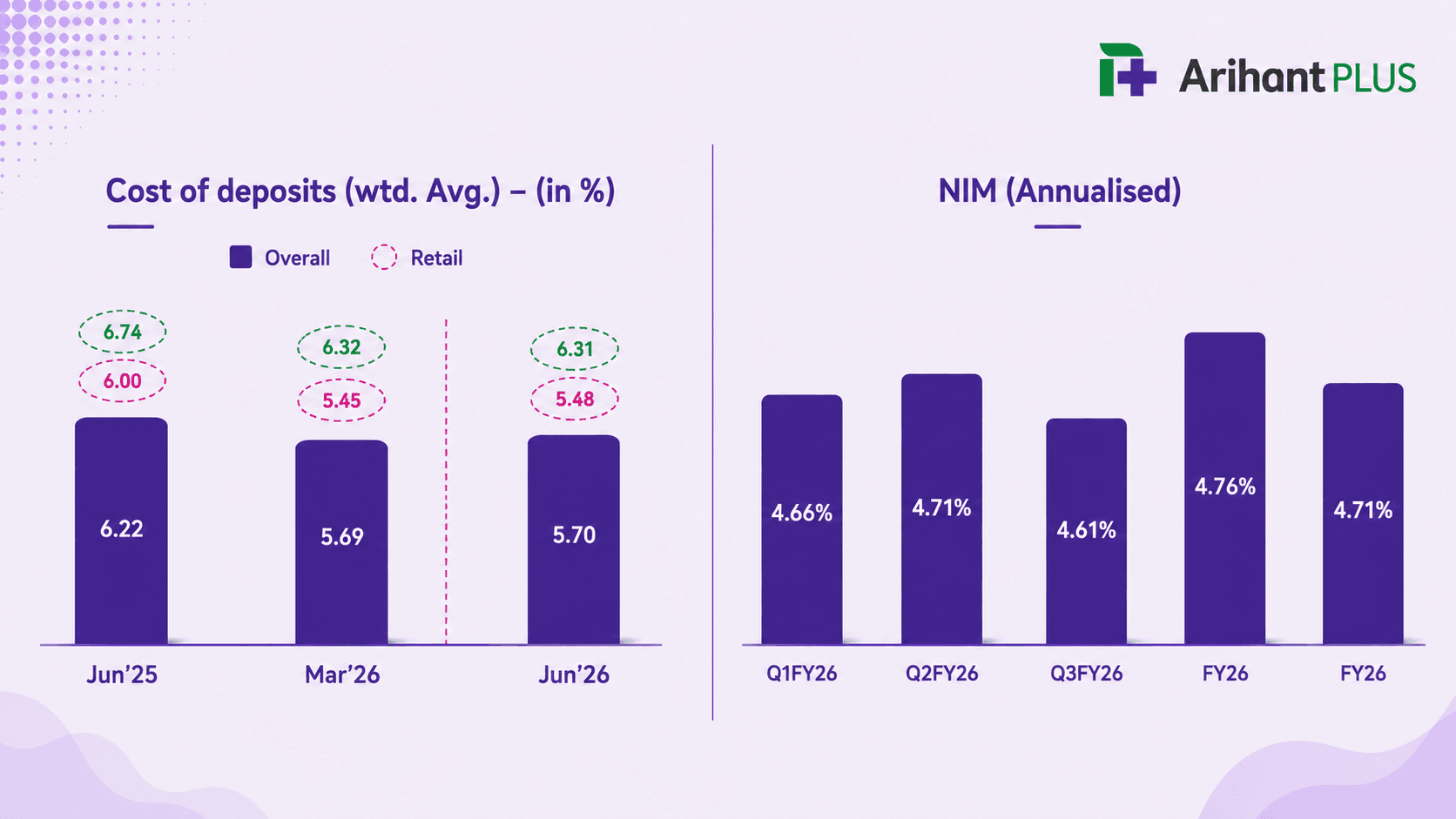
This means the bank still has a strong buffer, but that buffer is gradually becoming thinner while the core business is earning slightly less. Another difficult microfinance cycle may not threaten the bank’s survival, but it could hurt profits further and reduce the capital available to absorb future losses.
So, capital is not an immediate concern, but the falling trend in both capital adequacy and margins is something Bandhan will need to arrest.
Has the culture changed?
This is the hardest question because culture does not show up neatly in a quarterly result but given the recent events, is likely the most important than any metric I discussed above!
The bank is now led by Partha Pratim Sengupta, a career banker with a strong background in credit and risk. That choice suggests Bandhan is placing more emphasis on the quality of growth, rather than simply growing the loan book quickly.
The same shift is visible in how it sources loans. Bandhan is relying less on outside agents and routing more business through its own branches. Branch-led sourcing has increased from around ₹200 crore to more than ₹900 crore a month. This approach may cost more and take longer, but the bank has greater control over who receives a loan and how that customer is assessed.
However, culture takes time to prove. Documentation gaps in the government guarantee claims and repeated changes in senior risk roles show that the control framework is still being strengthened.
So, the direction appears to be changing, but the real test will come during the next difficult cycle. That is when we will find out whether Bandhan has simply changed its processes or genuinely changed the way it takes risk.

So, has Bandhan become a real bank?
In the conventional sense, Bandhan has largely become a real bank because it is no longer dependent on microfinance or a handful of eastern states. Its loan book is now spread across more regions and products, while secured lending has made the business less vulnerable to one local shock.
The trade-off is that this safer model earns lower returns, while costs and deposit pressures remain. So, the transformation is real, but Bandhan still needs to prove that a more diversified bank can also be a consistently profitable one.
This content is for educational and informational purposes only and should not be considered investment advice. Please consult a qualified financial advisor before making any investment decision.

Related Topics





LIC Gets RBI Nod for 9.99% HDFC Bank Stake: Buy Signal or Market Noise?



Bajaj Auto vs TVS Motor Q1FY27 | Beyond profits, whose quarter was stronger?


Wipro Q1 FY27 Results | 7 Key Takeaways Every Investor Should Know





Tata Motors Demerger Gets NCLT Nod: What Shareholders Must Know
ICICI Lombard Q1FY26 Result: Profit jump 28.7%, Strong Margin & Digital Momentum