


Buying Gold This Diwali 2026? 4 Ways to Buy and Invest in Gold

By
Arihant Team
Buying gold for Dhanteras is a tradition. But if your goal is investment rather than jewellery or gifting, how you buy gold matters. Here's why Gold ETFs deserve a closer look, alongside physical gold, gold mutual funds and digital gold.
In This Article
- Key Takeaways
- Diwali 2026: A Time to Celebrate, and Rethink How We Buy Gold
- Physical Gold: Tradition
- 2. Gold ETFs: Investment
- 3. Gold Mutual Funds
- 4. Digital Gold: Is it safe?
- Physical Gold vs Gold ETF vs Gold Mutual Fund vs Digital Gold
- What Should You Choose This Dhanteras?
- Frequently Asked Questions
Key Takeaways
Buy for the right reason: Physical gold makes sense for jewellery, gifting and tradition. Investment gold should be evaluated on costs, liquidity and convenience.
- Gold ETFs offer a practical investment route: They remove the need for personal storage, avoid jewellery making charges and provide exchange-traded liquidity, though fund and trading costs still apply.
- Convenience comes in different forms: Gold mutual funds offer SIP flexibility without a demat account, while digital gold involves additional regulatory and counterparty considerations.
Diwali 2026: A Time to Celebrate, and Rethink How We Buy Gold
For Indians, gold has always meant more than its monetary value. It's a symbol of prosperity, a family heirloom, a safety net for bad times and often something passed down through generations.
And there's perhaps no better time to see Indians' love for gold than Diwali.
This year, Dhanteras falls on Friday, November 6, 2026, followed by Diwali and Lakshmi Puja on Sunday, November 8.
For many families, buying gold during these celebrations is considered auspicious. Some bring home a gold coin, others purchase jewellery, while many see the occasion as an opportunity to add to their savings.
But before buying gold this Dhanteras, there's a question worth asking.
Are you buying gold as an investment or just for wearing as a piece of jewelry?
Because while gold may be the same precious metal, the way you buy it can make a significant difference to your costs, convenience and investment experience.
Today, buying gold doesn't necessarily mean visiting a jewellery store. Let's explore four ways to buy gold in India and understand which one fits your purpose.
Open a free account today
Invest in tomorrow with just one click
Physical Gold: Tradition
Most people make gold purchases on Dhanteras and other aupicious days in the form of jewellery or coins. And there's a good reason. A gold necklace can be worn, a coin can be gifted, and both carry emotional value that financial investments cannot replace.
But if you're buying gold purely to invest, physical ownership comes with costs.
Jewellery attracts GST and high making charges. Gold coins and bars may involve premiums over the underlying gold price. Then there's the responsibility of storage, insurance and security. Keeping gold at home carries the risk of theft or loss. A bank locker offers another option but may involve rental charges.
When selling, deductions or differences between buying and selling prices can also affect what you receive.
Before buying: Check the purity, applicable BIS hallmark and HUID, invoice details and the jeweller's buyback terms.
The takeaway: Physical gold is good if you want jewelry to wear, not gold as an investment. For investment alone, additional costs and storage responsibilities deserve attention.
2. Gold ETFs: Investment
Suppose you're planning to invest ₹1 lakh in gold this Diwali. You don't intend to wear it or gift it. You simply want exposure to gold prices as part of your investment portfolio.
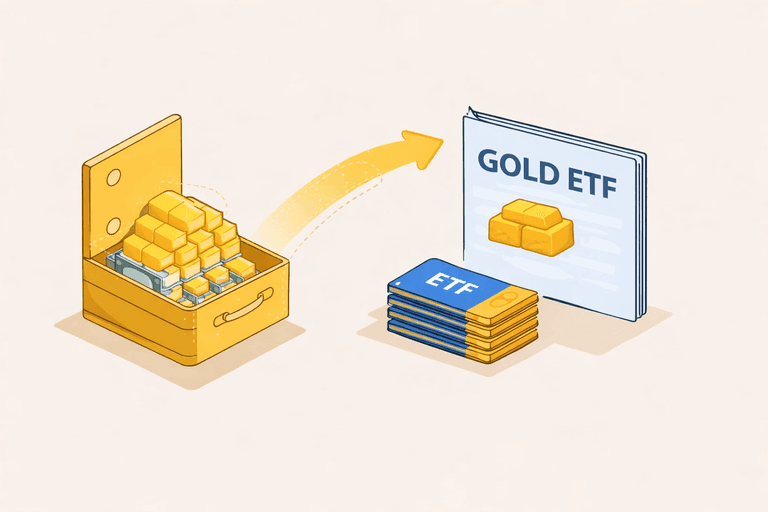
Then, buying gold in the form of Gold Exchange-Traded Funds (ETFs) is the smartest choice.
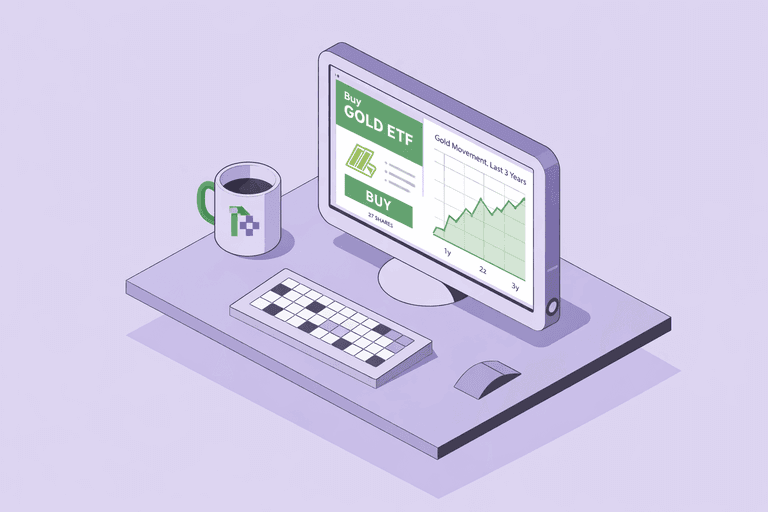
Gold ETFs are SEBI-regulated mutual fund schemes that invest primarily in physical gold and permitted gold-related instruments. Their units are listed and traded on stock exchanges, just like stocks, allowing you to buy gold at your convenience using your mobile phone. All you need is a demat and trading account.
Unlike jewellery, you don't take physical possession of the metal. And its purity is guaranteed.
Why Gold ETFs deserve a closer look
- No physical storage or theft worries: Your ETF units are held electronically. There's no gold to safeguard at home, no need to rent a locker for this investment and no risk of physical theft of gold in your possession.
- Lower ownership-related costs: Gold ETFs avoid jewellery making charges and GST on purchases of ETF units. Instead, investors incur fund expenses and potentially brokerage, demat charges and trading spreads. That distinction matters when your goal is investment rather than consumption.
- Transparent pricing and holdings: Gold ETF prices are visible during market hours. Fund houses also disclose information such as net asset value (NAV), expense ratios, portfolios and tracking performance. This makes it easier to evaluate the product before investing.
- Exchange-traded liquidity: You can buy or sell Gold ETF units on the stock exchange during trading hours, subject to market liquidity. You can place your gold ETF order anytime on the ArihantPlus app though, using after-market-order (AMO) facility. You don't need to visit a jeweller or negotiate a physical gold buyback price. However, the exchange price may differ from the fund's NAV, particularly when trading liquidity is limited.
- Disciplined investment with SIP: You can even start a gold SIP for as little as ₹15. Invest daily, weekly, or monthly to grow your gold wealth automatically and consistently.
Do Gold ETFs exactly match gold returns?
Gold ETFs aim to track gold prices, but their returns slightly differ from gold price return because of expenses, cash holdings, execution costs and other factors.
Two useful measures to examine are:
- Expense ratio: The annual cost of managing the fund, reflected in its NAV.
- Tracking difference: The gap between the ETF's return and the return of its gold benchmark over a period.
A lower expense ratio can help, but investors should also compare tracking difference and trading liquidity.
And remember, Gold ETFs aren't risk-free. Their value fluctuates with gold prices, and investors also face market and trading-related risks.
The takeaway: For someone buying gold primarily as an investment, Gold ETFs offer a compelling combination of cost efficiency, transparency, liquidity and convenience, without the complications of storing physical gold.
3. Gold Mutual Funds
If you don't have a demat account, gold mutual funds, particularly Gold Fund of Funds (FoFs), provide a smart way to invest in gold. These schemes generally invest in Gold ETFs, giving investors indirect exposure to gold prices.
Their biggest advantage is convenience. You can invest through a lump sum or start a Systematic Investment Plan (SIP), contributing a fixed amount every month. For example, you could start with ₹2,000 a month this Diwali and continue investing beyond the festive season.
However, Gold FoFs may carry higher overall expenses than directly investing in Gold ETFs, because of their additional fund structure.
The takeaway: Gold mutual funds can be useful for investors who prefer SIPs and don't want to manage a demat account.
4. Digital Gold: Is it safe?
Digital gold is promoted as an easy way to purchase gold online, sometimes starting with amounts as small as ₹10 or ₹100.
But is it safe?
Marget regulator SEBI has explicitly cautioned investors that digital gold operates outside its regulatory framework. Unlike gold ETFs, digitial gold carries counterparty, custody, and operational risks, without investor protections. Add high buy-sell spreads and 3% GST, and this small-ticket convenience comes with major safety trade-offs.
The takeaway: Digital gold offers small-ticket convenience and bypasses demat account need, but that's exactly why you need to be cautious. Its not regulated and SEBI has warned investors of its risks. When you can invest in gold ETF from as little as ₹15, why take the risk?
Physical Gold vs Gold ETF vs Gold Mutual Fund vs Digital Gold
Factor | Physical gold | Gold ETF | Gold mutual fund | Digital gold |
Best for | Wearing, gifting, tradition | Investment exposure | SIP-based investing | Small online purchases |
Physical storage | Required | Not required personally | Not required personally | Managed by provider |
Demat account | No | Yes | No | No |
Main costs | GST, making charges, premiums | Expense ratio, trading costs | Fund expenses | GST, spreads, other charges |
Liquidity | Depends on buyer | Exchange-traded | Fund redemption | Provider-dependent |
SEBI-regulated investment product | No | Yes | Yes | No |

What Should You Choose This Dhanteras?
The answer depends on why you're buying gold.
If you're buying a necklace for a loved one or a coin for the pooja to mark an auspicious occasion, physical gold serves a purpose beyond investment returns.
But if your goal is to invest in gold, gold ETF is the best choice. They save you from high making charges, storage hassles, and illiquidity - giving you pure gold exposure transparently.
And for investors who prefer monthly contributions without a demat account, gold mutual funds offer an alternative.
Remember, while Dhanteras brings good fortune, smart asset allocation secures your financial returns.
But always remember, buying gold on an auspicious day doesn't guarantee investment returns.
This Diwali, let tradition guide the celebration and your investment objective guide how you buy gold.
Disclaimer: This article is for educational purposes only and does not constitute investment advice. Gold investments are subject to market risks. Please read all relevant documents carefully before investing.
Frequently Asked Questions
1. What is the best way to buy gold this Diwali 2026?
If you're buying for gifting or personal use, physical gold may be suitable. For investment exposure, Gold ETFs and gold mutual funds are alternatives worth comparing.
2. Why choose a Gold ETF over physical gold?
Gold ETFs avoid jewellery making charges and personal storage requirements. They also provide transparent fund disclosures and exchange-traded liquidity, although expenses and market risks remain.
3. Can I invest in gold without a demat account?
Yes. Gold mutual funds allow lump-sum and SIP investments without a demat account.
4. Is digital gold the same as a Gold ETF?
No. Gold ETFs are SEBI-regulated mutual fund products, while digital gold offered by online platforms generally falls outside SEBI's securities-market regulatory framework.
Related Topics



Everyone Bought Gold ETFs in January. Here's Why They're Selling Now

EGR vs Gold ETF: Key differences, taxation & which should you choose?

Electronic Gold Receipts Explained: A Smarter Way to Invest in Gold?

Oil Is Surging After The Iran Strikes. So Why Isn’t Gold Following?

Physical Gold vs Gold ETFs: Which investment is best for Indian investors?
How Your Gold Profits Are Taxed And Budget 2026 Expectations For Gold

Gold & Silver Rally Amid US–Venezuela Conflict: What Should Investors Do?
Silver vs gold 2025: Why smart investors are choosing silver now