



Should You Buy Gold This Akshaya Tritiya?

By
Arihant Team
Akshaya Tritiya, to be celebrated on April 19 this year, has traditionally been seen as an auspicious day to buy gold. However, with prices hovering near all-time highs, buying behaviour is clearly evolving. While the sentiment remains strong, consumers are opting for lighter purchases or delaying buying, even as investors increasingly shift toward financial gold like ETFs, making this festival as much about smart investing as tradition.
In This Article
- Introduction
- Record Gold Rally That Is Changing Behaviour
- From Jewellery to ETFs: The Shift in Gold Demand
- Gold Stocks Are Not the Same as Gold
- The Investor’s Approach This Akshaya Tritiya
Introduction
As Akshaya Tritiya approaches, gold once again takes centre stage. It is a tradition deeply rooted in culture, and for many households, buying gold on this day is almost non-negotiable.
However, this year, the context feels meaningfully different.
Gold prices are currently hovering around ₹1,55,000 per 10 grams, compared to roughly ₹95,000 a year ago. If you go back two Akshaya Tritiyas, prices were nearly half of current levels.
Such a sharp rise in a relatively short period has real implications for both consumers and investors.
Open a free account today
Invest in tomorrow with just one click
Record Gold Rally That Is Changing Behaviour
Across jewellery stores, footfall remains steady, which suggests that interest in gold has not diminished. However, the nature of purchases has evolved. Consumers are increasingly opting for lighter jewellery, often below 5 grams, rather than heavier traditional pieces.
In many cases, buyers are exchanging old gold to offset costs, while others are choosing to delay purchases altogether in anticipation of better price levels. Demand, therefore, has not disappeared, but it has become more cautious and adaptive.
From Jewellery to ETFs: The Shift in Gold Demand
And while physical consumption is adjusting, investment demand for gold remains strong. The key difference is that this demand is now shifting toward financial formats.
Gold ETFs, in particular, have seen a sharp rise in participation. Over the past year, assets under management in gold ETFs have expanded significantly, reflecting a growing preference among investors for more efficient and liquid ways to gain exposure.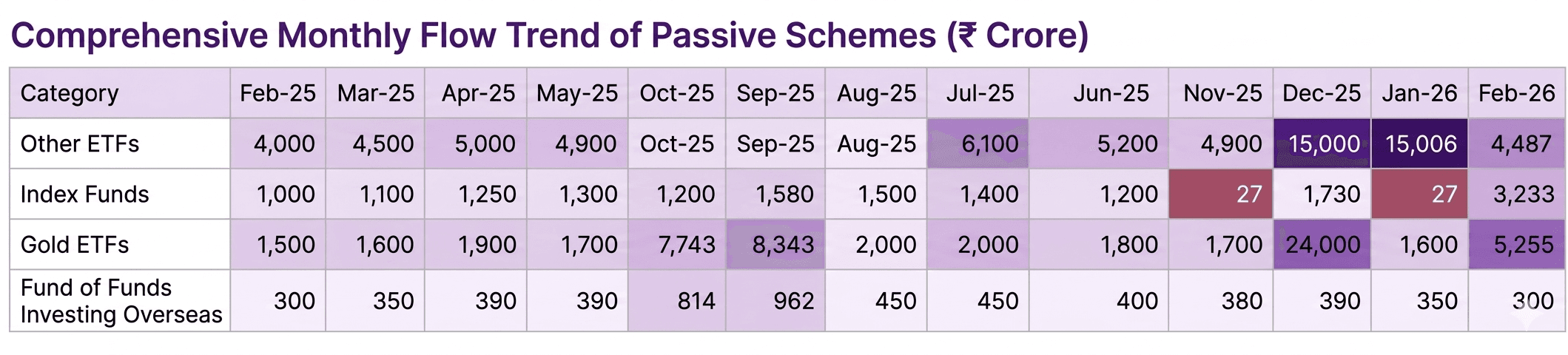
Source: AMFI
This shift is being driven by clear advantages: the absence of making charges, ease of transaction, and improved tax treatment, where long-term capital gains now apply after just 12 months.
Gold Stocks Are Not the Same as Gold
Now when talking about gold investments, gold-related equities are often seen as a natural extension of the gold trade. .
Companies such as Titan, Kalyan Jewellers, and PC Jeweller are operating businesses, not direct proxies for gold prices. Elevated prices reduce affordability, shift demand toward lower-margin products, and introduce uncertainty around volumes. This explains the uneven performance seen across the sector.
Titan continues to stand out due to its strong execution and brand strength. However, valuations appear elevated after the recent rally, which means investors should be mindful of entry points rather than chasing the stock at current levels.
However, within the broader gold ecosystem, gold financiers present a different and often overlooked opportunity.
Companies such as Manappuram Finance tend to benefit more directly from rising gold prices. Higher prices increase the value of collateral, which in turn supports loan growth.
Additionally, improvements in management and asset quality cycles are strengthening the outlook for this segment. However, this remains a more selective play and requires a deeper understanding of business dynamics.
The Investor’s Approach This Akshaya Tritiya
This Akshaya Tritiya, the approach to gold needs to be more intentional. If the purchase is driven by cultural or traditional considerations, it makes sense to continue the practice, but with greater awareness. Focusing on lighter, cost-efficient options is far more practical than viewing jewellery as a primary investment.
For investors seeking exposure to gold as an asset class, ETFs currently offer the most efficient route. They provide direct linkage to gold prices without the additional costs and complexities associated with physical ownership or the operational risks embedded in equities.
Remember, gold’s role in a portfolio extends beyond any single occasion. It serves as a hedge against currency fluctuations, geopolitical uncertainty, and equity market volatility. And in the current global environment, where such risks remain elevated, that role becomes even more relevant.

Related Topics


Everyone Bought Gold ETFs in January. Here's Why They're Selling Now


EGR vs Gold ETF: Key differences, taxation & which should you choose?

Electronic Gold Receipts Explained: A Smarter Way to Invest in Gold?

Oil Is Surging After The Iran Strikes. So Why Isn’t Gold Following?

Physical Gold vs Gold ETFs: Which investment is best for Indian investors?

How Your Gold Profits Are Taxed And Budget 2026 Expectations For Gold

Gold & Silver Rally Amid US–Venezuela Conflict: What Should Investors Do?


Silver vs gold 2025: Why smart investors are choosing silver now