
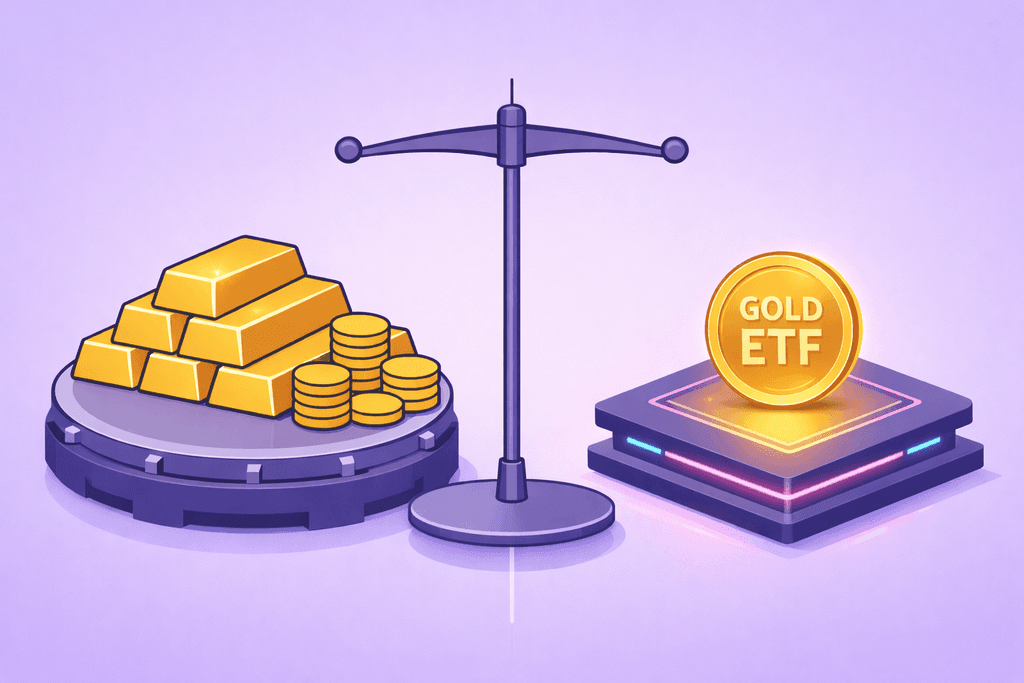
Physical Gold vs Gold ETFs: Which investment is best for Indian investors?
Gold remains a trusted hedge for Indian investors, but how you invest matters. This guide compares physical gold, digital gold, and gold ETFs on costs, safety, liquidity, and regulation to help you choose the most efficient and secure way to add gold to your portfolio.
In This Article
- Investing in Physical Gold
- Investing in Digital Gold
- Investing in Gold ETFs
- Gold ETFs vs Physical Gold vs Digital Gold
- What this means for you
- Final Takeaway
From wedding jewellery passed down generations to small coins bought every Diwali, gold has always been our financial safety net. But while our love for gold hasn’t changed, how we invest in it certainly has. What was once limited to jewellery and coins has now expanded to modern options like Gold ETFs. So the obvious question is which one actually makes sense for your portfolio today?
Let’s break it down.
Investing in Physical Gold
Traditionally, gold investment in India has taken the form of jewellery, coins, and bullion bars. Jewellery is the most common format and holds emotional or sentimental significance, while coins and bars marked are typically purchased with investment intent.
That said, physical gold is not without limitations. Jewellery purchases usually involve making charges and storage costs. Moreover, purity standards may differ across sellers, making verification an important consideration during resale.
Open a free account today
Invest in tomorrow with just one click
Investing in Digital Gold
Digital gold is a modern way to own gold. Instead of buying physical coins or jewellery, you purchase gold online, sometimes starting with as little as ₹10.
Digital gold has now grown into a ₹13,800 crore market in India. But SEBI has flagged a warning: if a platform via which you bought the gold runs into trouble, it currently has no legal power to protect you.
Digital gold works on the promise that every unit you buy is backed by real gold stored in a vault. But unlike gold ETFs or banks, these platforms aren’t legally required to hold gold equal to what customers own. Additionally, brokerage platforms are no longer allowed to sell digital gold, limiting the ways you can exit your investment.
So what can you do if you already hold digital gold? You have three main options:
- Take delivery of your gold and hold it physically.
- Sell and move the proceeds to regulated alternatives like Gold ETFs on ArihantPlus.
- If you don’t have a demat account, then Gold Mutual Funds are a practical alternative but they tend to work out slightly more expensive overall than Gold ETFs in most typical cases.
Investing in Gold ETFs
Unlike digital gold, Gold ETFs are fully regulated by SEBI. The fund buys real gold and stores it in approved vaults (like ICICI Bank vaults, Kotak vaults, or other certified custodians).
SEBI regulates the fund manager who runs the ETF. They are required by law to hold the gold separately from their own assets, get it audited regularly, and follow strict reporting rules. So even if the fund manager or the company running the ETF runs into trouble, your gold is safe and can’t be touched.
So what exactly is a Gold ETF?
A Gold ETF is a fund that invests in 99.5% pure physical gold on your behalf. It is listed on stock exchanges, with real-time pricing and the ability to buy or sell during market hours. You can make a one-time purchase in a gold ETF or even set up a gold ETF SIP to invest regularly to benefit from rupee-cost averaging and compounding.
On ArihantPlus, you can place an AMO (After Market Order) for Gold ETFs anytime. The app automatically places the order when the market opens.
The popularity of ETFs is reflected in numbers: Indian Gold ETFs saw a 65% jump in holdings in 2025, reaching 95 tonnes, making India the 6th largest holder globally.
You can alternatively opt for gold mutual funds. Gold mutual funds do not hold gold directly. They invest in Gold ETFs, making them suitable for investors without a demat account. However, this structure usually involves higher costs due to an additional expense layer.
Gold ETFs vs Physical Gold vs Digital Gold
Now let’s break down gold’s two main investment options, physical gold and Gold ETFs, to see which one fits your investing goals best!
Feature | Gold ETF | Physical Gold | Digital Gold |
Purity | 24K gold (0.995 purity and above) | May be questionable; depends on vendor | 24K gold (0.999) |
Pricing | Transparent, real-time pricing on the exchange | Depends on hallmarking and location | Platform-driven pricing, linked to spot gold |
Investment Size | Small (starts with ₹10) | Typically, larger (in thousands) | Small (starts with ₹10) |
Cost | Brokerage cost | Making, storage, and insurance cost | Spread, storage and redemption charges |
Liquidity | High; tradable during market hours | Moderate; resale depends on jeweller | High; sell back to platform anytime |
Taxation (LTCG) | Held > 12 Months = 12.5% Tax without indexation | Held > 24 Months = 12.5% Tax without indexation | >24 months: 12.5% without indexation |
Counterparty Risk | Low; SEBI-regulated | None | Present; depends on platform & vault partner |
Regulation & Safety | SEBI regulated | Not regulated as an investment | Not regulated by SEBI or RBI |
What this means for you
Whether you decide to buy gold ETF or physical gold, you need to understand that each option differs in regulation, costs, liquidity, and risk. This makes it essential to align your gold investment choice with your objective rather than convenience alone.
- Jewellery: Makes sense for weddings and cultural needs, where utility and emotional value outweigh investment returns.
- Digital Gold: Offers convenience for small buys but lacks SEBI regulation, limiting investor protection.
- Gold ETFs: Best option for cost efficient, liquid, and fully regulated exposure to gold prices. You can do a SIP and buy sell directly through your trading account.
- Gold Mutual Funds: They are best for investors who don’t have a trading and demat account. Since gold mutual funds primarily invest in gold ETFs making them tad bit expensive than ETFs.
- Electronic Gold Receipts (EGRs): A regulated way to buy and trade gold digitally on stock exchanges under SEBI’s framework.
Final Takeaway
Choosing the right investment vehicle is as important as choosing the right investment! Today, you have more ways than ever to invest in gold, but each comes with trade-offs. Physical gold offers emotional and cultural value, gold ETFs provide transparency, cost efficiency, and liquidity, while digital gold offers convenience; it is not regulated putting your money at risk.
Understanding the nuances and risks of each option helps you build a gold strategy that protects your wealth, keeps you flexible, and aligns with your financial goals.
Happy Investing!

Related Topics

Everyone Bought Gold ETFs in January. Here's Why They're Selling Now


EGR vs Gold ETF: Key differences, taxation & which should you choose?

Electronic Gold Receipts Explained: A Smarter Way to Invest in Gold?


Oil Is Surging After The Iran Strikes. So Why Isn’t Gold Following?


How Your Gold Profits Are Taxed And Budget 2026 Expectations For Gold

Gold & Silver Rally Amid US–Venezuela Conflict: What Should Investors Do?

Silver vs gold 2025: Why smart investors are choosing silver now