



Are Gold ETFs Backed by Physical Gold? What Indian Investors Should Know

By
Arihant Team
Your Gold ETF units may be sitting in a demat account, but what backs them? Indian Gold ETFs hold actual gold in secure vaults. Yet physical backing alone doesn't guarantee better returns. Here's how to verify the holdings, understand the costs and choose an ETF more carefully.
In This Article
- Key Takeaways
- Introduction
- 1. Is there actual gold behind your gold ETF?
- 2. Who stores and verifies the physical gold?
- 3. What changed Gold ETFs in 2026?
- 4. If every gold ETF holds gold, why do returns differ?
- 5. How can you check whether a gold ETF is expensive?
- 6. Gold ETF vs Physical Gold: What changes for investors?
- 7. Five checks before investing in a gold ETF
- Conclusion: Real gold is only half the story
- FAQs
Key Takeaways
- Gold ETFs in India are backed by physical gold of at least 99.5% purity, stored securely in vaults with appointed custodians.
- SEBI's 2026 changes aim to make gold valuation more consistent and improve the monitoring and safety of gold held by ETFs.
- Even though Gold ETFs hold physical gold, their returns may differ slightly due to expenses, tracking differences and market price fluctuations.
- Before investing, look beyond the fund's name. Check its gold holdings, expense ratio, tracking difference, liquidity and whether its market price is close to its NAV.
Introduction
Imagine investing ₹1 lakh in gold without buying a single gold coin or visiting a jewellery store.
Your investment appears in your demat account. You can track its value and sell it through the stock exchange.
But where is the gold?
Is there actually a gold bar sitting in a vault somewhere, or are you simply buying a financial product that follows gold prices?
It's a fair question, especially as more Indian investors turn to Gold Exchange-Traded Funds (ETFs).
The answer is yes. Indian Gold ETFs are backed primarily by physical gold.
But here's what matters more: how is that gold stored, who verifies it, and why can two Gold ETFs tracking the same metal deliver different returns?
Let's understand.
1. Is there actual gold behind your gold ETF?
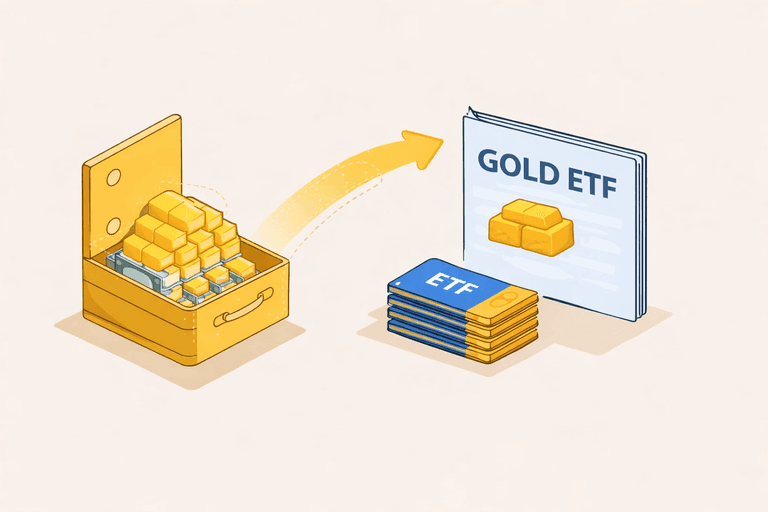
Yes. Unlike a product that merely promises a gold-linked payout, a Gold ETF invests primarily in physical gold and permitted gold-related instruments.
When you buy units, you own a proportionate interest in the fund's assets. You don't own an individually assigned gold bar, and you generally cannot walk into a vault and collect gold against a few ETF units. Instead, the fund holds the underlying assets while you hold electronic units.
But that raises another question: how do you know the gold actually exists?
2. Who stores and verifies the physical gold?
Every unit of gold ETF you purchase is backed by gold that are safely stored. Gold ETFs use appointed custodians and secure vaulting arrangements to hold the physical metal.
The gold generally meets a minimum purity standard of 99.5%, with applicable Good Delivery requirements. Custodians maintain records of the gold received and stored. The holdings are also subject to verification and oversight requirements.
Importantly, fund houses publish portfolio disclosures, allowing investors to examine how much of the scheme's assets are invested in physical gold.
What can you check?
Visit the asset management company's website and look for the ETF's monthly portfolio disclosure and Scheme Information Document (SID). These documents help you understand the fund's holdings, custody arrangements and investment risks.
3. What changed Gold ETFs in 2026?
Two developments are particularly relevant.
Gold valuation now reflects domestic spot prices
Until March 2026, the valuation of physical gold held by mutual funds relied on London Bullion Market Association (LBMA) prices, adjusted for currency, duties and other domestic factors.
From April 1, 2026, SEBI introduced a methodology based on polled domestic spot prices published by recognised stock exchanges. The objective is to make valuations more reflective of Indian market conditions and improve consistency across funds.
This doesn't change the fact that Gold ETFs hold physical gold. It changes how that gold is valued for calculating the fund's NAV.
Tighter oversight of bullion vaults
In September 2026, SEBI approved an expanded regulatory framework for vaults holding gold and silver for ETFs and other bullion products.
The proposed oversight covers areas such as security, segregation, record-keeping and reconciliation of physical holdings.
For investors, the significance is straightforward: physical backing is only as dependable as the systems responsible for safeguarding and accounting for the metal.
4. If every gold ETF holds gold, why do returns differ?
This is where investors should pay closer attention.
Suppose two Gold ETFs track the same gold benchmark. Over a year, the benchmark rises 12%. One ETF delivers 11.5%, while another delivers 10.8%.
Both funds may hold genuine physical gold. Yet their returns differ. Why?
- Expense ratio: The fund deducts annual operating expenses from its assets.
- Tracking difference: The ETF may underperform or outperform its benchmark over a period because of expenses, cash holdings and other factors.
- Trading price: The price you pay on the exchange can differ from the ETF's NAV.
This last point is particularly important. An ETF might have an NAV of ₹100 per unit but trade at ₹103 because buyers are willing to pay a premium.
If you purchase at ₹103, you're paying 3% above the underlying value indicated by NAV. That premium could narrow later, affecting your realised return even if gold prices remain stable.
The lesson: Owning a physically backed Gold ETF is only part of the equation. The price at which you buy matters too.
5. How can you check whether a gold ETF is expensive?
Before placing an order, look at the ETF's indicative Net Asset Value (iNAV), where available.
iNAV is an estimate of the ETF's underlying value during the trading session.
Comparing the exchange price with iNAV can help identify whether units are trading at a premium or discount.
However, iNAV may not always update continuously for commodity ETFs, so investors should check its timestamp.
Also examine trading volumes and the bid-ask spread.
A wider spread means a bigger difference between the price at which you can immediately buy and sell.
For example, a quoted buying price of ₹101 and selling price of ₹99 represents a ₹2 spread.
That is a transaction cost investors can easily overlook.
6. Gold ETF vs Physical Gold: What changes for investors?
Factor | Physical gold | Gold ETF |
Ownership | Jewellery, coins or bars | Electronic fund units |
Gold purity | Buyer verifies | Scheme-level purity requirements |
Storage | Home or locker | Custodian-managed vaults |
Making charges | Applicable to jewellery | None |
Liquidity | Depends on resale arrangements | Exchange-traded, subject to liquidity |
Main risks | Theft, storage, resale costs | Gold prices, tracking, trading and custody risks |
Gold ETFs eliminate the investor's need to personally store gold, arrange locker facilities or worry about physical theft of gold kept at home.
But the underlying gold still needs secure custody, and the investment remains exposed to market and operational risks.
7. Five checks before investing in a gold ETF
Before selecting a Gold ETF, examine:
- Physical gold allocation: Check the latest portfolio disclosure to see what the scheme actually holds.
- Expense ratio: Compare the annual cost across ETFs.
- Tracking difference: See how closely the fund has followed its gold benchmark over time.
- Trading liquidity: Check volumes and bid-ask spreads.
- NAV versus market price: Avoid overlooking a significant premium when buying units.
These checks can be more useful than selecting an ETF solely because it delivered the highest recent return.
Conclusion: Real gold is only half the story
So, is there actual gold behind India's Gold ETFs?
Yes. But knowing that is only the starting point.
For investors, the more important questions are how the gold is safeguarded, how accurately the ETF tracks its benchmark and whether its units are trading at a reasonable price.
Gold ETFs offer a convenient way to invest without the storage responsibilities of physical gold.
But a good Gold ETF investment isn't just about the gold backing it. It's also about what you pay, how closely it tracks gold prices and how easily you can exit.
Disclaimer: This article is for educational purposes only and does not constitute investment advice. Mutual fund investments are subject to market risks. Read all scheme-related documents carefully before investing.
FAQs
Are gold ETFs in India backed by real gold?
Yes. Indian Gold ETFs invest primarily in physical gold and permitted gold-related instruments under SEBI's regulatory framework.
Where is the gold stored?
The physical gold is held in secure vaulting arrangements through appointed custodians.
Can gold ETFs lose money despite physical backing?
Yes. Their value changes with gold prices, while expenses, tracking difference, and trading conditions can affect investor returns.
Can I take physical delivery of my gold ETF investment?
Ordinary retail investors generally sell units on the stock exchange. Direct physical redemption is usually available only to eligible participants or large investors under scheme-specific conditions.
Related Topics




Everyone Bought Gold ETFs in January. Here's Why They're Selling Now


EGR vs Gold ETF: Key differences, taxation & which should you choose?

Electronic Gold Receipts Explained: A Smarter Way to Invest in Gold?


Oil Is Surging After The Iran Strikes. So Why Isn’t Gold Following?


Physical Gold vs Gold ETFs: Which investment is best for Indian investors?

How Your Gold Profits Are Taxed And Budget 2026 Expectations For Gold

Gold & Silver Rally Amid US–Venezuela Conflict: What Should Investors Do?

Silver vs gold 2025: Why smart investors are choosing silver now