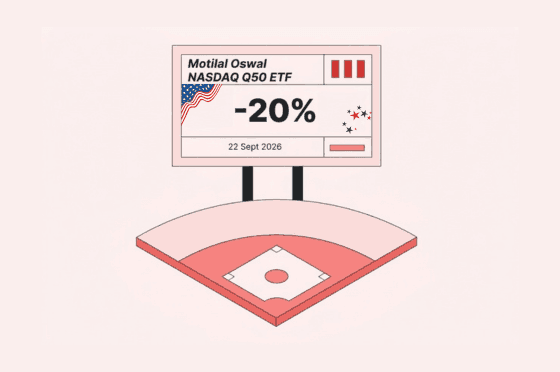
Why Motilal Oswal NASDAQ Q50 ETF crashed 20%?

By
Arihant Team
Motilal Oswal NASDAQ Q50 ETF has hit the 20% lower circuit for three consecutive days. What is the reason for this huge crash in its market price? Has the ETF underperformed or have the US stocks it tracks crashed?
In This Article
- Introduction
- What is Motilal Oswal Nasdaq Q 50 ETF?
- How to determine the value of ETFs?
- Why is Motilal Oswal Nasdaq Q 50 ETF seeing huge demand for its units?
- Why did Motilal Oswal NASDAQ Q50 ETF crash?
- Investor Takeaway
Introduction
Did you know that the Motilal Oswal Nasdaq Q 50 ETF crashed by 20% yesterday? Well, surprisingly this ETF also crashed by 20% on Monday, September 21st 2026 and on Tuesday. So why is Motilal Oswal Nasdaq Q 50 ETF crashing heavily? Is something wrong with this ETF or the US stocks this ETF tracks? Let's find out.
Open a free account today
Invest in tomorrow with just one click
What is Motilal Oswal Nasdaq Q 50 ETF?
Before we look at the Motilal Oswal Nasdaq Q 50 ETF, let's understand what an ETF is. An ETF or Exchange Traded Fund tracks Indian or foreign stock market indices like the Nifty 50, BSE Sensex or US stock market indices like Nasdaq-100, bonds and commodities depending on the type of ETF. Also ETFs are traded on stock exchanges like NSE and BSE just like stocks.
Motilal Oswal Nasdaq Q 50 ETF tracks the Nasdaq Q-50 TRI (Total Return Index) a US stock market index which consists of 50 large non-financial Nasdaq-listed companies that have the potential to be a part of the Nasdaq-100. The ETF aims to generate similar returns as the Nasdaq Q-50 Total Return Index it tracks.
You can see the Top 10 holdings of the Motilal Oswal Nasdaq Q 50 ETF in the table below.
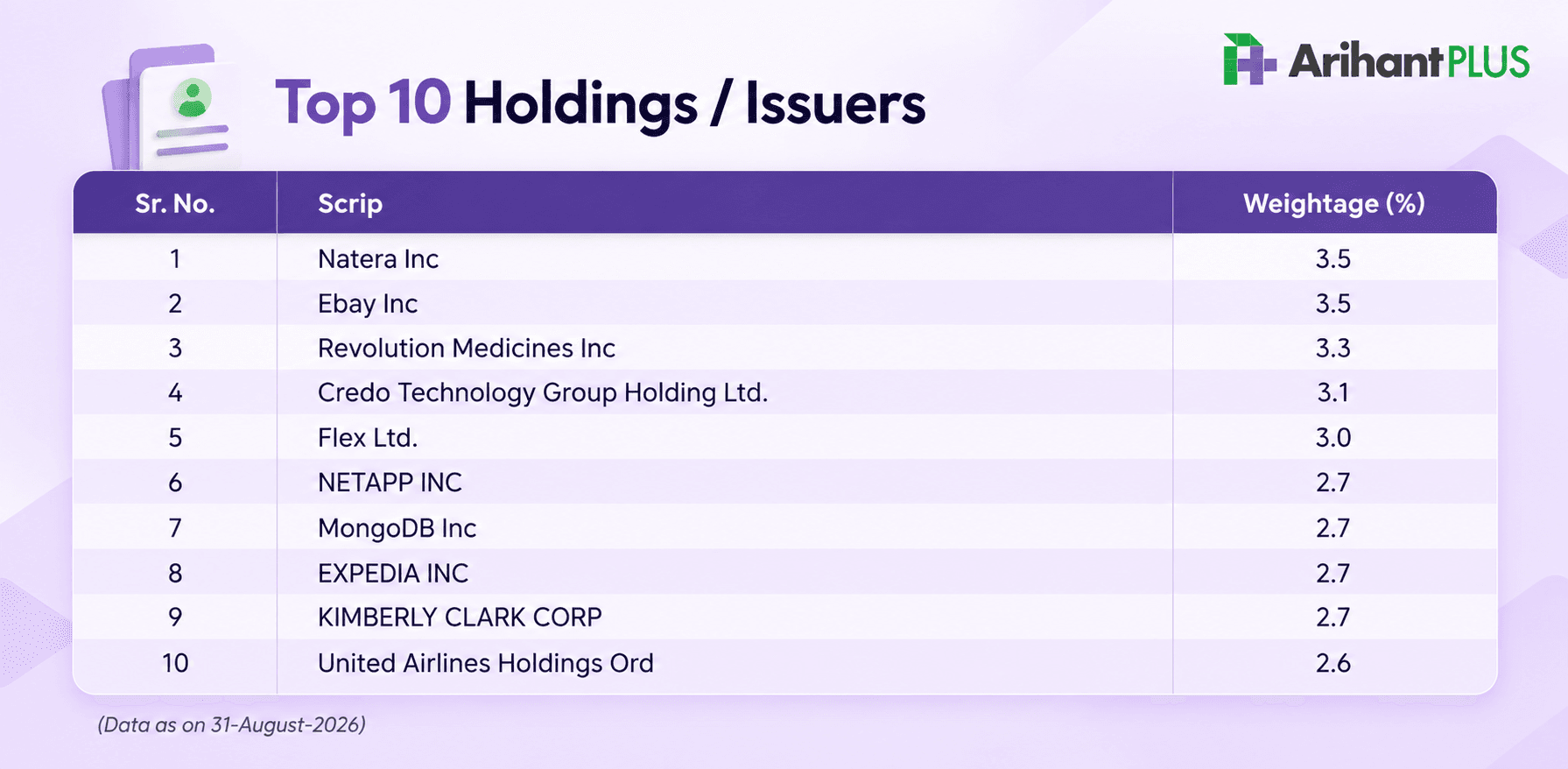
Source: Motilal Oswal Mutual Fund Factsheet
How to determine the value of ETFs?
ETFs have two important prices. A real-time market price at which investors buy and sell units on stock exchanges determined by the demand and supply. The second is the NAV (Net Asset Value) which shows the true value of the securities held by the ETF. The actual NAV is calculated at the end of the trading day.
What if you want to estimate an ETFs real time value before the end of the trading day? Then you could check its iNAV or indicative NAV which is a real time estimate of the ETFs NAV throughout the trading day.
You could compare an ETFs live market price to its iNAV. If the market price is higher than the iNAV the ETF is trading at a premium. If it's lower than the iNAV the ETF is trading at a discount. You can find the iNAV of ETFs on the NSE website or on official AMC websites.
For example, the iNAV of Motilal Oswal Nasdaq Q 50 ETF is 121.23 at 1.30 PM on September 23, 2026.

Source: Motilal Oswal Mutual Fund
Why is Motilal Oswal Nasdaq Q 50 ETF seeing huge demand for its units?
ETFs are designed to trade close to the value of the assets they hold. Now, market makers like broker-dealers or global investment banks create and redeem ETF units to reduce significant premiums or discounts. However, market makers may face restrictions when they create fresh units of International ETFs.
This is because the RBI and SEBI have placed a $7 billion industry-wide limit on overseas investments for the mutual fund industry. There is also a separate $1 billion limit for investments in overseas ETFs and a further $1 billion limit per mutual fund house. This has created artificial demand for units of many International ETFs as these limits are almost exhausted by AMCs.
Market makers provide liquidity to ETFs by buying and selling units whenever investors want to trade. As the industry limit is nearly exhausted, market makers cannot create fresh units of these International ETFs leading to a shortage in supply.
However, the demand for International ETF units is very high. This demand-supply mismatch pushes the International ETFs market price way above its true value which means the ETF is trading at a high premium to its NAV. This is exactly what happened to the Motilal Oswal Nasdaq Q 50 ETF where supply of fresh units couldn’t match the higher demand leading to an inflated market price over its NAV.
Why did Motilal Oswal NASDAQ Q50 ETF crash?
On September 4, 2026 the market price of Motilal Oswal Nasdaq Q 50 ETF was around ₹141.93 compared to the official NAV/iNAV of ₹118.74. This is a premium of around 19.5%. What’s surprising is the market price of this ETF climbed all the way to ₹396.30 on September 18, 2026 whereas the official NAV/iNAV was ₹118.14. This is a massive 235% premium (market price over NAV).
This sharp run up in Motilal Oswal NASDAQ Q50 ETF market price over its NAV fueled by an artificial shortage in its units couldn't sustain for long. After touching an intra day high of ₹471.99 on Monday, September 21st, its market price crashed to ₹317.04 hitting a 20% lower circuit.
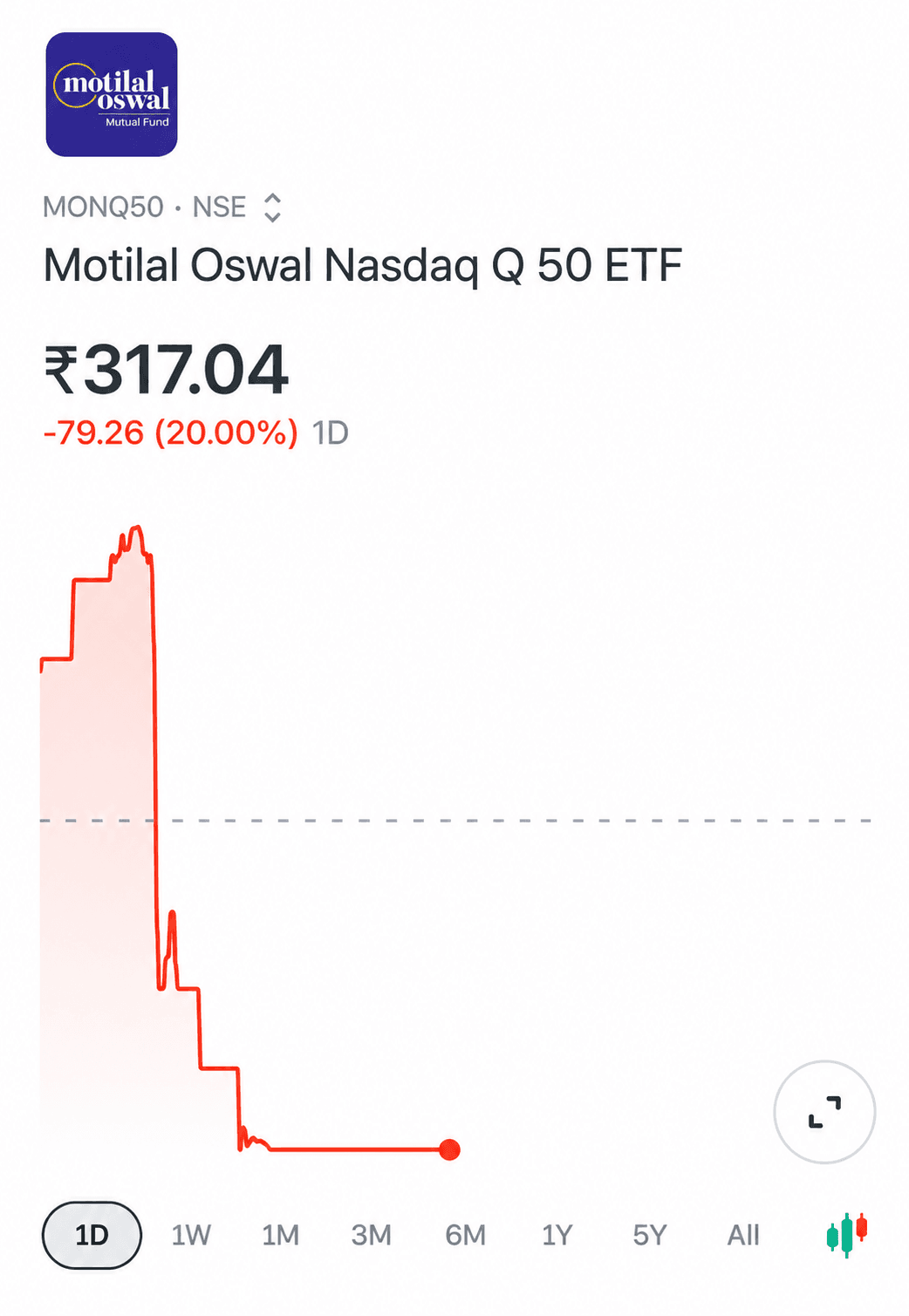
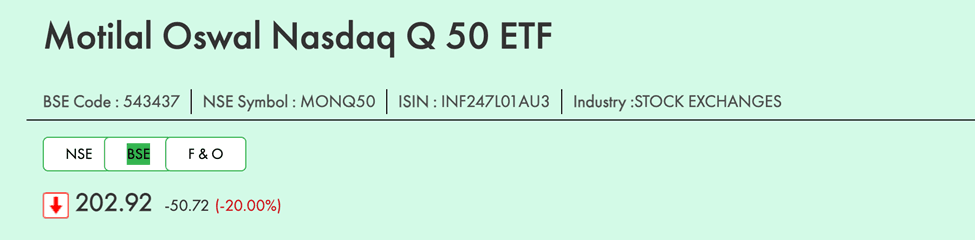
This was followed by a second 20% lower circuit on September 22, 2026 taking its market price all the way down to ₹253.64. Motilal Oswal NASDAQ Q50 ETF crashed by another 20% yesterday taking its market price down to ₹202.92.
Source: ArihantCapital
Was there any other factor for this crash besides the artificial shortage of Motilal Oswal NASDAQ Q50 ETF units? Previously, the maximum daily ETF price band was fixed at ±20% based on its T-2 day NAV. However, after SEBI’s new ETF pricing rules effective September 7, 2026 an ETF will now use the T-1 day closing market price, based on the last 30 minutes' (VWAP) volume weighted average price. This allowed the market price of Motilal Oswal NASDAQ Q50 ETF to climb way above its NAV which ultimately resulted in its crash.

Investor Takeaway
The crash in the market price of Motilal Oswal NASDAQ Q50 ETF has some important lessons.
Always check the iNAV of an ETF before investing as it shows if the ETF is trading at a premium or discount over its market price.
If the market price is way above the iNAV you are overpaying for the ETF and if the market price crashes you could suffer a heavy loss.
Many AMCs warn investors against overpaying for ETFs and you should heed their warning.
- If you are thinking of investing in the Motilal Oswal NASDAQ Q50 ETF do note that the recent heavy crash in its market price has not made it cheap. Its market price is still substantially higher than its NAV.
Related Topics

Everyone Bought Gold ETFs in January. Here's Why They're Selling Now

Why US ETFs Are Expensive for Indian Investors And How It Impacts Your Returns


Physical Gold vs Gold ETFs: Which investment is best for Indian investors?

How Your Gold Profits Are Taxed And Budget 2026 Expectations For Gold