
Why US ETFs Are Expensive for Indian Investors And How It Impacts Your Returns

By
Arihant Team
Indian investors are increasingly investing in US ETFs for global exposure, but many overlook the hidden premium they pay. Due to regulatory limits and high demand, ETF prices often trade above their actual value (NAV), reducing returns. Understanding this premium risk is crucial to making smarter investment decisions.
In This Article
- Introduction
- Why you’re losing money in US ETFs (without realizing it)
- Why premium in US ETFs exist
- Why demand still remains strong
- Risk most US ETF investors ignore: Premium Risk
- Investor Takeaway
Introduction
Many Indian investors are pouring in money into international exchange traded funds ETFs), particularly US ETFs - and for good reason. Global diversification, access to big names and global growth make these US ETFs very attractive.
But here’s something many investors do not realise: investing in US ETFs from India isn't as cheap as it seems. You are paying a hidden premium to access it.
And even as the US markets remain volatile due to the current war, the money from India keeps flowing into these ETFs. On the surface, it looks like smart global investing. But if you look a little closer, there’s a hidden cost that quietly eats into your returns.
This is not because the underlying assets are overpriced, nor because the ETF is mismanaged. The explanation lies in a single number that most retail investors rarely check!
Open a free account today
Invest in tomorrow with just one click
Why you’re losing money in US ETFs (without realizing it)
When you buy an ETF on the NSE or BSE, you transact at the market price. However, every ETF also has an indicative Net Asset Value, or iNAV, which reflects the real-time value of the underlying portfolio.
In an efficient market, the ETF’s trading price should remain very close to its iNAV. This means if the NAV of an ETF is ₹10, you should be able to buy it at this price. But in the case of international ETFs in India, this gap has widened meaningfully.
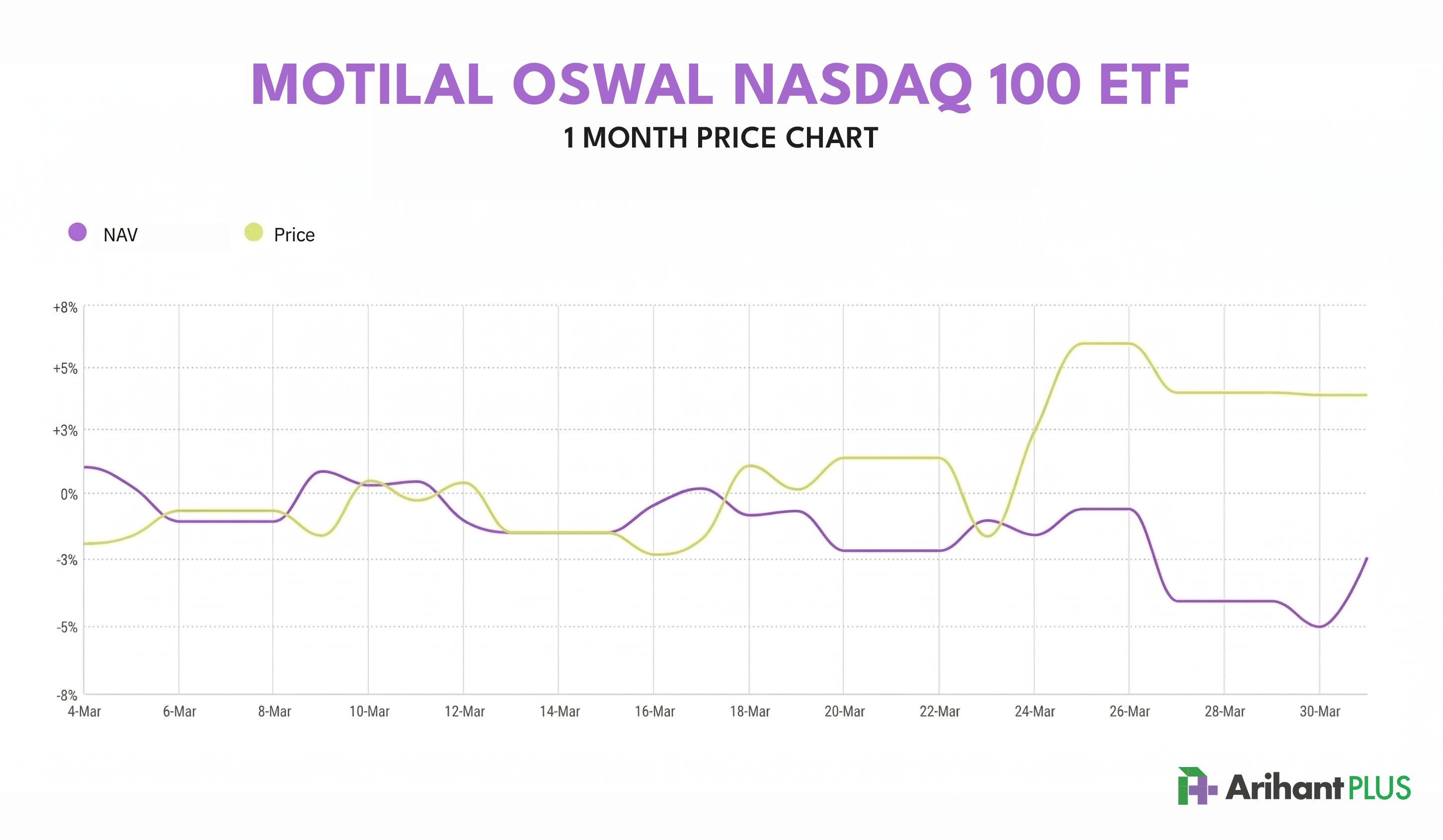
Consider the Motilal Oswal Nasdaq 100 ETF. On March 30, 2026, it was trading on NSE at around ₹231.54, while its NAV stood near ₹211.85. This implies a premium of roughly 9%.
In practical terms, you are paying ₹109 for ₹100 worth of Nasdaq exposure. A year ago, this premium was closer to 3%, which suggests that the gap has widened significantly over time.
To understand why this is happening, one needs to look beyond the ETF itself and examine the broader regulatory structure.
Why premium in US ETFs exist
In India, mutual funds can invest only a limited amount overseas. The total industry limit is $7 billion, with a separate $1 billion limit for international ETFs. These limits have stayed almost unchanged for years.
The overall overseas investment limit was fully used up in early 2022, and the ETF specific limit was exhausted by 2024. Since then, most fund houses have not been able to create new ETF units freely without crossing these limits.
Normally, ETFs stay close to their NAV because of a process called creation and redemption. If an ETF trades above its NAV, institutional participants can create new units and sell them in the market. This increases supply and helps bring the price back in line.
But that process works only when fresh money can be invested in the underlying overseas assets. Right now, that is restricted. So the usual price-correction mechanism does not work properly. Supply is capped, but demand keeps rising. As a result, the ETF market price moves above its actual value.
This is not just a short-term mismatch. It is a structural premium caused by limited access and restricted supply.
Why demand still remains strong
Despite these inefficiencies, investor demand for international ETFs has not slowed. In fact, several factors continue to support it.
- Indian equities underperformance: Global markets, particularly US technology stocks, have delivered strong returns relative to domestic indices in recent periods. This naturally attracts capital, as investors seek to participate in higher-growth segments.
- Popularity of US tech stocks: The dominance of large US technology companies such as Nvidia, Apple, and Microsoft has reinforced the narrative around global innovation and artificial intelligence. This has made international exposure more appealing, especially to retail investors.
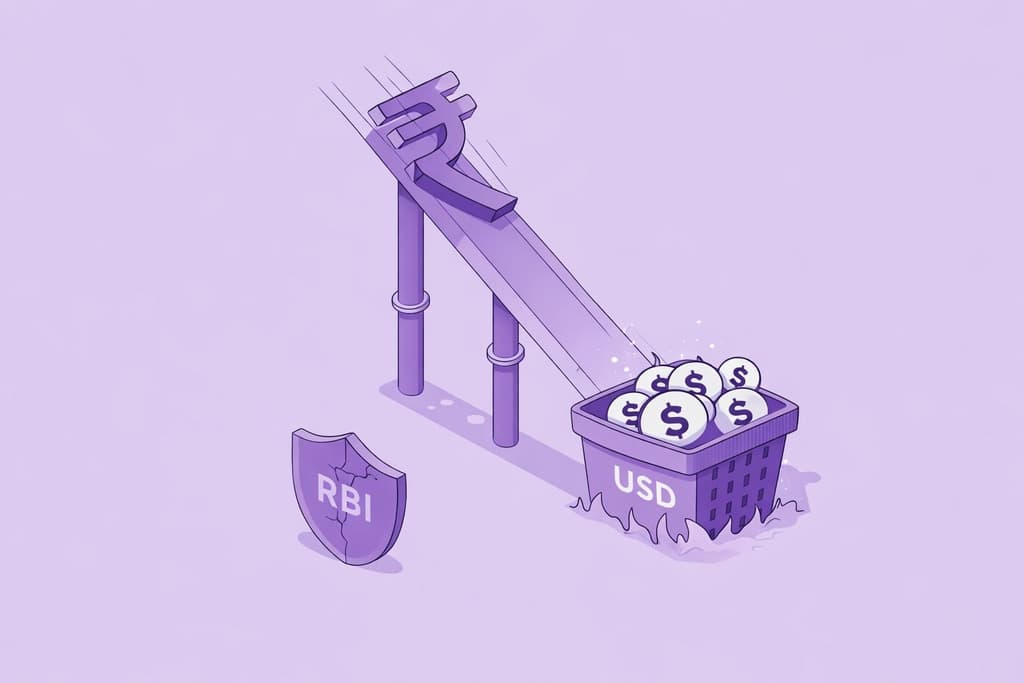
- Currency argument: Indian rupee is depreciating. Since 2025, INR depreciated ~9% against dollar, and in the last 5 years it has depreciated ~18%. This means that the value of your Indian rupee denominated assets has lost ~9% since 2025 alone. So, holding dollar-denominated assets can help boost returns and act as a hedge against rupee depreciation.
- Accessibility: Investors can easily gain access to international markets through ETFs traded on NSE and BSE without dealing with the complexities of foreign remittances or overseas brokerage accounts. This ease of access significantly lowers the barrier to entry.
Risk most US ETF investors ignore: Premium Risk
The demand for global exposure may be valid, but that does not remove the risk of paying a premium.
When you buy an ETF at a premium, your return depends on two things: the performance of the underlying index, and what happens to the premium.
If the premium remains elevated, or increases further, it can work in your favour. But it the premium shrinks, your returns can take a hit, even if the underlying index performs well. Let us understand this with an example.
If you buy an ETF at a 10% premium and that premium later drops to 2%, you end up losing money even if the index itself does not move. This is known as premium risk. This risk is different from market risk and currency risk, but it is often ignored.
So you might ask, what can bring these premiums down?
These premiums can continue only as long as the current constraints remain. And there are 3 ways where we see it can cool down:
- Extension of overseas investment limits by the RBI. If fund houses are allowed to create new units again, supply would rise and premiums could fall quickly.
- If US markets lose appeal or Indian markets become more attractive, interest in international ETFs may reduce, bringing premiums down.
- Regulatory action to improve ETF price efficiency.
When you buy an ETF, you don’t purchase it to profit off premium rise or drop. However, with the US ETF attested to premium risk, your returns take a hit. You can eliminate this risk by directly investing in US stocks through an international broker, provided the costs are not high.
Investor Takeaway
International diversification still makes sense and remains an important part of a balanced portfolio. But the way you invest matters.
Right now, Indian investors buying international ETFs are not just taking exposure to global markets. They are also paying for limited access.That creates an extra layer of risk which can meaningfully affect returns.
In simple terms, investors are not just buying the US market. They are paying for the ability to participate in it. And in today’s environment, that access comes at a price. So when you invest in an ETF, make sure to check the premium and account that in your costs to avoid surprises later.
Related Topics


Everyone Bought Gold ETFs in January. Here's Why They're Selling Now


Physical Gold vs Gold ETFs: Which investment is best for Indian investors?

How Your Gold Profits Are Taxed And Budget 2026 Expectations For Gold