

Is This The Right Time To Stop Your SIP?

By
Arihant Team
Market volatility often makes investors question their SIPs, but stopping during a downturn can hurt long-term wealth creation. Learn how rupee cost averaging, investor behaviour, and disciplined investing can help you stay on track. Discover when to continue your SIP and when your portfolio actually needs a review.
In This Article
- Introduction
- Power of Continuing Your SIP
- Why is a falling market NOT actually bad news for your SIP?
- Concept of Behaviour Gap
- 3 Thumb Rules for Mutual Funds Investing
- Investor Takeway
Introduction
SIP investing is basically a cult in India. Every newbie who starts investing gets told the same gospel “Mutual Fund Sahi Hai”.
A SIP is how almost everyone begins their journey, and everyone around you swears it is safer than picking direct stocks. But is it really that simple? In times like this, when Indian markets have gone nowhere for months and your portfolio is sitting in the red, does the gospel of SIP investing actually hold up, or is it just something people repeat without really testing it?
Power of Continuing Your SIP
In March 2026, the Nifty 50 fell 11.3 percent in a single month, and the Sensex dropped 11.5 percent. That is the kind of month that makes even a disciplined investor question everything. And right on cue, your investment app has a button sitting there waiting for you. Stop SIP. It looks tempting. But before you tap it, ask yourself one honest question. Has your goal actually changed, or are you just reacting to fear?
Say you invest ₹5,000 every month through a SIP, stick with it for 10 years, and that it grows to around ₹11 lakh. That is already a real milestone for most people. Stretch it to 20 years, and the same ₹5,000 a month can turn into roughly ₹45 lakh. Stay in for 30 years, and it can compound into a whopping ~₹1.5 crore.
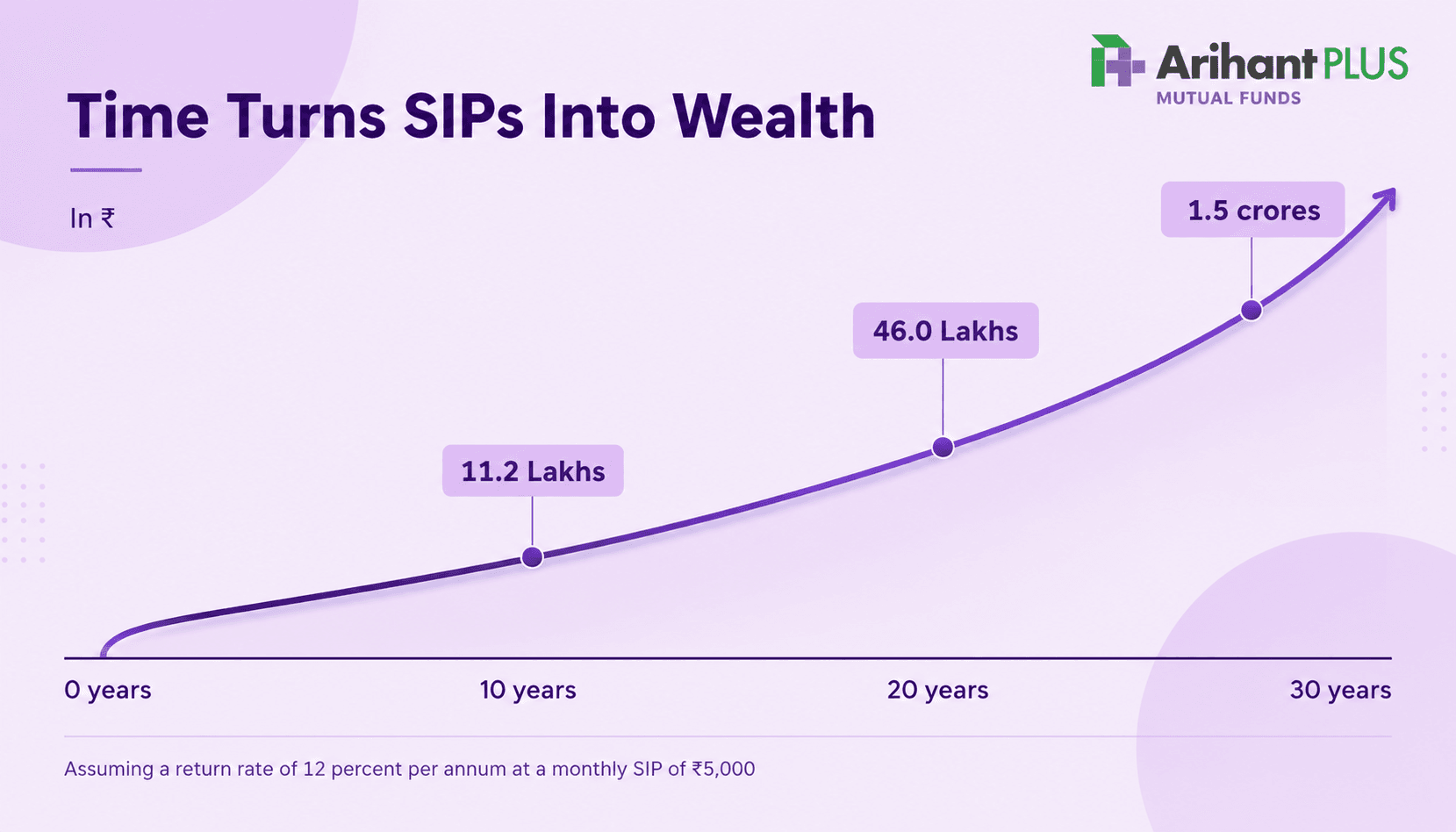
These numbers assume a 12 percent annual return, so treat them as an illustration and not a promise. Your actual returns depend on the fund you pick and how markets behave along the way. But the core idea holds up. Time and consistency do the heavy lifting, not timing the market.
Why is a falling market NOT actually bad news for your SIP?
When the markets fall, your fixed monthly amount buys more units, because units are cheaper. Think of it as a sale going on in the stock market - and you can buy more with the same amount than you did earlier. This means your average cost of each unit will be lower. This is called rupee cost averaging, and it is the whole point of a SIP.
If your goal is still five, seven, or ten years out, the units you buy cheap today are the ones that do the real work once the market recovers.
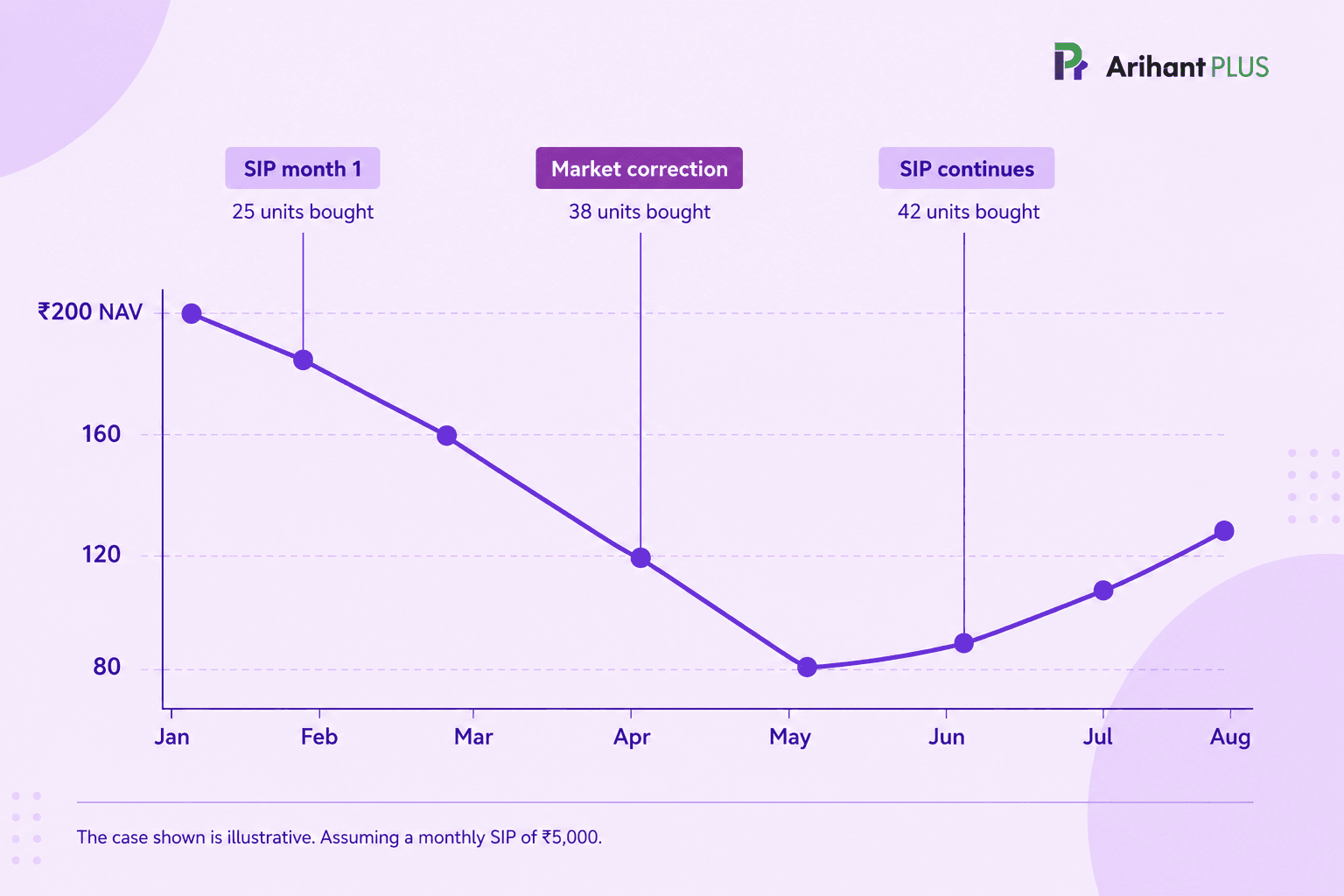
That is exactly why stopping your SIP in a downturn is such a costly habit. You end up walking away right when good companies are on sale. So the rule is simple. Do not stop your SIP just because the market fell. What you should actually check is whether you are in the right funds to begin with. Thematic bets and small cap or mid cap funds tend to get hit the hardest in a downturn, and some never fully recover. Review your portfolio, swap out the weak schemes, be careful about sectoral and thematic funds. But keep the SIP investment running (maybe with the right schemes if a change is needed).
And remember, the number on your screen today is not your final wealth. It is just today's price tag on a journey that is not over yet.
Concept of Behaviour Gap
There is a concept called the behaviour gap, and Axis Mutual Fund actually studied this for Indian investors. They looked at equity and hybrid funds from 2003 to 2022, and debt funds from 2009 to 2022. The finding was blunt. Investors earned far less than the funds themselves earned. In equity funds, the funds delivered around 19.1 percent, but investors only captured around 13.8 percent.
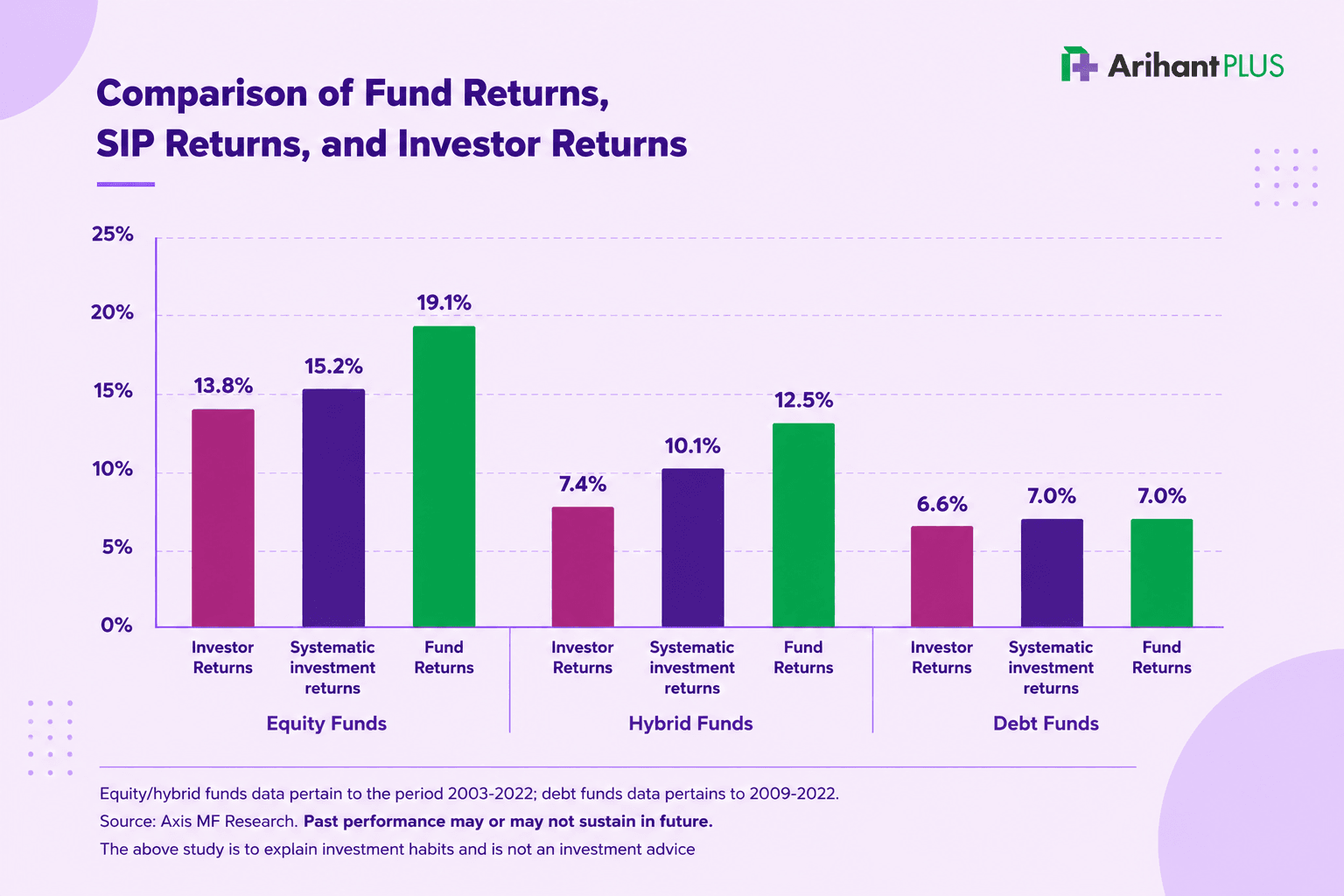
The fund did its job. Investors just did not stick around long enough to benefit fully. Why? People pour money in when markets are rising, because that is when everyone feels confident. Then markets fall, panic sets in, and people stop their SIPs or exit entirely, right when cheap valuations are about to reward them.
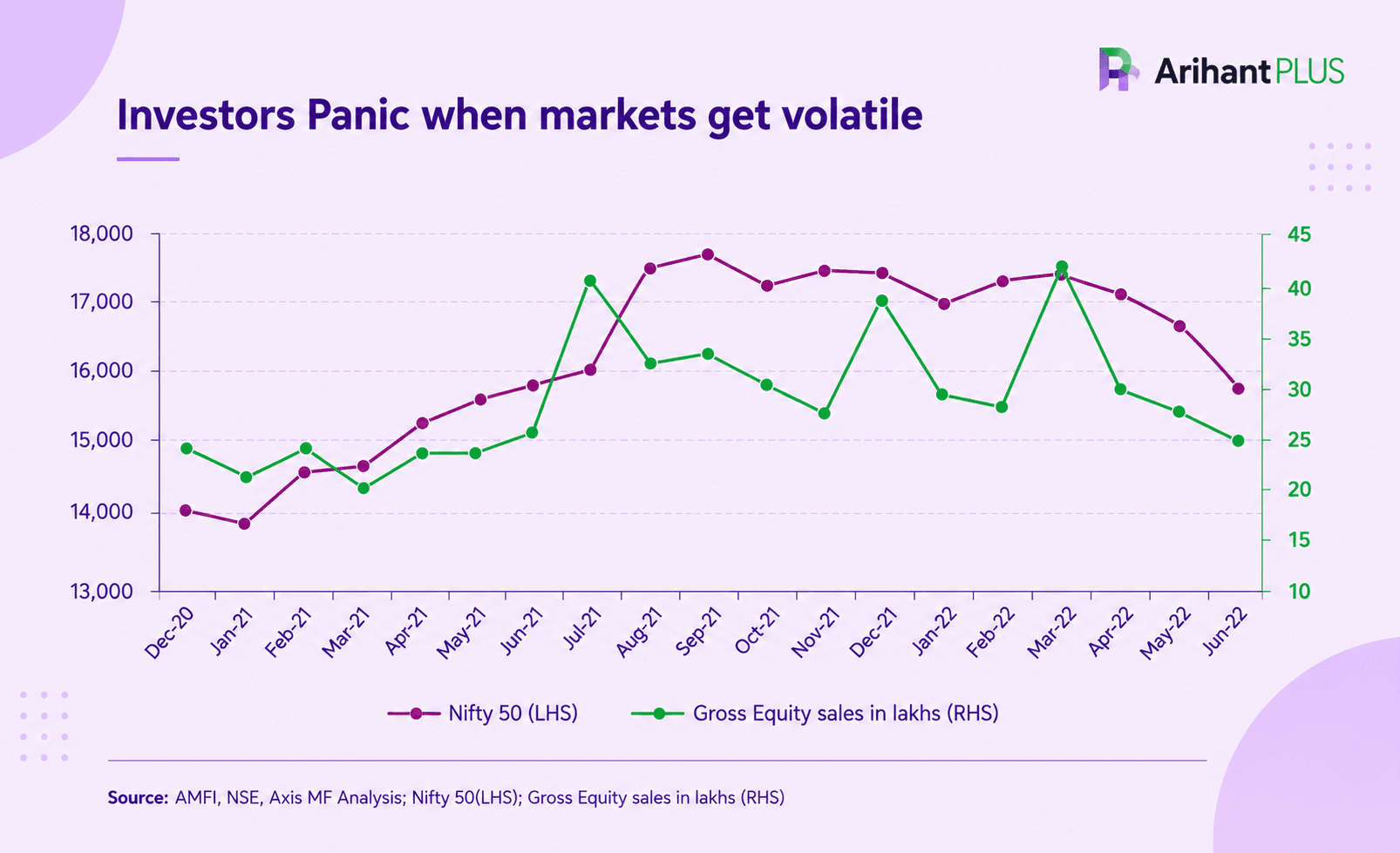
Markets are volatile by nature. Your reaction to that volatility is usually what actually costs you money, not the volatility itself.
3 Thumb Rules for Mutual Funds Investing
Quit Daily Tracking: Stop checking your portfolio every day. Daily tracking just turns normal market noise into anxiety, and anxious decisions are rarely good ones.
Revisit Time Horizon: If your goal is still five to seven years away, this week's headline has no business influencing that plan. Short term noise and long term wealth are two different games.
- Review Asset Allocation: If full equity exposure genuinely keeps you up at night, the problem is not that you are investing. The problem is that your portfolio does not match your risk appetite. Hybrid funds, balanced advantage funds, or index funds might suit you better, since they tend to fall less sharply while still keeping you in the market.
Investor Takeway
Does the gospel of SIP investing hold up? Mostly, yes, but only if you actually behave like it is meant to be used. Before you stop your SIP, ask yourself if your goal has changed. If it has not, a falling market is not a good enough reason to walk away. Headlines will keep coming and going, and markets will keep rising and falling. Long term wealth still comes down to patience, consistency, and discipline, not to how brave you feel this particular month.
Review your goal, review your allocation, and then decide with a clear head, not a panicked one.

Related Topics



Why International ETFs Trade at a 30–56% Premium, and Why Funds Keep Closing

Mutual Funds vs PMS: What’s the difference and which one is right for you?

Energy Funds Deliver 12% Returns in 3 Months: Invest Now or Wait?

Sensex down 8% due to Iran war: Should you pause SIP or buy the dip?